Algeria
 Egypt
 Libya
 Morocco
 Sudan
 Tunisia
 Benin
 Burkina Faso
 Cabo Verde
 Côte d'Ivoire
 Ghana
 Guinea
 Guinea-Bissau
 Liberia
 Mauritania
 Niger
 Nigeria
 Senegal
 Sierra Leone
 The Gambia
 Togo
 Cameroon
 Central African Republic
 Chad
 DR Congo
 Equatorial Guinea
 Gabon
 Republic of the Congo
 São Tomé and Príncipe
 Burundi
 Comoros
 Djibouti
 Eritrea
 Ethiopia
 Kenya
 Madagascar
 Malawi
 Mauritius
 Mozambique
 Rwanda
 Seychelles
 Somalia
 South Sudan
 Tanzania
 Uganda
 Angola
 Botswana
 Eswatini
 Lesotho
 Namibia
 South Africa
 Zambia
 Zimbabwe
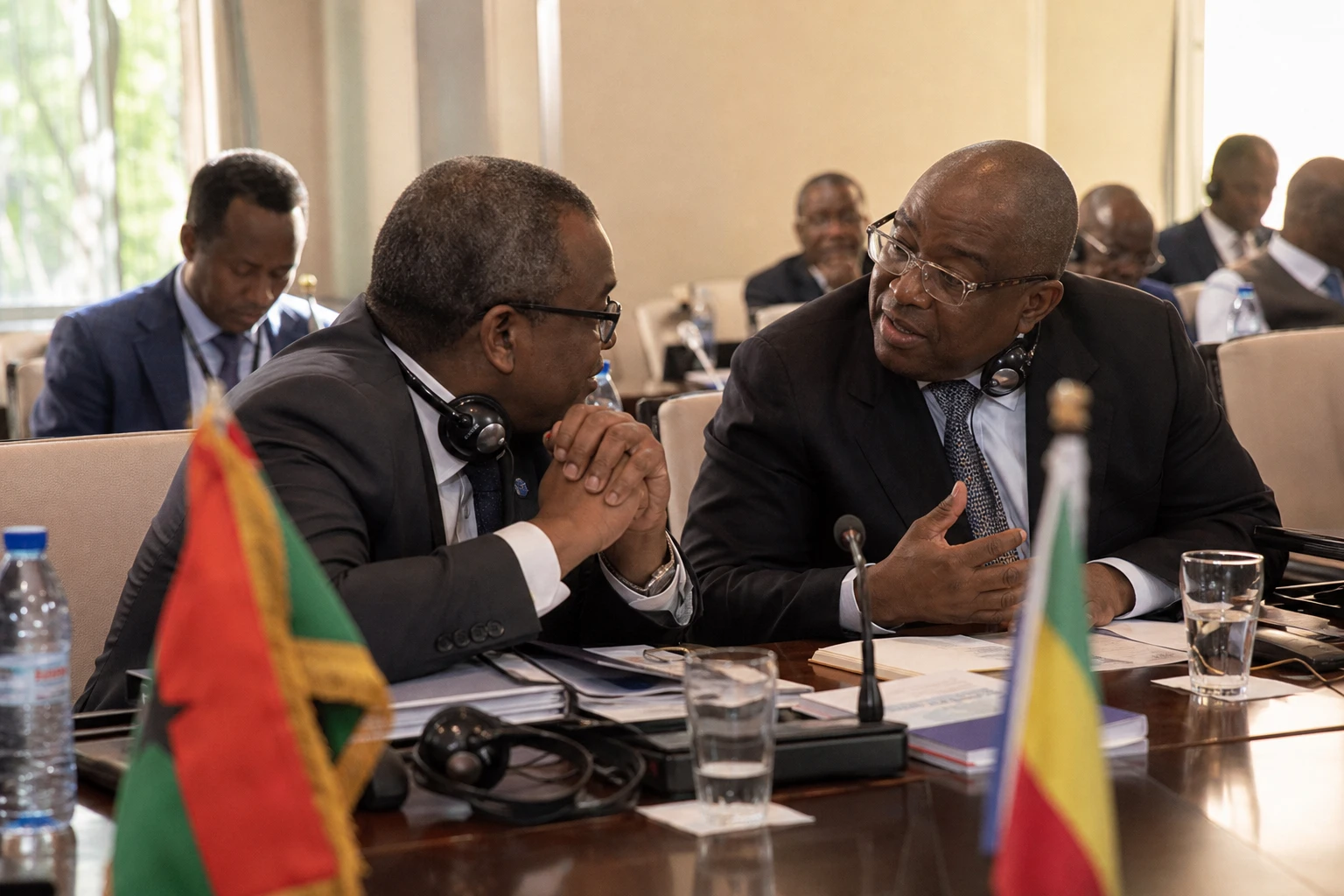
In northern Mali, the war is also fought in the treatment of captives
In the Malian desert, violence does not stop when a battle ends. It sometimes continues in the way prisoners are treated, filmed and then displayed online. This is where the gravity of a conflict can be measured: not only by its losses, but by the rules it violates.
In Mali, this issue returned to the fore after the attack on 18 July 2026 in the Tabrichat area, between Anéfis and Gao, in the Gao region. Fighters from the Group for the Support of Islam and Muslims (JNIM), affiliated with al-Qaeda, and the Azawad Liberation Front (FLA), an armed separatist movement, ambushed a military convoy. Images subsequently circulated online, renewing debate about the protection of captured soldiers and the responsibilities of the parties to the conflict.
On 23 July 2026, the United Nations human rights office said the alleged events could amount to serious violations of international humanitarian law. Amnesty International, for its part, said it had analysed 12 videos showing at least 19 Malian soldiers executed after their capture. If confirmed, these findings point to a reality familiar from conflicts in the Sahel: once a fighter is hors de combat, they can no longer be treated as a legitimate target.
Gao, Anéfis, Tabrichat: a strategic corridor under pressure
Northern Mali remains a vital transit area. The road between Anéfis and Gao links military, commercial and logistical zones. It runs through territory where the Malian army, armed groups that have signed past agreements and those that have not, and jihadist networks have contested the ground for years. In this part of the country, every convoy carries more than supplies: it is a show of force.
The regional context also matters. Mali has left ECOWAS, but remains exposed to the effects of insecurity spilling across West Africa. The borders with Niger and Burkina Faso form a continuum of crisis in which armed groups move, regroup and sometimes strike together. Against this backdrop, the presence of Russian military partners, now integrated into the Africa Corps structure, adds another dimension to the chain of command and the communication of war.
The authorities in Bamako often portray operations in the north as a struggle for national sovereignty. Armed groups, meanwhile, speak of resistance, self-determination or war against the state. But beyond these narratives, one constant remains: protecting captured people is an obligation. Humanitarian law depends neither on the flag nor the ideology, nor on the type of conflict.
What the videos show, and why it changes how the conflict is viewed
The videos analysed show, according to Amnesty International, disarmed soldiers, some lying on the ground with their hands behind their backs, then shot at close range. Others were allegedly mistreated before being killed. The legal terminology is precise: when a fighter lays down their arms, they become a person hors de combat. Their execution may then constitute a war crime.
The issue is not only a moral one. It is judicial, political and military. Judicially, the absence of a credible investigation perpetuates impunity. Politically, every abuse fuels public distrust of both the state and armed groups. Militarily, it feeds a spiral of reprisals, makes surrenders less likely and prolongs the war.
Mali has already faced similar warnings. In 2025, human rights organisations denounced the execution of civilians in Diafarabé, in the centre of the country. This repetition matters. It shows that the security crisis is not confined to the battlefields of the north. It extends to the rules governing the conduct of forces, accountability mechanisms and the minimum level of trust between the army and the population.
Images circulating on Telegram and X also raise a modern question: war is now documented by those who wage it. Evidence is produced in the same space as propaganda. This requires observers to cross-check footage, locations, faces and timelines before reaching any definitive conclusion. It is also why field reports, UN statements and investigations by specialist NGOs are becoming increasingly important.
Mali in a fragmented Sahel, and the test of accountability
For Bamako, the Tabrichat episode is not simply a tactical defeat. It exposes the limits of a strictly military response to a conflict that has become more dispersed, more mobile and more politicised. Malian forces face adversaries able to combine ambushes, media operations and opportunistic alliances. At the same time, the state is being judged on another front: the rule of law.
Malian soldiers are paying the immediate price of this protracted war. Families are seeking news, units are losing men, and accounts of capture or execution weigh on troop morale. In the rural regions of the north, traders, herders and travellers also suffer the indirect consequences of these clashes: more dangerous roads, disrupted markets, restricted movement and rising prices when routes are closed.
At regional level, this case is a reminder that Sahel security cannot be considered separately from justice. The African Union and sub-regional organisations have often stressed the fight against terrorism. But without an accountability mechanism, the response remains incomplete. Mali, like its neighbours, therefore faces a difficult equation: regain territorial control without allowing the conflict to become a legal grey zone.
What happens next will depend on the armed actors’ ability to respect minimum rules, but also on the Malian authorities’ willingness to open serious, visible and independent investigations. In northern Mali, the battle is not only about weapons. It is also about evidence, accountability and the law.