Algeria
 Egypt
 Libya
 Morocco
 Sudan
 Tunisia
 Benin
 Burkina Faso
 Cabo Verde
 Côte d'Ivoire
 Ghana
 Guinea
 Guinea-Bissau
 Liberia
 Mauritania
 Niger
 Nigeria
 Senegal
 Sierra Leone
 The Gambia
 Togo
 Cameroon
 Central African Republic
 Chad
 DR Congo
 Equatorial Guinea
 Gabon
 Republic of the Congo
 São Tomé and Príncipe
 Burundi
 Comoros
 Djibouti
 Eritrea
 Ethiopia
 Kenya
 Madagascar
 Malawi
 Mauritius
 Mozambique
 Rwanda
 Seychelles
 Somalia
 South Sudan
 Tanzania
 Uganda
 Angola
 Botswana
 Eswatini
 Lesotho
 Namibia
 South Africa
 Zambia
 Zimbabwe
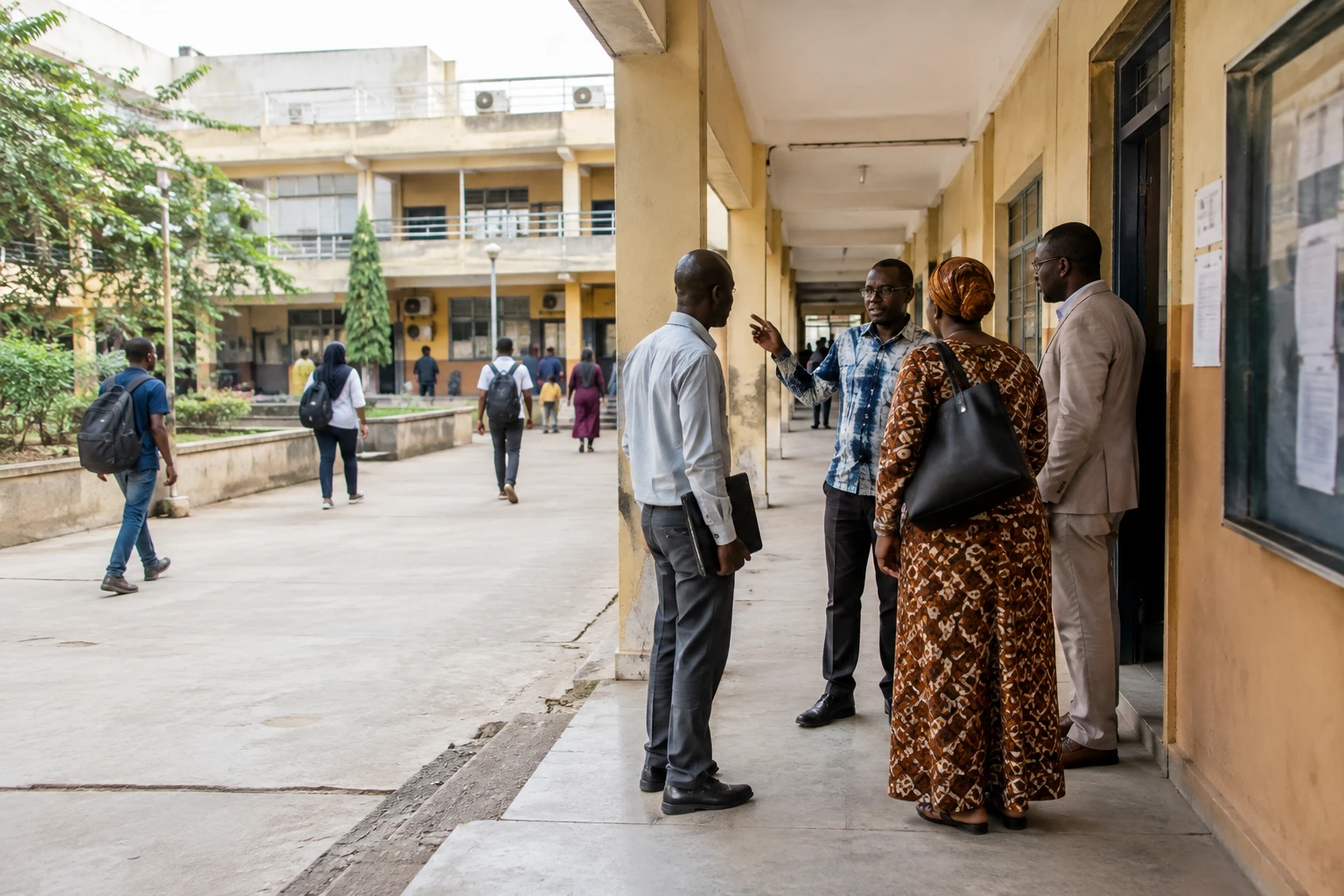
In Bamako, as at the universities of Ségou and Sikasso, a strike can quickly become about more than salaries. It also affects classes, examinations and the ability of Malian institutions to produce their own scientific research.
Since Monday 26 October 2026, Mali’s academic staff have been on a 120-hour stoppage, lasting five days. The action is due to end on Friday 30 October. CEN-SNESUP, their national union, is demanding the effective implementation of a research allowance provided for in legislation since 2017, but whose amount and payment arrangements have yet to be set.
A right enshrined in law, but with no amount set
The dispute concerns the implementation of rules governing the status of academic staff. Mali’s Official Gazette does provide for allowances and benefits for these employees. However, it specifies that the conditions for granting them and their rates must be set by decree adopted by the Council of Ministers. The research allowance is included in the provisions cited by the union, but its implementation remains incomplete.
CEN-SNESUP is therefore calling on the authorities to set the amount of the allowance, arrange its payment and consider the back payments sought since the status was adopted. The issue has practical consequences: funding research activities, including access to documentation, conducting research and disseminating its results. The union says academics currently have to cover some of these costs themselves.
The action is being observed at several institutions, but the figures cited for the proportion of staff on strike vary. The union says there has been strong support. Malian media report that the executive committee welcomed the level of participation on the first day. In the absence of an independent count at each institution, a national percentage should not be presented as established.
The authorities and the union have already held discussions on pay and careers. According to the African Press Agency, progress has included salary scales, outstanding overtime payments and the integration of some employees into the civil service. A committee on the research allowance has also been set up, but no definitive amount has been agreed.
Students face the consequences of the impasse
For students, the immediate impact depends on their institution and academic calendar. Classes may be interrupted, tutorials postponed and assessments rescheduled. If the dispute drags on, universities will also have to reorganise timetables and examinations. Students living far from Bamako or with fewer resources to absorb delays may be particularly affected.
Research is also at stake. When the resources needed for scientific work are not defined or funded, researchers may find it harder to document their projects, publish their findings or take part in academic exchanges. The demand is therefore not only about academic staff’s income. It also raises questions about the resources allocated to producing and sharing knowledge in Mali.
The legal framework gives some measure of the problem. The status of academic staff, published in the Official Gazette in October 2017, recognises pay-related benefits but refers to implementing legislation to set rates and conditions. This gap between the principle and its execution is fuelling the dispute. It also makes it harder to determine the budget needed to meet the back-payment demands.
This is not a new episode. In February 2025, discussions resumed after an earlier strike and led to its suspension. According to the African Press Agency, a committee had then begun examining the content and arrangements for the allowance. The renewed dispute in October 2026 shows that those discussions did not produce a definitive decision.
A national issue with regional implications
The matter falls primarily to Mali’s institutions: the ministry responsible for higher education, the government and representatives of academic staff. The National Transitional Council, the legislative body during the transition, may also be called upon to address the legislation and public resources involved. To break the deadlock, the parties will need to clarify the timetable, funding and rules for calculating any back payments.
At the West African level, the issue also has implications for academic cooperation. Mali is a member of the African and Malagasy Council for Higher Education, CAMES, which sets common frameworks for, among other things, evaluating and recognising academic careers. These regional mechanisms do not set the amount of a national allowance on behalf of the Malian state. But stable teams, uninterrupted classes and research resources all matter for cooperation between institutions.
ECOWAS, the Economic Community of West African States, is another important regional framework for Mali, although resolving this demand is primarily a matter for the national authorities and social partners. The key point to watch now is the response to the union before the announced end of the action on 30 October. Without an agreement, a renewed strike could further disrupt the academic calendar. With a clear framework for negotiations, the authorities could instead address an issue that has remained unresolved for several years.
For now, the confirmed facts are the duration of the action, its central demand and the absence of an agreed amount for the allowance. What happens next will depend on negotiations capable of turning a right enshrined in law into workable arrangements, while limiting delays for students and research teams.
The status of academic staff is set out in the Official Gazette of the Republic of Mali. The stages of the strike and earlier discussions have been reported by the African Press Agency, while Malian media have reported on the mobilisation announced by CEN-SNESUP, including Bamada and Le Soir de Bamako.