Algeria
 Egypt
 Libya
 Morocco
 Sudan
 Tunisia
 Benin
 Burkina Faso
 Cabo Verde
 Côte d'Ivoire
 Ghana
 Guinea
 Guinea-Bissau
 Liberia
 Mauritania
 Niger
 Nigeria
 Senegal
 Sierra Leone
 The Gambia
 Togo
 Cameroon
 Central African Republic
 Chad
 DR Congo
 Equatorial Guinea
 Gabon
 Republic of the Congo
 São Tomé and Príncipe
 Burundi
 Comoros
 Djibouti
 Eritrea
 Ethiopia
 Kenya
 Madagascar
 Malawi
 Mauritius
 Mozambique
 Rwanda
 Seychelles
 Somalia
 South Sudan
 Tanzania
 Uganda
 Angola
 Botswana
 Eswatini
 Lesotho
 Namibia
 South Africa
 Zambia
 Zimbabwe
A spectacular theft that goes beyond a crime story
In Paris, a luxury hotel can become the scene of a major international burglary. When the victim is a Malian businessman known far beyond Bamako, the case also tells another story: the movement of African fortunes, the networks of trust that accompany them, and the vulnerability of some highly exposed lives in major capitals.
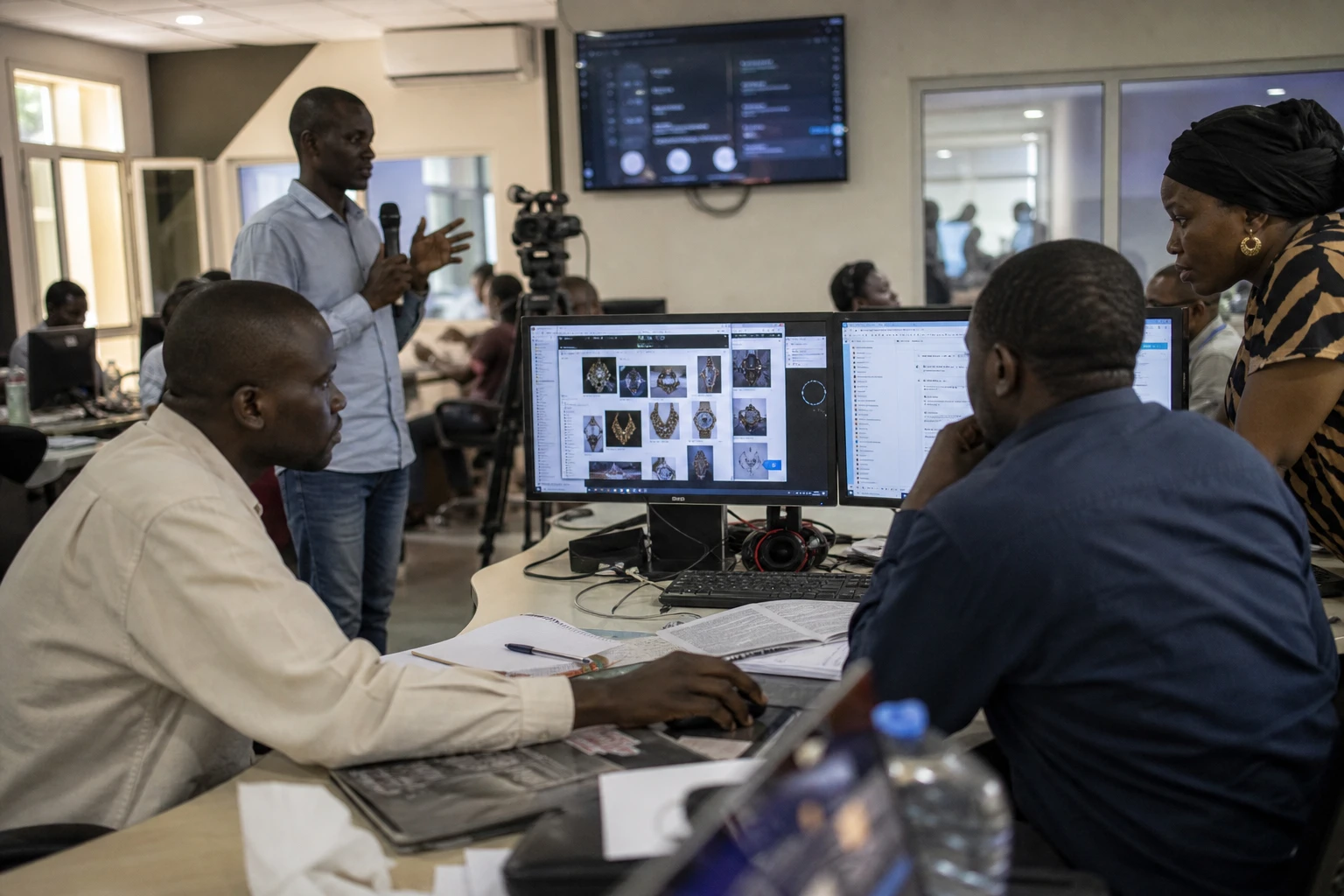
On 9 September 2026, two men entered a room at the Plaza Athénée on Avenue Montaigne in Paris. The victim, Oumar Gambi, often known as Barouni Gambi, is a Malian entrepreneur with a high profile on social media and in Mali’s business community. According to reports, the haul included several pieces of jewellery and a Richard Mille watch valued at €636,000, with the total approaching €1 million. The investigation was entrusted to the Brigade de répression du banditisme, a Paris police unit specialising in violent attacks and high-profile thefts.
What is known about the theft and its target
The thieves are said to have climbed up the façade before entering through an open window on the seventh floor. The incident was swift, discreet and unusual for a hotel under such close surveillance. According to the first information made public, the burglary took place at around 2am. The perpetrators fled and had not been arrested at the time of reporting.
Oumar Gambi is no stranger in Mali. Local media describe him as a philanthropic business operator with a strong public profile, sometimes known by the nickname Barouni Gambi. Other Malian publications mention his donations, sponsored events and prominence among a generation of young, visible fortunes in Bamako. This public image also helps explain why the theft attracted so much attention: it does not target only a wallet, but a figure associated with success, ostentation and prestige.
The case also reveals a business geography typical of Malian entrepreneurs based between Bamako, Brazzaville and Paris. According to published reports, Gambi made his fortune in Congo-Brazzaville, where he set up a services company in 2023 and later launched property projects with Malian and French associates. This cross-border dimension illustrates the economic role of the West African business diaspora, active across several monetary and legal jurisdictions at once.
The influence of Malian and Congolese networks
The case takes on a political dimension because it also involves Congo-Brazzaville. Oumar Gambi is described as close to some members of Denis Sassou Nguesso’s circle. Sassou Nguesso was re-elected in March 2026 to a fifth term, according to official results confirmed by the Congolese Constitutional Court. The context matters: in Brazzaville, power remains concentrated around a head of state who has been in office for more than four decades, and the ties between business, political proximity and public image remain closely intertwined.
For Mali, above all, the case highlights the movement of capital and reputations beyond the country’s borders. Malian businesspeople based abroad often provide economic support, informal financing and social prestige. But this mobility also creates vulnerabilities: frequent travel, large sums in jewellery or luxury goods, and broad circles of associates who can sometimes be difficult to secure. The Paris theft shows how visible wealth attracts not only covetousness, but also suspicions of proximity, dependence or betrayal.
The Malian man here is not simply a national passing through. He reflects an African business bourgeoisie taking shape across several centres, with Paris remaining a showcase, a place of temporary residence and a space of symbolic protection. In cases like this, the issue is not only the value of what was stolen. It is also the ability of African elites to secure their assets, protect their movements and manage wealth spread across different legal environments.
What the case says about Mali and West Africa
The impact of this burglary goes beyond a crime story because it speaks to a West Africa in transition. Mali left ECOWAS on 29 January 2025, along with Burkina Faso and Niger. Since then, Bamako has operated in a more fragmented regional space, while trade, mobility and business networks continue to cross borders. Economic dynamics do not stop at institutional breaks.
This regional context offers a more nuanced reading of the case. Malian entrepreneurs who have prospered abroad remain connected to Bamako through investment, philanthropy, sport and media visibility. They are part of an economy of reputation in which success is displayed as much as it is financed. This can foster innovation, jobs and some local projects. But it also exposes those who hold such wealth, particularly when they travel between several African and European capitals.
At the continental level, the case is a reminder of a wider reality: African fortunes are increasingly transnational and, as a result, increasingly exposed. Major European cities are no longer simply places to escape to or store wealth. They are becoming stages where private security, social prestige, elite mobility and police surveillance intersect. For Mali, as for other countries on the continent, the issue is not only the luxury goods stolen. It is the place of African economic elites in a world where visible wealth and vulnerability often go hand in hand.