Algeria
 Egypt
 Libya
 Morocco
 Sudan
 Tunisia
 Benin
 Burkina Faso
 Cabo Verde
 Côte d'Ivoire
 Ghana
 Guinea
 Guinea-Bissau
 Liberia
 Mauritania
 Niger
 Nigeria
 Senegal
 Sierra Leone
 The Gambia
 Togo
 Cameroon
 Central African Republic
 Chad
 DR Congo
 Equatorial Guinea
 Gabon
 Republic of the Congo
 São Tomé and Príncipe
 Burundi
 Comoros
 Djibouti
 Eritrea
 Ethiopia
 Kenya
 Madagascar
 Malawi
 Mauritius
 Mozambique
 Rwanda
 Seychelles
 Somalia
 South Sudan
 Tanzania
 Uganda
 Angola
 Botswana
 Eswatini
 Lesotho
 Namibia
 South Africa
 Zambia
 Zimbabwe
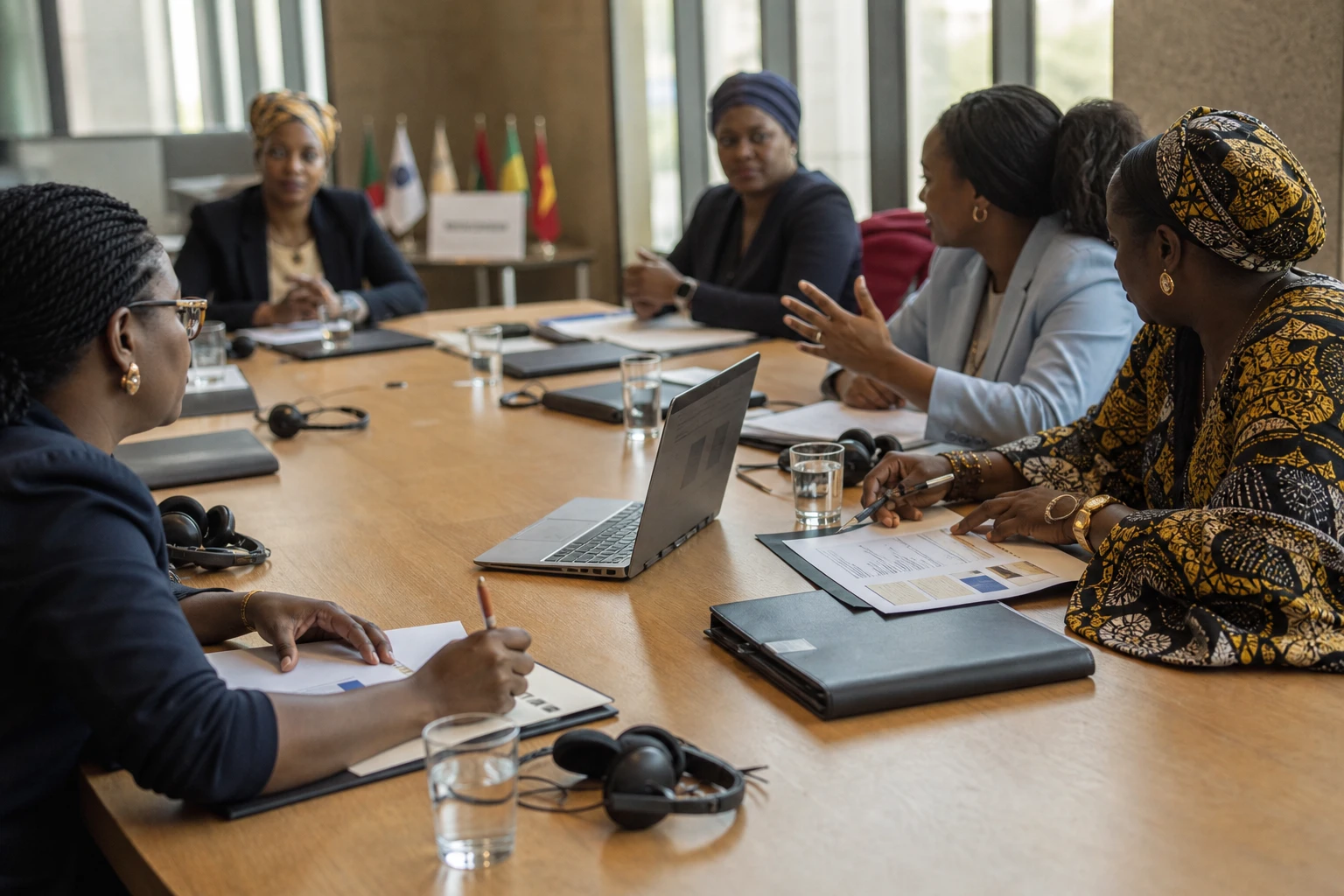
In Mali and Niger alike, the first obstacle for a small business is not always the idea or the market. Often, it comes when the business needs to move from structured activity to investment capable of financing growth. In these two Sahelian countries, a programme for women entrepreneurs is seeking to bridge precisely that gap.
Two West African economies face the same financial bottleneck
Mali and Niger are both part of the West African Economic and Monetary Union, or WAEMU, which shares the CFA franc and a regional banking framework, among other things. Yet access to credit varies considerably according to the size of a business, the quality of its accounting records and the guarantees it can provide.
For micro, small and medium-sized enterprises, banks often prioritise short-term cash-flow needs. Financing to buy equipment, open a new branch or expand teams on a lasting basis is harder to secure. This limits businesses’ ability to turn a profitable activity into a sustainable enterprise.
In Niger, the World Bank described a financial system still marked by liquidity pressures and limited access to credit for MSMEs in March 2026. A new $250 million project is intended, among other things, to support financial institutions’ liquidity and expand lending to small businesses. The operation targets 7,500 MSMEs, with particular attention to women-led businesses.
This public intervention confirms a broader point: small-business financing does not depend solely on demand from women entrepreneurs. It also depends on the ability of banks and microfinance institutions to take risks on businesses that are still young and sometimes far from major economic centres.
Support focused on investment readiness
Against this backdrop, the Wangari programme has supported 18 women-led businesses in Mali and Niger over three years. It is run by Investisseurs & Partenaires, with support from partners based in the two countries, including Zira Capital in Mali and Sinergi in Niger.
Its aim was not to replace a bank or an investment fund. Instead, it set out first to make businesses more legible to potential financiers. This involves clarifying the business model, formalising accounts, preparing a business plan and defining a realistic funding requirement.
The programme was aimed at formal businesses led or co-led by women. Among other criteria, selected businesses had to be registered in Mali or Niger, employ at least three people and have annual turnover of at least 5 million CFA francs. These criteria targeted businesses already operating, but still at the stage before their first fundraising round.
This stage is crucial. A woman entrepreneur may have a viable product and loyal customers but lack the documents needed to convince an investor. Financial preparation then serves as a bridge between the day-to-day reality of a business and the requirements of external financing.
First funding secured in both countries
In Mali, participants secured more than €93,300 in various forms. The funding reportedly includes grants, loans at preferential rates, repayable advances and impact finance—that is, capital seeking both a return and measurable social or environmental outcomes.
The sum remains limited relative to the needs of a national economy. It nonetheless takes on a different significance for businesses often seeking their first external funding. A successful first transaction can boost their credibility with banks, local funds and business partners.
In Niger, nine businesses took part in the programme. Seven of them began the process of securing funding. Some obtained resources during or after the support period, notably in the form of repayable advances with no interest or collateral. Other funding deals reportedly exceeded €30,000.
These instruments address a common difficulty: a business in a growth phase may need capital while being unable to provide the guarantees required for a conventional bank loan. A repayable advance can then fund a specific step without immediately increasing bank debt.
Why targeting women matters for access to capital
Supporting women-led businesses is not just a matter of representation. It also responds to a real imbalance in access to networks, financial information and guarantees.
In Mali, the Investment Promotion Agency and UN Women have set up a Women Business Center. It supports women entrepreneurs with formalisation, skills development, fundraising and access to markets. This approach shows that credit alone is not enough when a business lacks reliable accounts or an identified financial contact.
The expected effects therefore extend beyond the beneficiaries themselves. A business that invests can create jobs, stabilise suppliers and develop local offerings. The impact nevertheless varies by location. Businesses based in Bamako or Niamey generally have more direct access to banks, investors and government agencies than those in the regions.
The challenge is to prevent support programmes from remaining concentrated in the capitals. Formalisation, digital finance and regional business networks can help bridge the gap, provided they are tailored to the realities of businesses far from major centres.
An issue that extends beyond the Wangari programme
The cases of Mali and Niger illustrate a regional issue. In WAEMU, banks operate in a common market, but small businesses do not all have access to the same resources. Economic pressures, liquidity constraints and market uncertainty make lenders more cautious.
The response therefore cannot rely solely on one-off programmes. It also requires the development of guarantees, local investment funds, leasing, risk-sharing mechanisms and local-currency financing. Finally, businesses need to be able to produce regular, comparable financial data.
The third edition of Wangari, announced for 2026, is set to support six women entrepreneurs for six months in Mali and Niger. This next stage will show whether the initial experiences lead to larger funding deals and lasting relationships with investors.
The key indicator will be less the number of participants than their ability to take the next steps: secure appropriate financing, create jobs, improve governance and access wider markets. For small women-owned businesses in the Sahel, the first fundraising round is not the end point. It is often the real beginning of scaling up.