Algeria
 Egypt
 Libya
 Morocco
 Sudan
 Tunisia
 Benin
 Burkina Faso
 Cabo Verde
 Côte d'Ivoire
 Ghana
 Guinea
 Guinea-Bissau
 Liberia
 Mauritania
 Niger
 Nigeria
 Senegal
 Sierra Leone
 The Gambia
 Togo
 Cameroon
 Central African Republic
 Chad
 DR Congo
 Equatorial Guinea
 Gabon
 Republic of the Congo
 São Tomé and Príncipe
 Burundi
 Comoros
 Djibouti
 Eritrea
 Ethiopia
 Kenya
 Madagascar
 Malawi
 Mauritius
 Mozambique
 Rwanda
 Seychelles
 Somalia
 South Sudan
 Tanzania
 Uganda
 Angola
 Botswana
 Eswatini
 Lesotho
 Namibia
 South Africa
 Zambia
 Zimbabwe
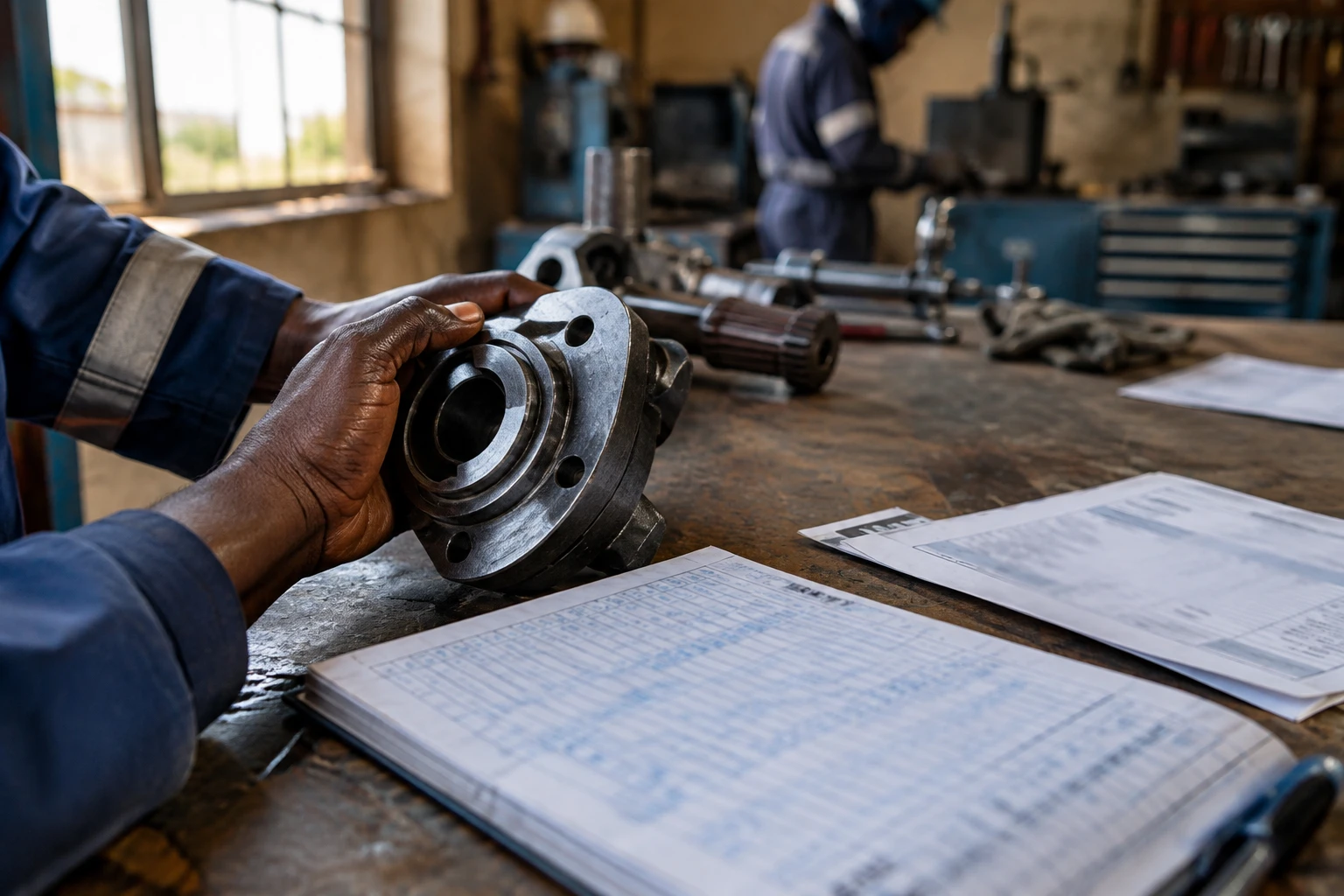
Financing a local business is not enough if it cannot buy equipment, pay its staff or wait several months for a mine to settle its invoices. In Mali, a banking programme for mining subcontractors has begun making disbursements, but its next challenge will be to turn projects into executed contracts and measurable jobs.
A financial lever in a key sector
The extractive sector carries considerable weight in Mali’s economy. According to the 2024 EITI report, presented in 2026, it generated CFAF 978 billion for the public treasury in 2024. It also accounted for 9.5% of GDP, 40.9% of tax revenue and 78.8% of exports, according to figures reported by the Mali Chamber of Commerce and Industry and the Malian Press and Advertising Agency.
This importance contrasts with the small share of employment attributed to the extractive sector: the EITI report estimates that it accounted for 1.6% of jobs in 2024. The aim of local content is therefore also to better anchor the benefits of activity in Malian businesses, skills and jobs.
Mali’s Law No. 2023-041 of 29 August 2023 sets the framework for local content in mining. Its aims include increasing the value added produced in the country, developing skills and strengthening national businesses. The banking initiative is in line with this direction, without replacing mining companies’ obligations or public policy.
Funding already committed, a portfolio to convert
Launched in Bamako on 27 October 2025 by AFG Bank Mali, the Local Content Champion Program (LCCP) has a stated allocation of CFAF 100 billion. It targets Malian businesses supplying goods and services to mines, including those in construction and drilling, equipment, energy, transport and logistics.
In its first year, the bank reports that CFAF 21.055 billion in loans had been disbursed, from a project portfolio valued at CFAF 49.347 billion. It says 30 businesses are in the programme pipeline, 19 have at least one approved application and 15 have already received financing. These results come from figures provided by the bank; detailed data could not be found in an independent publication consulted.
Financing is focused mainly on equipment purchases and working capital. The latter is the cash needed to cover day-to-day expenses before payments are received. An advance against an invoice, contract or purchase order can therefore help a subcontractor pay staff, buy fuel or deploy machinery before its client settles the bill.
The bank names SENO MINING, which provides mining services and carries out public works, as a recipient of equipment financing. CORICA Mining, CCB Mining and Drill Corp Sahara are among the other businesses it identifies as part of the programme’s pool of supported companies. Their presence in the programme does not, in itself, make it possible to assess the value of contracts won or their economic progress.
From credit to real activity
The main obstacle described by AFG Bank Mali is the preparation of applications. A business may have technical experience and a contract but lack financial statements, guarantees or sufficiently well-organised legal documents to obtain a loan quickly. The bank says it wants to step in earlier, with preliminary support and help preparing applications.
This challenge is a reminder that financing does not automatically create a competitive supplier. Mining companies define their needs and technical requirements. Local businesses must be able to meet them on time. Banks assess risks and guarantees, while the state sets the rules on local content. Coordination between these actors determines whether contracts translate into sustained activity for Malian service providers.
The programme’s stated aim is to contribute to 2,000 direct jobs by 2027. AFG Bank Mali says it tracks changes in the workforces of supported businesses rather than counting only hires directly linked to a loan. The cited results report several recruitment campaigns in 2026, including 122 positions announced at the Goulamina and Baboto–Loulo-Gounkoto sites, as well as six positions linked to an energy project at Sadiola. Announced positions are not necessarily filled jobs, however, and these figures alone do not demonstrate the programme’s impact.
Impact measurement will therefore need to distinguish planned recruitment from actual hires, and jobs retained from newly created jobs. It will also need to specify how many contracts beneficiaries are executing, what investments have been made and what share of value added remains in the Malian economy.
A reach beyond one bank’s results
The challenge also concerns West Africa: mineral resources can generate public revenue, but the extent of the benefits also depends on the suppliers, jobs and skills created in producer countries. In Mali, the implementation of the local content law and the transparency of results will be as important as the amounts announced.
For its second year, AFG Bank Mali plans to accelerate the conversion of projects into financing, expand the number of businesses it supports and strengthen the monitoring of results. The 2027 targets remain its goal, but the bank considers it premature to raise them before it has consolidated data on jobs and disbursements.
The programme could, according to the bank, be adapted to other sectors and rolled out through its subsidiaries in Madagascar and Côte d’Ivoire before the end of the first quarter of 2027. In Mali, its success will be judged less by the size of its allocation than by its ability to turn bankable applications into operational equipment, executed contracts and jobs actually created.