Algeria
 Egypt
 Libya
 Morocco
 Sudan
 Tunisia
 Benin
 Burkina Faso
 Cabo Verde
 Côte d'Ivoire
 Ghana
 Guinea
 Guinea-Bissau
 Liberia
 Mauritania
 Niger
 Nigeria
 Senegal
 Sierra Leone
 The Gambia
 Togo
 Cameroon
 Central African Republic
 Chad
 DR Congo
 Equatorial Guinea
 Gabon
 Republic of the Congo
 São Tomé and Príncipe
 Burundi
 Comoros
 Djibouti
 Eritrea
 Ethiopia
 Kenya
 Madagascar
 Malawi
 Mauritius
 Mozambique
 Rwanda
 Seychelles
 Somalia
 South Sudan
 Tanzania
 Uganda
 Angola
 Botswana
 Eswatini
 Lesotho
 Namibia
 South Africa
 Zambia
 Zimbabwe
Mali’s lithium sector is scaling up, but the battle is still over permits and infrastructure
In Bamako, Mali’s mining map is no longer defined by gold alone. Since 2024, lithium has become part of the country’s industrial landscape, with a first mine coming on stream at Goulamina, followed by a second site at Bougouni, in the south of the country. This growing presence is attracting new players beyond the Chinese partners already firmly established. It also serves as a reminder of a simple truth: in Mali, the value of a deposit depends not only on what lies underground, but on the state’s ability to issue, regulate and sustain mining permits.
The regional context matters. Mali is part of West Africa, where ECOWAS remains the main economic cooperation organisation, even as recent political tensions have reshaped several balances. In the mining sector, southern Mali now hosts some of the continent’s most closely watched lithium projects. The areas around Bougouni, Kolondiéba and Sikasso are becoming a strategic corridor for investors, linked to international battery and energy storage markets.
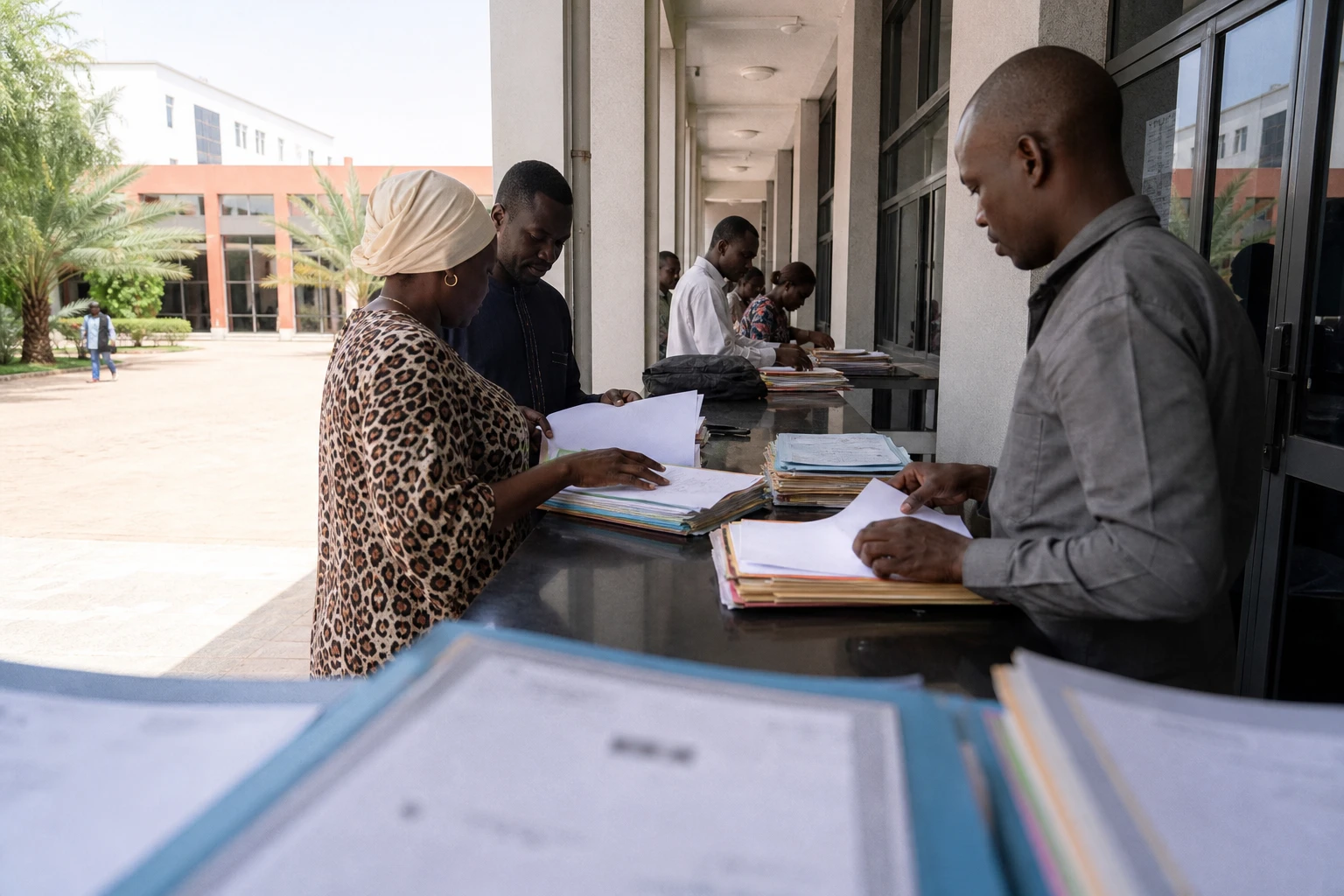
The most immediate development is administrative, but far from insignificant. At its meeting on Friday 21 August 2026, the Council of Ministers approved the renewal of ten mining exploration permits, including two lithium permits held by Intermin Lithium SARL, a subsidiary linked to First Lithium. The permits cover Gouna and Faraba, in southern Mali. According to the official statement carried by public radio and television and the pan-African news agency APA, this is the second renewal of these permits, following a period disrupted by the suspension of exploration permit renewals between December 2022 and March 2025.
For First Lithium, the renewal is more than a piece of paper. The company said in late July that publication of its first mineral resource estimate in Mali depended on this administrative step. Its work is focused in particular on Blakala, within the Gouna permit, and on Faraba. In mining, exploration is often the true economic starting point: without a robust estimate, there can be no bankable project or sound feasibility study, leaving little scope to attract serious financing.
But Mali’s lithium story is not limited to one group. The country already has two lithium mines in production, at Goulamina and Bougouni. Malian authorities present this shift as a step towards industrial sovereignty. Goulamina came on stream in December 2024, while Bougouni began production in February 2025, according to Kodal Minerals. In February 2026, the Malian Ministry of Mines even said that the combined output of the two sites could put Mali in first place in Africa by volume of spodumene concentrate in 2026. This projection should be treated with caution, as it depends on actual production rates, exports and logistical constraints.
Chinese interests already dominate part of the supply chain. Goulamina is backed by Ganfeng, a major China-listed lithium player, while Bougouni is also part of a structured partnership with Chinese and British partners. Other interests are emerging alongside these. In May 2026, Rosatom said it had obtained preliminary results confirming the potential of a lithium site in Mali, through its energy subsidiary Atomenergoprom, according to Interfax. Lithium Africa, meanwhile, says it has worked on several projects in Mali, but its permits reportedly expired in 2025 and their renewal remains pending. In other words, Mali is attracting interest, but the field remains competitive, with each player still seeking a place in a sector being built in stages.
The stakes extend beyond Mali. In its Global Critical Minerals Outlook 2026, the International Energy Agency estimates that global lithium demand will continue to grow strongly through to 2040 under its scenario based on policies already announced. This is a key factor for African producer countries: rising demand can boost revenues, but it also puts greater pressure on governments to negotiate better contracts, develop roads, secure energy supplies and process more of the supply chain locally. For Mali, the next phase will therefore hinge on three fronts: publication of resource estimates, the actual pace of the mines already open, and the ability to turn this rush into lasting benefits for the formal economy, communities in the south and the central government.