Algeria
 Egypt
 Libya
 Morocco
 Sudan
 Tunisia
 Benin
 Burkina Faso
 Cabo Verde
 Côte d'Ivoire
 Ghana
 Guinea
 Guinea-Bissau
 Liberia
 Mauritania
 Niger
 Nigeria
 Senegal
 Sierra Leone
 The Gambia
 Togo
 Cameroon
 Central African Republic
 Chad
 DR Congo
 Equatorial Guinea
 Gabon
 Republic of the Congo
 São Tomé and Príncipe
 Burundi
 Comoros
 Djibouti
 Eritrea
 Ethiopia
 Kenya
 Madagascar
 Malawi
 Mauritius
 Mozambique
 Rwanda
 Seychelles
 Somalia
 South Sudan
 Tanzania
 Uganda
 Angola
 Botswana
 Eswatini
 Lesotho
 Namibia
 South Africa
 Zambia
 Zimbabwe
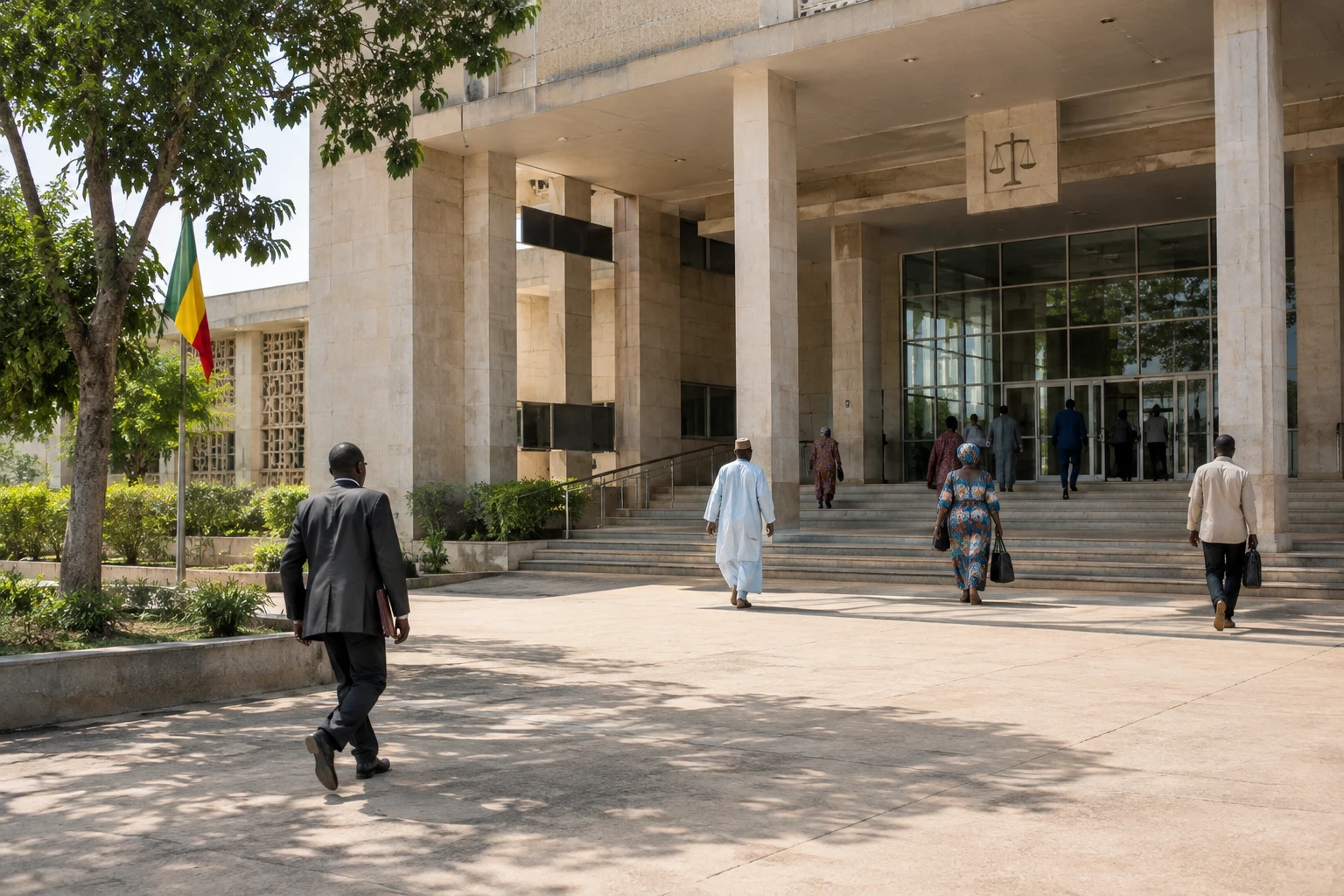
Moving from an undisclosed place of detention to a prison in Bamako does not put an end to the questions. The judicial proceedings against four Malian activists are now partly known. But their families are concerned about their health and are challenging the conditions of their detention before they appeared in court.
Judicial proceedings after months without news
On 20 October 2026, Youssouf Daba Diawara, Aboubacar Soumaré, Moussa “Abba” Djiré and Ibrahima Tamega appeared before the National Specialised Unit for the Fight Against Cybercrime in Bamako. They were then remanded in custody and transferred to the capital’s central prison, according to information reported by Malian media and a human rights organisation.
Their appearance came after nearly six months during which their families said they did not know where they were. Organisations and their families say they had been detained by State Security at undeclared locations and without any known judicial procedure. The precise circumstances of their detention have yet to be publicly established. Committee for Justice has also called for judicial safeguards and the protection of the detained activists. Committee for Justice’s account of the safeguards sought.
The case comes amid a period of heightened tensions in Mali. Since the coups of 2020 and 2021, the transitional authorities have postponed election dates. In May 2025, they dissolved political parties and movements of a political nature. In this context, calls to hold elections or contact with opponents in exile can take on particular political significance, without establishing the guilt of those facing prosecution.
Different charges for each activist
Moussa Djiré and Ibrahima Tamega are due to stand trial on 4 January 2027 on charges of “undermining the credibility of the state through an information system”, according to details of the proceedings reported in this case. This date is still in the future at the time of publication: no decision on their guilt is therefore yet known.
In Moussa Djiré’s case, investigators are focusing in particular on telephone exchanges with Oumar Mariko, a Malian opposition figure in exile. The transitional authorities accuse him of complicity in the attacks of 25 April 2026, carried out by the Group for the Support of Islam and Muslims (JNIM) and the Azawad Liberation Front (FLA). Mariko rejects the accusation. The fact that he spoke with Djiré is not, by itself, enough to establish participation in the attacks.
Ibrahima Tamega is suspected of having taken part in the creation of graffiti that appeared in Bamako at the end of May. The reported inscriptions expressed opposition to the Russian presence and Russian fighters. The accusation concerns messages painted on walls; the specific evidence against Tamega has not been made public in the information available.
The judicial proceedings against Youssouf Daba Diawara and Aboubacar Soumaré are at an earlier stage. The investigation is reportedly still under way and no trial date has been announced. According to reported information, they face charges of “undermining the credibility of the state”, “criminal conspiracy” and “attempting to destabilise the institutions of the Republic”. The alleged acts include meetings with opposition figures in exile and statements in favour of elections. These are accusations, not judicial findings.
Health and access to medical care are also at issue
Concerns about their health have been raised by their families and have not been confirmed by an independent medical report. Those close to Ibrahima Tamega report malnutrition and severe anaemia, as well as swollen legs and feet. He was reportedly authorised to undergo tests at a hospital in Bamako.
The families of Youssouf Daba Diawara and Aboubacar Soumaré describe them as very thin and weak. Those close to Moussa Djiré report that he has difficulty walking and was in a state of shock after his detention. These accounts raise practical questions: can the detainees see a doctor, receive visits from their lawyers and communicate with their families? The authorities have not provided a detailed public response in the information reviewed.
This issue extends beyond the cases of the four activists. Lawyer and former minister Mountaga Tall and his son Cheick Mamadou Tall have also been reported by their families as held incommunicado since May 2026. Amnesty International and Human Rights Watch have expressed concern about the disappearance of Mountaga Tall and the lack of official information about his fate. Amnesty International’s alert on Mountaga Tall and the concerns raised by Human Rights Watch underline the importance of making the place of detention, legal status and access to family members verifiable.
A test for justice and freedoms in the region
The specialised unit must now investigate the charges and safeguard the rights of the defence. The steps to watch are effective access to lawyers and medical care, disclosure of the case documents and the holding of the announced hearings. They will help distinguish verified evidence from accusations, while shedding light on the conditions in which the four men were held before their court appearance.
Across West Africa, the case comes as Mali’s relations with the Economic Community of West African States (ECOWAS), the regional organisation, have been profoundly reshaped by the withdrawal of Mali, Burkina Faso and Niger, which took effect in January 2025. Freedom of expression, political transitions and judicial safeguards remain regional issues, but each case must be assessed on its own facts.
For the families, the urgent priority is immediate: to know the detainees’ state of health and be able to see them. For Mali’s justice system, the challenge is to make the charges accessible to the defence and examine them in public, without conflating political criticism with criminal guilt.