Algeria
 Libya
 Morocco
 Sudan
 Tunisia
 Benin
 Burkina Faso
 Cabo Verde
 Côte d'Ivoire
 Ghana
 Guinea
 Guinea-Bissau
 Liberia
 Mali
 Mauritania
 Niger
 Nigeria
 Senegal
 Sierra Leone
 The Gambia
 Togo
 Cameroon
 Central African Republic
 Chad
 DR Congo
 Equatorial Guinea
 Gabon
 Republic of the Congo
 São Tomé and Príncipe
 Burundi
 Comoros
 Djibouti
 Eritrea
 Ethiopia
 Kenya
 Madagascar
 Malawi
 Mauritius
 Mozambique
 Rwanda
 Seychelles
 Somalia
 South Sudan
 Tanzania
 Uganda
 Angola
 Botswana
 Eswatini
 Lesotho
 Namibia
 South Africa
 Zambia
 Zimbabwe
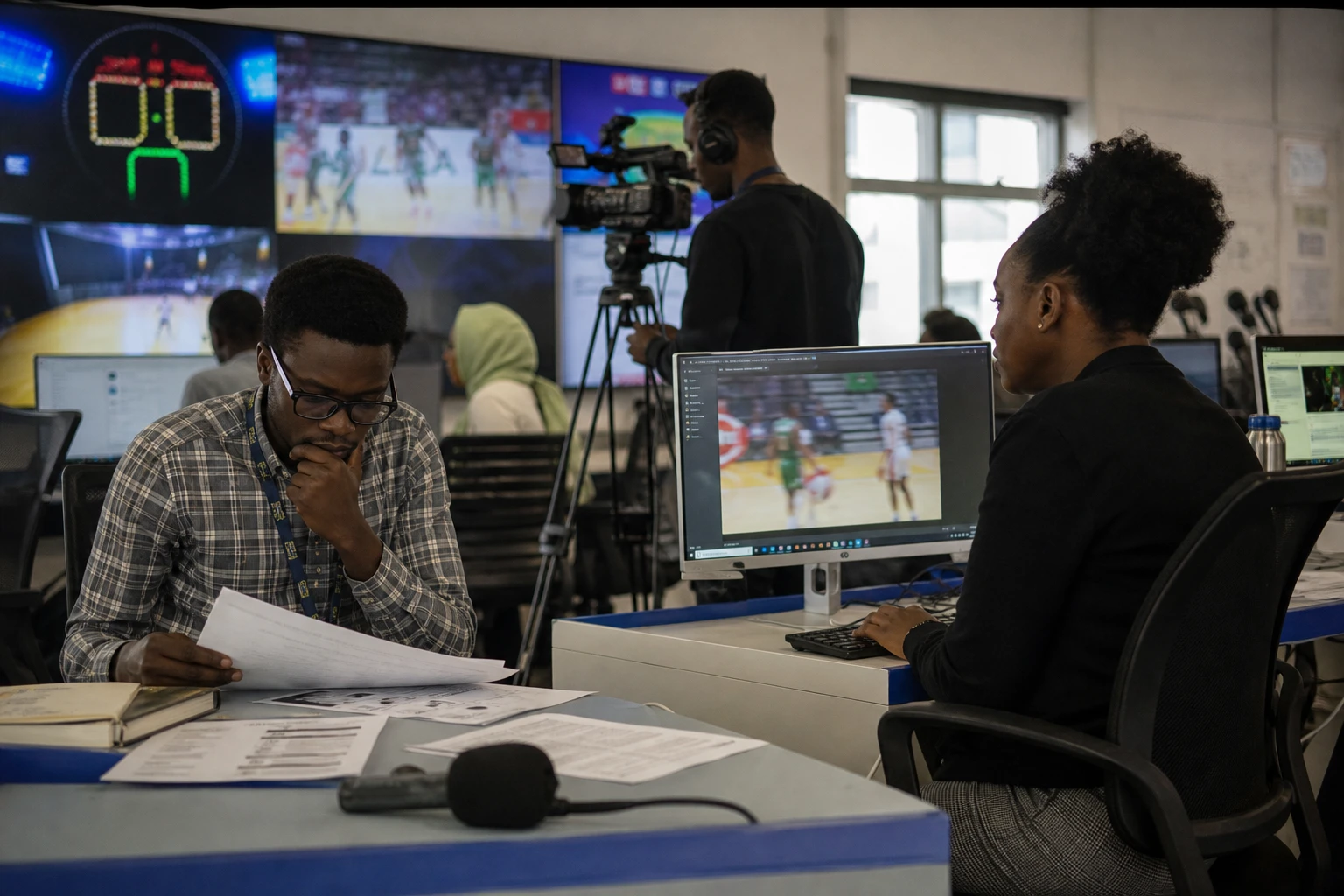
An African final that means more than the score
In Abidjan, a generation of Malian players is playing for more than just a match. It is defending a habit that has become rare in youth sport: winning often without losing focus or discipline. Against Egypt, Mali once again had to dig deep to turn its expected superiority into a concrete qualification.
The tournament is being held in Abidjan, Côte d’Ivoire, from 5 to 16 August 2026, and is organised by FIBA Africa, the continental branch of the International Basketball Federation. The format is straightforward but demanding: the top two teams in the tournament qualify for the 2027 FIBA U19 Women’s World Cup. Mali, the reigning U18 champions, arrived at this edition with a title to defend.
Mali, an established force in women’s youth basketball
The country of Bamako is not on unfamiliar ground here. Mali’s women’s U18 team had already won the 2024 edition, and qualified automatically for 2026 by reaching the continental semi-finals. In other words, Mali has not simply benefited from a favourable draw: it is building on sustained sporting continuity, with a youth development pathway that regularly produces competitive teams at African level.
This also matters when viewing the tournament through an African lens. In a West African region where federations are seeking to establish stable training centres, Mali shows that a consistent youth policy can deliver lasting results. It is no coincidence that the country is described on the continental website as the defending Women’s U18 champion.
A close match, far from a comfortable win
The semi-final against Egypt nevertheless confirmed that status alone is not enough to win. Mali prevailed 57-55 on Friday 14 August 2026 at the Palais des Sports de Treichville. The Malian players won the first three quarters, then held off Egypt’s comeback in the final period. They were still six points ahead at the start of the fourth quarter, before seeing the gap narrow in a tense finish.
The score reflects the course of the match: 16-14, 16-15 and then 16-13 to Mali in the first three quarters, before a final period that favoured Egypt, 13-9. Both teams struggled with their shooting. Mali finished with around 27% shooting accuracy, including 12.5% from three-point range, compared with 35% for Egypt. But Mali’s defence and management of the final possessions mattered more than the percentages.
This kind of win has particular value in a development tournament. A youth team can dominate on talent. It becomes credible at the highest continental level when it also knows how to win without shining. That is precisely what Mali showed against an Egypt side that never gave up and even won the final quarter.
What this qualification means for Mali’s players
The first consequence is clear: Mali are assured of a place in the final and therefore of one of Africa’s two spots at the 2027 FIBA U19 Women’s World Cup. This qualification is no trivial matter. It gives the players the opportunity to develop at a higher level, against opponents from other confederations, with an intensity that often accelerates careers.
The second consequence is symbolic, but significant. For a country such as Mali, where high-level women’s sport remains an area for both assertion and development, success at U18 level lends credibility to the whole lower tier of the sporting pyramid. It reinforces the idea that grassroots work in clubs, academies and local competitions can produce visible results at continental level. Bamako, the country’s political and sporting capital, also receives an encouraging signal for the future.
The contest with Egypt also served as a reminder of a reality in African youth basketball: the gaps are narrowing. The continent’s teams are improving, defences are better organised and finals are often decided by a handful of possessions. This rise in technical competitiveness is good news for Africa, as it broadens the competitive base and reduces reliance on only the historically dominant countries.
An impact that extends beyond Abidjan and Bamako
At regional level, Mali’s run forms part of a West Africa in which ECOWAS remains a central political framework, even if basketball is not played like a diplomatic summit. The message is nevertheless the same: talent moves around, standards become established, and youth team successes become points of reference for neighbouring federations. By maintaining its place at the top of women’s U18 basketball, Mali shows that sporting achievement can also serve as an institutional showcase.
Sunday’s final will show whether Mali can turn this qualification into a third consecutive title. But even before that last match, the essentials are already in place: Mali has secured its place at the 2027 FIBA U19 Women’s World Cup and confirmed that it remains a well-established force in African youth basketball. On a continent where the foundations of sporting excellence are being laid at an increasingly early age, this kind of continuity matters as much as a trophy.