Algeria
 Egypt
 Libya
 Morocco
 Sudan
 Tunisia
 Benin
 Burkina Faso
 Cabo Verde
 Côte d'Ivoire
 Ghana
 Guinea
 Guinea-Bissau
 Liberia
 Mauritania
 Niger
 Nigeria
 Senegal
 Sierra Leone
 The Gambia
 Togo
 Cameroon
 Central African Republic
 Chad
 DR Congo
 Equatorial Guinea
 Gabon
 Republic of the Congo
 São Tomé and Príncipe
 Burundi
 Comoros
 Djibouti
 Eritrea
 Ethiopia
 Kenya
 Madagascar
 Malawi
 Mauritius
 Mozambique
 Rwanda
 Seychelles
 Somalia
 South Sudan
 Tanzania
 Uganda
 Angola
 Botswana
 Eswatini
 Lesotho
 Namibia
 South Africa
 Zambia
 Zimbabwe
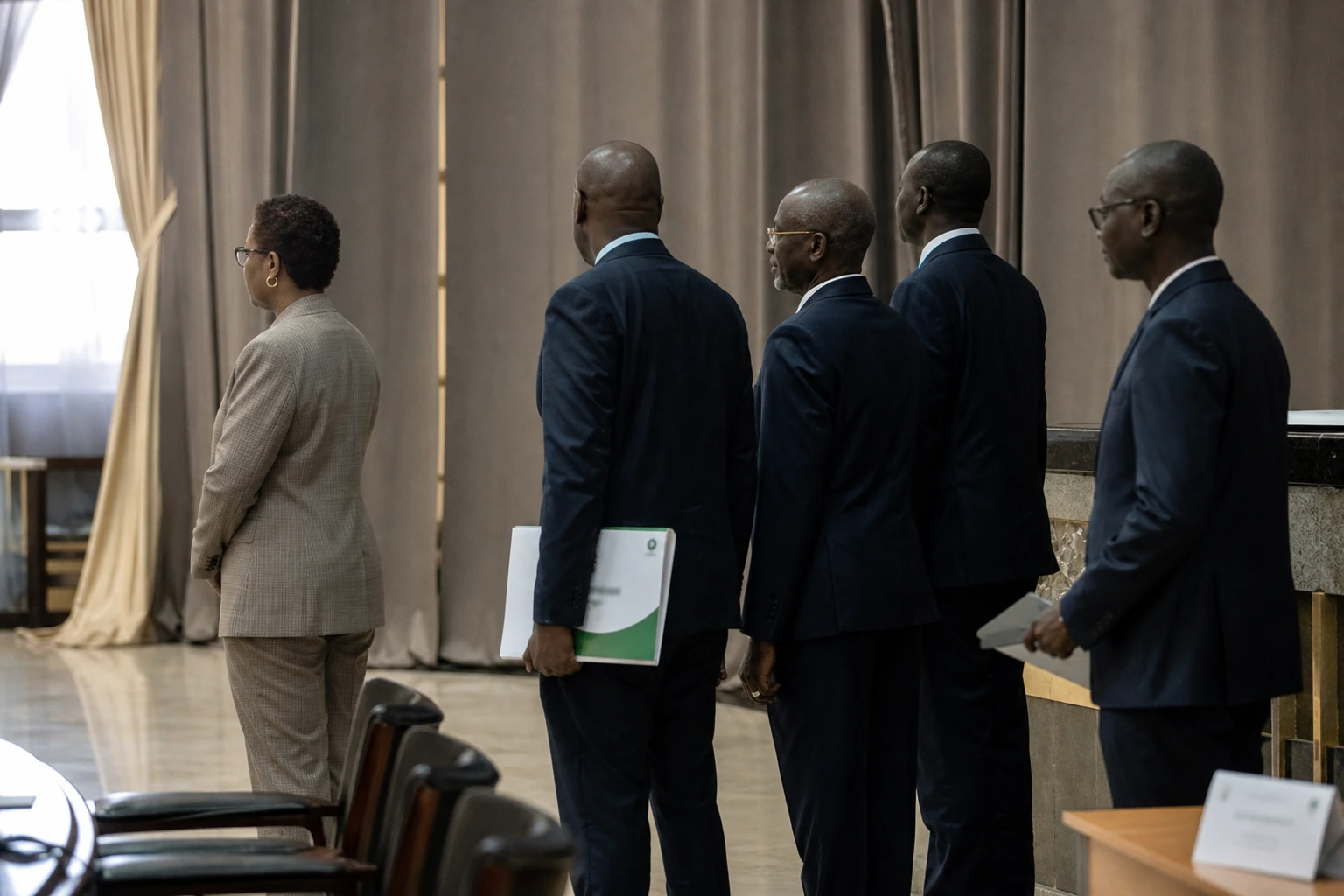
In Bamako, a trial that goes beyond one journalist’s case
In Mali, a sentence spoken in front of journalists can now end up before a judge. That is the message of the case of Chahana Takiou, editor-in-chief of the twice-weekly Le 22 Septembre, who is on trial in Bamako over remarks about the judicial handling of press offences. The case has taken on wider significance because, at its heart, it raises the question of where public criticism ends and a criminal offence begins.
Mali’s context gives the trial particular weight. Since the military transition, relations between the authorities, the justice system and the media have grown more strained, while the country has moved away from ECOWAS, the Economic Community of West African States, to join the Confederation of Sahel States alongside Burkina Faso and Niger. In this landscape, freedom of expression is no longer merely a legal issue. It also touches on how the state intends to control its public narrative.
What the Malian justice system accuses Chahana Takiou of
Chahana Takiou appeared on Monday 27 July before the specialised judicial division for combating cybercrime in Bamako, after being remanded in custody on 8 June 2026. He is charged in particular with “undermining the credibility of the state through the judicial institution”, after denouncing what he said was the abusive use of the cybercrime law against journalists at a media forum held in Bamako from 3 to 6 June.
According to several consistent reports, the prosecutor called for a one-year prison sentence, six months of it to be served, and the state’s legal team sought 2 million CFA francs in compensation. The verdict is due on Monday 3 August. In court, the journalist argued that his remarks were “not criticism but an observation”, citing the case of his colleague Youssouf Sissoko, who had already been convicted in a case relating to a press article handled under the cybercrime law.
The legal basis of the case is significant. Mali has a law, No. 2019-056, on the suppression of cybercrime, which remains in force and is regularly invoked in cases involving journalists. The Malian Ministry of Justice also describes the cybercrime division as one of the major components of its judicial reform. At the same time, press freedom organisations argue that this framework is too often used to treat conduct covered by press law as cybercrime.
A court case amid already heightened tensions
The Takiou case did not come out of nowhere. In March 2026, Youssouf Sissoko, editor-in-chief of L’Alternance, was sentenced to two years in prison by the same judicial unit after publishing a critical opinion piece about Niger’s head of state, according to RSF. In July 2025, journalist Alfousseini Togo had already received a suspended sentence and a fine for undermining the credibility of the state. The recurrence of such cases has reinforced the view among media professionals that the judicial system is taking a tougher line on critical writing.
The Malian press also operates in a more fragile material and security environment than elsewhere. RSF says insecurity in the north and centre of the country, attacks by armed groups, and administrative and financial pressures are weighing on newsrooms. In several areas outside Bamako, practising journalism already means navigating a power struggle with armed actors and local authorities, as well as deteriorating transport conditions.
Institutionally, the case also reveals tension within the state. On one hand, the justice system is seeking to assert its authority and defend its credibility. On the other, the profession sees these prosecutions as conflating protection of the institution with restrictions on public debate. The right to criticise a court ruling does not mean the right to insult. But criminalising a journalistic assessment raises another question: whether prosecutions are proportionate. This is where the Malian case becomes an issue of governance, not just the press.
Beyond the courtroom, a signal for the Sahel and West Africa
The case’s significance extends beyond Bamako. In the AES area, where transitional governments emphasise sovereignty, security and institutional discipline, the space given to critical journalism is a political test. The Malian authorities want to show that they are reforming and modernising the justice system. Media stakeholders, for their part, want to ensure that modernisation does not mean greater criminalisation of public speech.
At regional level, Mali remains under close scrutiny. Its withdrawal from ECOWAS has reshaped West African power balances, while the Confederation of Sahel States seeks to establish its own political and security framework. In this context, every case involving a journalist also serves as a barometer. It shows how far transitional governments will tolerate dissent, especially when it targets the justice system itself.
The verdict expected on 3 August will show whether the court opts for a strictly punitive interpretation or opens the way to a more nuanced one. But beyond that timetable, one question remains: in a Mali shaped by transition, security concerns and regional realignments, what place is left for a press that challenges institutions without being considered a threat?