Algeria
 Egypt
 Libya
 Morocco
 Sudan
 Tunisia
 Benin
 Burkina Faso
 Cabo Verde
 Côte d'Ivoire
 Ghana
 Guinea
 Guinea-Bissau
 Liberia
 Mauritania
 Niger
 Nigeria
 Senegal
 Sierra Leone
 The Gambia
 Togo
 Cameroon
 Central African Republic
 Chad
 DR Congo
 Equatorial Guinea
 Gabon
 Republic of the Congo
 São Tomé and Príncipe
 Burundi
 Comoros
 Djibouti
 Eritrea
 Ethiopia
 Kenya
 Madagascar
 Malawi
 Mauritius
 Mozambique
 Rwanda
 Seychelles
 Somalia
 South Sudan
 Tanzania
 Uganda
 Angola
 Botswana
 Eswatini
 Lesotho
 Namibia
 South Africa
 Zambia
 Zimbabwe
A voice message imitating a relative, a fake official email or a fabricated digital identity: artificial intelligence is making some forms of fraud more convincing and easier to scale up. In Bamako, the debate is now as much about detecting these threats as it is about Mali’s ability to build a coordinated response, without letting technology make decisions on its own.
Digital fraud on a new scale
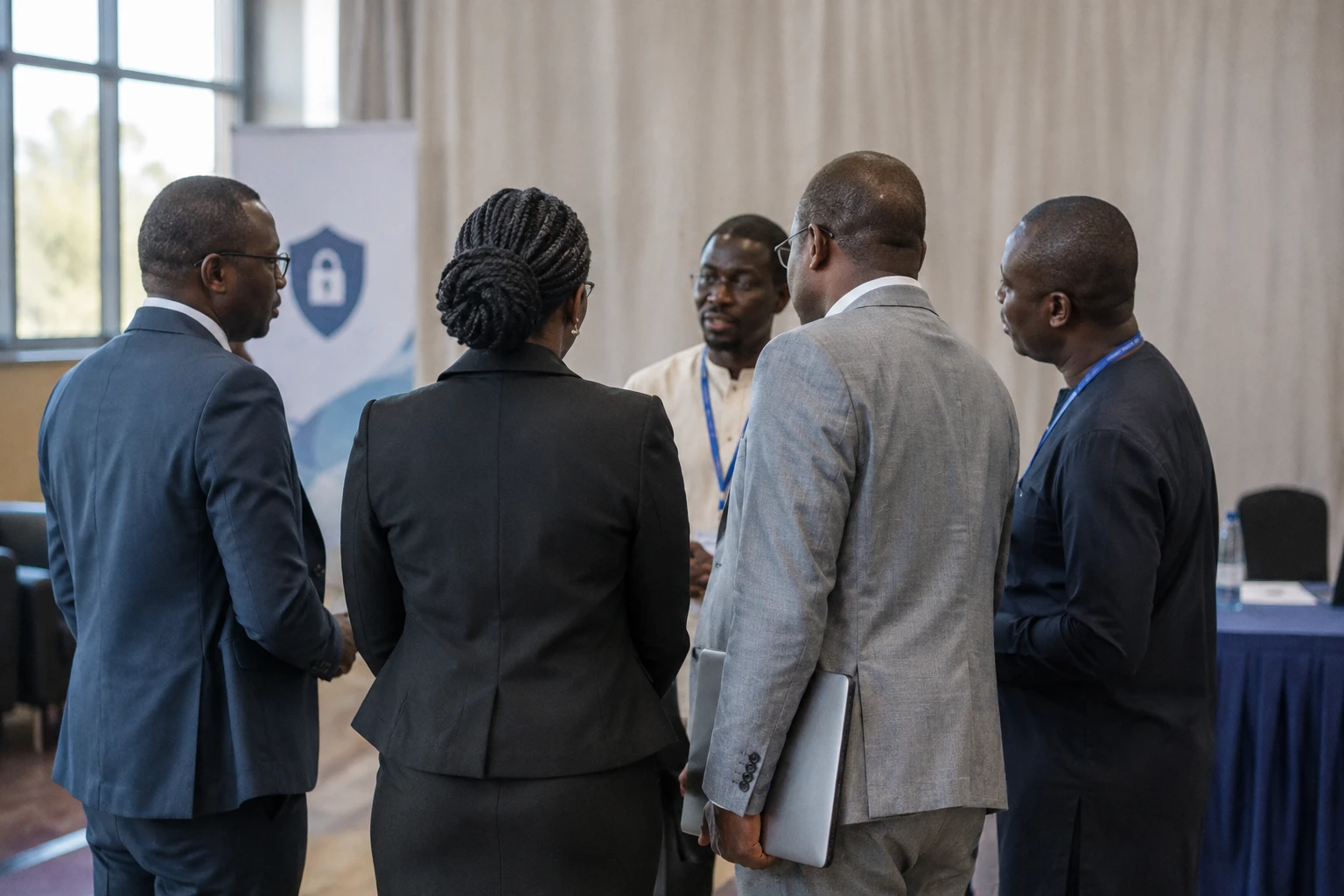
The fourth edition of the National Cybersecurity Days is taking place in Bamako from 26 to 30 October 2026. The official opening was held on Tuesday 27 October. Organised by the Malian Telecommunications, Information and Communication Technologies and Postal Services Regulatory Authority (AMRTP), the event brings together government departments, professionals, researchers and students to discuss AI and cyberspace security. The programme also addresses digital sovereignty and ways to strengthen local expertise.
At the opening, AMRTP president Saïdou Pona Sankaré warned that generative AI and machine-learning tools can automate and personalise attacks. This development makes investigators’ work more difficult: a phishing message — a fake communication designed to obtain login details or money — can be written in more convincing language and distributed on a large scale.
Judicial data indicate the workload already facing Malian services. In 2025, the National Cybercrime Unit recorded 1,338 cases, including 1,130 complaints and 208 cases opened on the prosecutor’s own initiative. Malian media have also reported that 834 cases remained under investigation. These figures count cases, not unique victims, and do not specify how many involved AI.
At continental level, INTERPOL estimates that artificial intelligence is involved in 55% of cyber offences reported by the 36 African countries covered by its 2026 survey. The figure reflects reports collected by the organisation; it is not an established prevalence rate for every country, nor a statistic specific to Mali. The report cites, in particular, AI-generated fraudulent messages, synthetic identities and deepfakes — artificially fabricated images, videos or voices.
A national strategy to put into practice
For victims, the consequences can be immediate: loss of money, account takeover or exposure of personal data. Businesses and government departments are also at risk, as their systems may be targeted by intrusions or fraud campaigns. Users of banking and mobile payment services are particularly exposed when criminals combine real and fabricated information to deceive identity checks.
AI can also be used to defend these same systems. Software can detect unusual logins, compare behaviour and help sort alerts. INTERPOL also recommends using machine learning to identify phishing campaigns and speed up the analysis of digital evidence. These tools do not replace investigators or judicial decisions: their alerts must be checked, and errors can affect innocent people.
Mali now has a national framework intended to provide an institutional response to these issues. On 25 February 2026, the government approved by decree the National Cybersecurity Strategy and its 2026–2030 action plan. In June, the authorities announced legislation establishing a National Information Systems Security Agency. The challenge will be to turn these announcements into resources, coordination between services and effective protection for essential infrastructure.
Implementation is not solely the responsibility of specialists. Government departments must secure their data and train their staff. Digital operators have a role in preventing and reporting incidents. For the public, simple verification steps — especially before transferring money or sharing a code — can help limit some forms of fraud. But individual vigilance cannot replace public services equipped with the skills, tools and clear rules they need.
Regional cooperation, an essential link
An attack can originate in one country, use servers in another and target a victim in Mali. Cooperation between states is therefore vital to preserve digital evidence and identify cross-border networks. ECOWAS, the Economic Community of West African States, has developed a regional framework for cybersecurity and the fight against cybercrime. Mali, a member of the Confederation of Sahel States alongside Burkina Faso and Niger, is also taking part in discussions on arrangements for cooperation with ECOWAS. The cross-border flow of digital threats makes the sharing of operational information particularly important.
In Bamako, the priority will be to measure the results of the 2026–2030 strategy: response times to incidents, staff training, the handling of complaints and the protection of public systems. The National Cybersecurity Days provide a forum for discussion, but their impact will depend on the decisions and budgets that follow. For Mali and its West African neighbours, the challenge is to harness defensive AI while keeping human oversight, transparency and users’ rights at the heart of the response.
Programme for the 2026 National Cybersecurity Days · AMRTP announcement on the opening of the JNC · INTERPOL’s 2026 assessment of cyber threats in Africa · 2025 review by the National Cybercrime Unit, as reported by the Malian press · Government information on the 2026–2030 national strategy · ECOWAS regional cybersecurity strategy