Algeria
 Egypt
 Libya
 Morocco
 Sudan
 Tunisia
 Benin
 Burkina Faso
 Cabo Verde
 Côte d'Ivoire
 Ghana
 Guinea
 Guinea-Bissau
 Liberia
 Mali
 Mauritania
 Niger
 Nigeria
 Senegal
 Sierra Leone
 The Gambia
 Togo
 Cameroon
 Central African Republic
 Chad
 DR Congo
 Equatorial Guinea
 Gabon
 Republic of the Congo
 São Tomé and Príncipe
 Burundi
 Comoros
 Djibouti
 Eritrea
 Ethiopia
 Kenya
 Madagascar
 Mauritius
 Mozambique
 Rwanda
 Seychelles
 Somalia
 South Sudan
 Tanzania
 Uganda
 Angola
 Botswana
 Eswatini
 Lesotho
 Namibia
 South Africa
 Zambia
 Zimbabwe
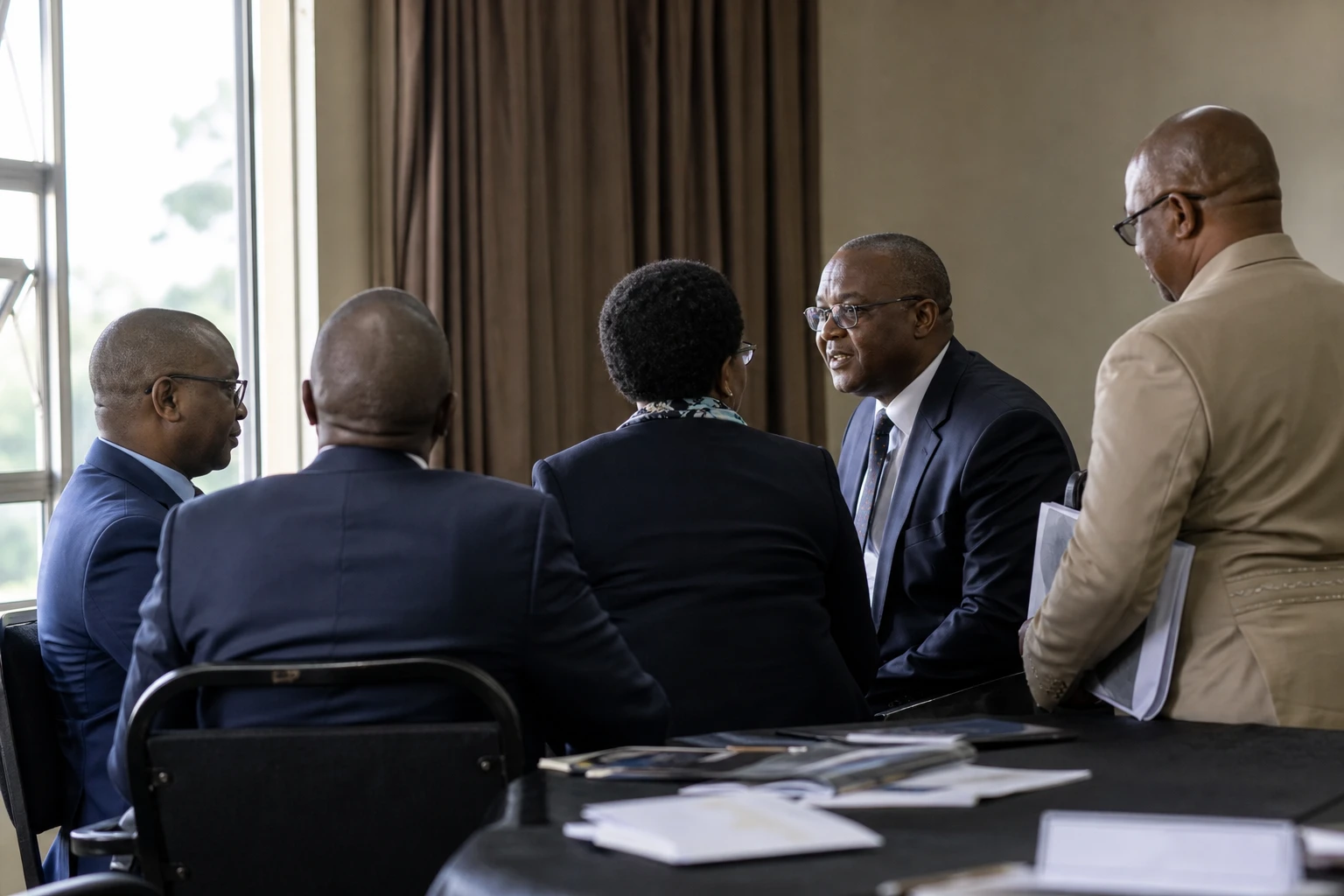
Malawi in a global industry no longer confined to mining
In Lilongwe, debate over mineral resources is no longer limited to extraction. It also concerns the role a country can play in processing and selling higher-value products. For Malawi, the choice is straightforward: export raw ore or join an industrial chain that leaves more value in the country.
This issue extends well beyond Balaka, in the south of the country, where Kangankunde is located. It also touches on the strategy of the Southern African Development Community, SADC, which has made mineral beneficiation and regional value chains a pillar of its industrialisation agenda. For several years, Malawi has been seeking a better balance between foreign investors, public revenues, local jobs and the development of industrial skills.
An agreement linking Balaka, Kazakhstan and France
On 3 September 2026, Lindian Resources announced that it had signed a technology and engineering services agreement with Carester, as well as a long-term offtake agreement to develop a rare earth oxide separation plant. The facility is intended to have a capacity of 8,000 tonnes a year and is being studied for Stepnogorsk, Kazakhstan. The Australian group also says the contract covers 70% of volumes for certain heavy rare earth products, with an offtake period of up to 20 years through extension options.
In this structure, Kangankunde remains the upstream source. The Malawian site is to supply monazite concentrate, an ore rich in rare earths. Lindian describes the project as one of its major assets in Malawi, with first production targeted for the fourth quarter of 2026. In its 2025 economic report, Malawi’s finance ministry confirms that the government has already granted Lindian a mining licence for Kangankunde and considers the project one of the country’s largest rare earth deposits.
The French dimension of the project lies in Caremag, the plant in Lacq, in south-western France. Carester describes the site as a future separation and recycling facility funded to the tune of €216 million, including €106 million committed by the French state and €110 million from Japanese partners. In time, the group aims to produce significant quantities of dysprosium and terbium oxides, two metals in high demand for permanent magnets.
Why rare earths matter so much
Rare earths are 17 metals used in strategic components. Neodymium, praseodymium, dysprosium and terbium, in particular, are used to make permanent magnets. These magnets are essential for electric vehicles, wind turbines, some electronic applications and defence uses. Value is therefore not created only at the point of extraction. It is concentrated above all in the separation and refining stages.
This is precisely where Europe wants to regain control. The European Critical Raw Materials Act sets clear benchmarks for 2030: 10% of annual needs for extraction, 40% for processing and 25% for recycling, with no more than 65% of annual needs coming from a single third country. For Brussels, dependence on a single source represents an industrial risk as well as a geopolitical one.
What this project means for Malawi
For Malawi, the immediate stakes are not only fiscal. They are also local. Mining revenues rarely benefit all areas equally. Administrative capitals, mining districts and rural areas do not receive the same returns. In Balaka, the promise of jobs, subcontracting and infrastructure is fuelling local expectations. But pressure on land, environmental questions and concerns over dust and mining roads remain tangible issues. Malawi’s EITI report notes that residents have raised health concerns about access to the site, while also pointing to ongoing consultations.
The Malawian government is seeking to capture more value locally. Its 2025 economic report says the country has also established new mining institutions, with a regulatory authority now operational and a state mining investment company expected to become fully active. The same document points to a clearer focus on local processing, following the adoption of a new mining legal framework in 2023. This shift gives the Kangankunde project political significance: the country no longer wants to be merely an extraction point on an investment map.
This strategy nevertheless hinges on a key factor: the real ability to turn ore into skilled jobs, local contracts and sustainable revenues. If the concentrate quickly leaves the country without a robust intermediate value chain, much of the added value will continue to be captured elsewhere. If, by contrast, the project is linked to local-content, training and procurement requirements, Malawi could establish a rare industrial segment in the region. This is where the example of Kangankunde becomes political in the fullest sense of the word.
Significance beyond Malawi
The project resonates far beyond Malawi. It illustrates a clear trend: mining investors are no longer looking only for deposits, but for complete industrial routes. Concentrate leaves an African country, separation takes place in Central Asia, and the final strategic value may accrue to Europe. This fragmented geography shows that mining sovereignty is now measured by control of the entire chain, not by the volume extracted.
It also highlights a regional reality. In SADC, states want to attract capital without remaining trapped in the simple export of raw materials. Like other countries in the region, Malawi is therefore seeking to move from being a supplier of what lies underground to becoming a processing player. This is the context in which Kangankunde should be watched in the months ahead: production starting in the fourth quarter of 2026, the Kazakh chain ramping up, and Caremag scheduled to begin operations from 2027.