Algeria
 Egypt
 Libya
 Morocco
 Sudan
 Tunisia
 Benin
 Burkina Faso
 Cabo Verde
 Côte d'Ivoire
 Ghana
 Guinea
 Guinea-Bissau
 Liberia
 Mali
 Mauritania
 Niger
 Nigeria
 Senegal
 Sierra Leone
 The Gambia
 Togo
 Cameroon
 Central African Republic
 Chad
 DR Congo
 Equatorial Guinea
 Gabon
 Republic of the Congo
 São Tomé and Príncipe
 Burundi
 Comoros
 Djibouti
 Eritrea
 Ethiopia
 Kenya
 Madagascar
 Mauritius
 Mozambique
 Rwanda
 Seychelles
 Somalia
 South Sudan
 Tanzania
 Uganda
 Angola
 Botswana
 Eswatini
 Lesotho
 Namibia
 South Africa
 Zambia
 Zimbabwe
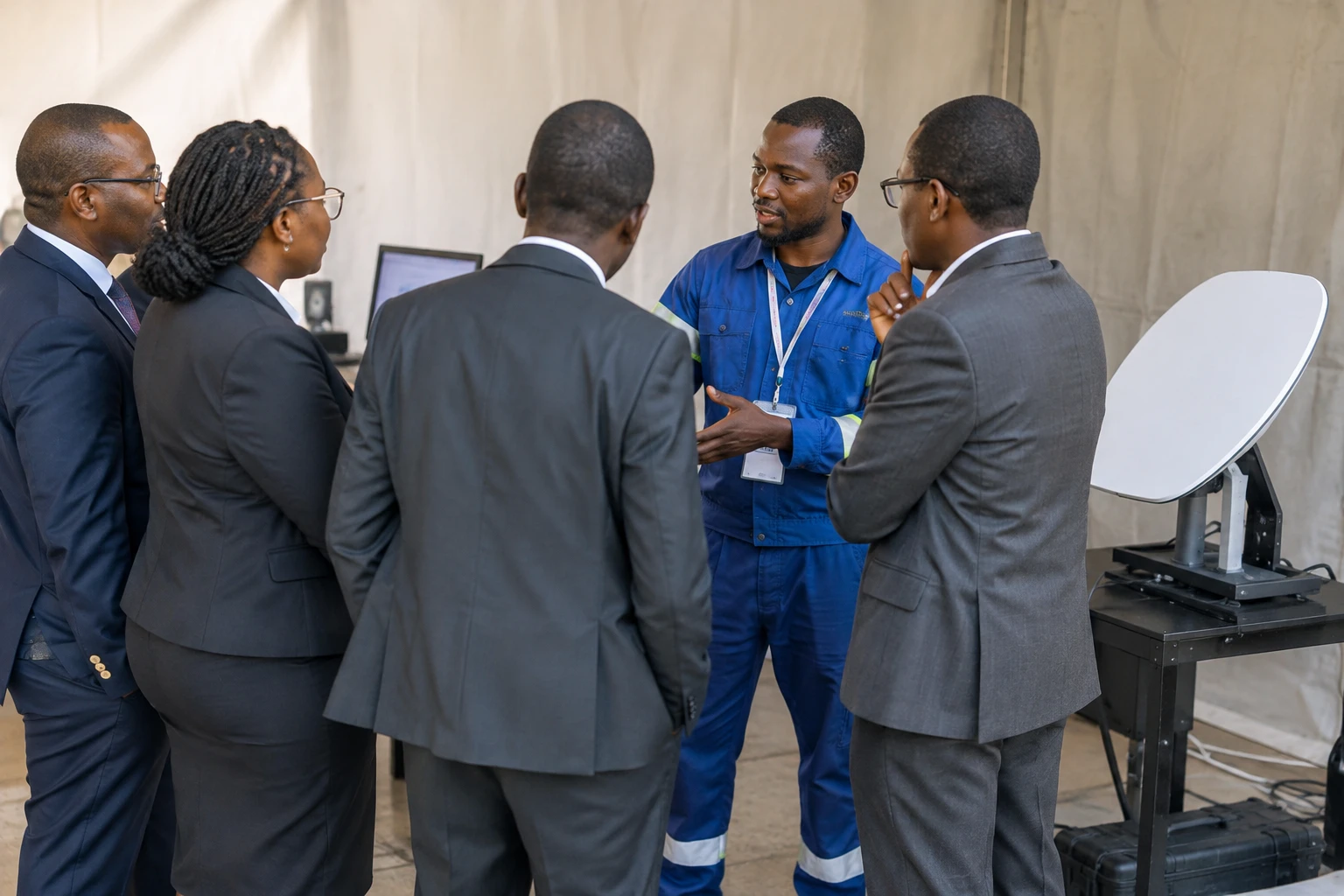
For a bank that needs to keep operating or a health centre far from major routes, a lost connection can quickly become a practical problem. In Malawi, the arrival of a new satellite provider is aimed at meeting these business needs. But it also highlights that network coverage alone does not ensure people can connect.
A market where coverage does not mean access
Malawi has expanded its mobile networks, but internet use remains far behind. A GSMA report, published in August 2026 by the global association of mobile operators, estimates that 4G covered 87% of the population in 2025. Around 80% of residents nevertheless lived in an area covered by mobile broadband without using mobile internet. The GSMA cites the cost of devices, digital skills and energy constraints among the barriers. The GSMA’s data on Malawi’s usage gap were also reported by Malawian media outlet Malawi24.
These figures mainly describe individuals’ access to mobile networks. They do not directly measure businesses’ demand for a satellite link. They nevertheless show that Malawi’s digital challenge is not simply a matter of installing more equipment: the cost of the service, electricity and the ability to use digital tools also matter.
The country is a member of the Southern African Development Community (SADC), which brings regional states together around economic and infrastructure co-operation. Cross-border connections and disparities between urban and rural areas are therefore regional issues too. SADC lists Malawi among its 16 member states.
Satellite service with local support
Paratus announced the launch of its operations in Malawi on Thursday 12 November 2026. Its subsidiary will initially offer Starlink solutions to businesses and organisations. The service includes equipment installation, technical support and local customer service. The group describes the launch as the sixteenth country in its sub-Saharan African network. The launch and services announced have also been reported by specialist outlet Developing Telecoms.
The target customer base is broad: banks, insurers, agricultural businesses, healthcare providers, non-governmental organisations, mining companies and government agencies. Installations are to be carried out with local technical partners. Paratus says it expects to activate services within 24 to 48 hours, depending on location and operational constraints. This is the company’s estimate, not an independent measure of service availability.
The service has two roles. In areas where terrestrial networks remain limited, a satellite link can provide connectivity to an institution or business. In Lilongwe, the capital, as well as Blantyre and Mzuzu, it can act as a backup in the event of a fibre or mobile network outage. For operations that rely on payments, digital records or remote communications, this redundancy can reduce interruptions. It does not, however, replace mobile networks and fibre, which remain essential to serving the population at scale.
A local distributor, an external satellite network
Paratus does not own the satellites used for this service. The group sells Starlink’s service and adds its own sales, installation and support capabilities. The two companies announced a distribution agreement in September 2023, with availability subject to operating licences being granted in each country. The distribution agreement between Paratus and Starlink sheds light on the model adopted in Malawi: international satellite infrastructure complemented by a local commercial presence.
This arrangement can make deployment easier for business customers, who have a local point of contact for installation and support. It also raises questions to monitor: the cost of equipment and subscriptions, actual service quality in different locations, and the national rules that apply to operators and terminals. The launch provides no detailed pricing or independent performance data. It is therefore not yet possible to assess how many businesses will be able to adopt the service.
The distinction between businesses and households matters. A bank or mining company may have an operational reason to pay for a dedicated link or backup network. For a household, connectivity being available in the area does not guarantee that a compatible device and subscription will be affordable. Expanding business services therefore does not, on its own, address the low level of mobile internet use identified by the GSMA.
A test for regional digital ambitions
The Malawian case illustrates a broader trend: operators are combining terrestrial networks and satellites to reach remote sites or strengthen service continuity. For SADC member states, the challenge is to benefit from these solutions while maintaining consistent rules on licensing, competition and user protection. The regional framework does not replace national regulation, but the cross-border movement of services and equipment makes co-ordination useful.
In the short term, tangible indicators will include the number of customers actually connected, prices, connection reliability and the ability of local partners to provide follow-up support beyond major urban centres. Commercial promises will also need to be distinguished from observed results. In Malawi, Paratus’s arrival broadens the connectivity options available to organisations. Its impact will nevertheless depend on whether technical coverage can be turned into an accessible, stable service suited to local needs.