Algeria
 Egypt
 Libya
 Morocco
 Sudan
 Tunisia
 Benin
 Burkina Faso
 Cabo Verde
 Côte d'Ivoire
 Ghana
 Guinea
 Guinea-Bissau
 Liberia
 Mali
 Mauritania
 Niger
 Nigeria
 Senegal
 Sierra Leone
 The Gambia
 Togo
 Cameroon
 Central African Republic
 Chad
 DR Congo
 Equatorial Guinea
 Gabon
 Republic of the Congo
 São Tomé and Príncipe
 Burundi
 Comoros
 Djibouti
 Eritrea
 Ethiopia
 Kenya
 Madagascar
 Mauritius
 Mozambique
 Rwanda
 Seychelles
 Somalia
 South Sudan
 Tanzania
 Uganda
 Angola
 Botswana
 Eswatini
 Lesotho
 Namibia
 South Africa
 Zambia
 Zimbabwe
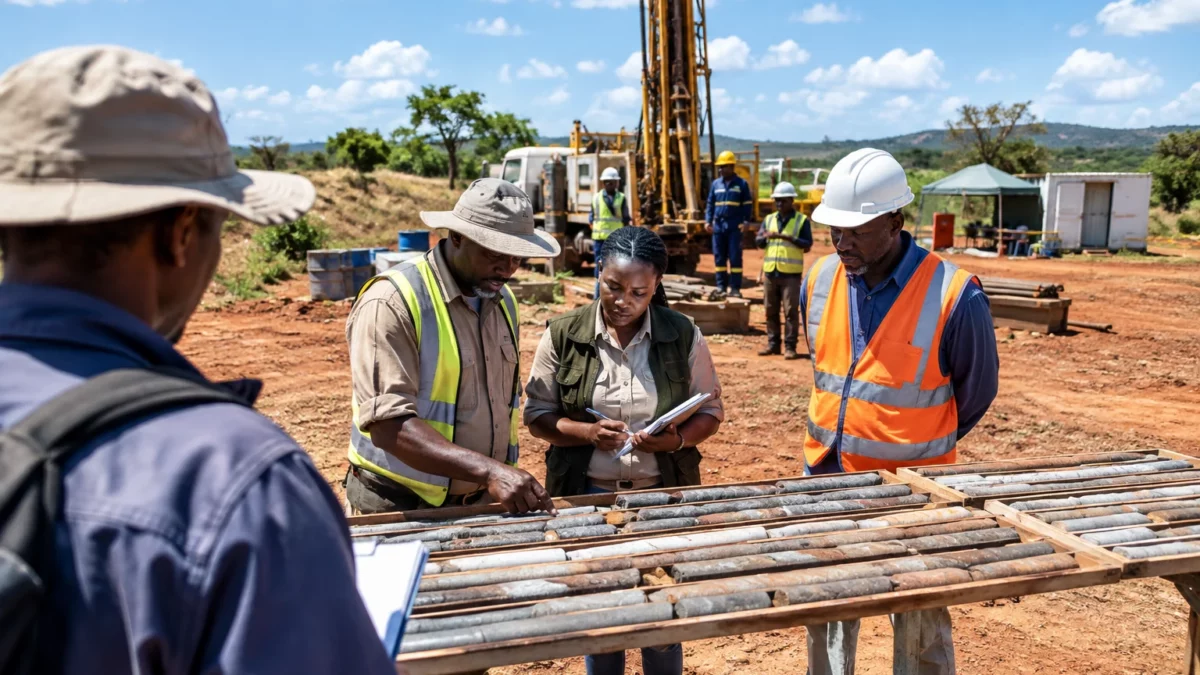
For Malawi, the mining challenge is not simply the size of its deposits. It also lies in the ability to process resources locally, create lasting benefits and protect affected communities. The Mkanda project, near Lilongwe, illustrates both the opportunities opened up by this strategy and the long path from a geological estimate to a profitable mine.
A deposit still at the exploration stage
On 16 November 2026, Australian company Fortuna Metals announced a new resource estimate for Mkanda, in central Malawi. It cites 292.5 million tonnes of so-called “inferred” resources containing rutile and graphite. The company has now added calculated quantities of monazite, a rare-earth-bearing mineral, and zircon.
These figures describe an estimated geological presence, not products that can already be recovered or sold. The “inferred” category represents a preliminary level of confidence: further work is needed before it can be shown that the deposit can be mined under technically and economically viable conditions. Fortuna says metallurgical tests will clarify the recovery and quality of the different minerals.
The company also says deeper drilling has encountered rutile beneath areas covered by the current estimate. This could lead to a revision of the deposit’s scope, but does not yet amount to an established additional resource. Fortuna is targeting a new estimate around mid-2027 and is preparing a pre-feasibility study, a stage intended to examine technical options, costs and markets.
A mining strategy for the country
Mkanda is part of a series of projects putting Malawi into discussions about supplies of minerals used by industry. About 20 kilometres away, Sovereign Metals’ Kasiya project also concerns rutile and graphite. Further south, Songwe Hill is targeting rare earths, while Lindian Resources is developing Kangankunde, where initial monazite concentrate production is scheduled for the fourth quarter of 2026.
These timelines and prospects should be treated with caution: they relate to different projects at different stages of development and, in some cases, are based on company announcements. They do not mean that Malawi already has an integrated supply chain capable of turning these minerals into finished industrial products.
The government has nevertheless expressed a desire to regulate the sector more effectively and retain more value in the country. In its 2026 economic and budget statement, the Ministry of Finance mentions stronger mining regulation, contract reviews and compliance with local-content, benefit-sharing and processing obligations. The debate is therefore as much about rules and industrial capacity as it is about underground resources.
Benefits to be measured beyond exports
For the state, new projects could increase public revenues and diversify an economy in which the mining sector remains underdeveloped. But the impact will depend on investments actually made, tax agreements, necessary infrastructure, and the share of jobs and procurement going to Malawian businesses. Benefits are not automatic: they must be negotiated and monitored over time.
For residents of the affected areas, the practical questions are different: access to land, water, roads and jobs, compensation, and environmental monitoring. Study and permitting work must assess these effects before any mining begins. Expected benefits at national level do not remove the need to document local consequences, particularly for households that depend directly on land and water resources.
Geography also matters. Malawi is landlocked: transporting minerals to ports depends on regional transport corridors, including routes through neighbouring countries. The cost and reliability of these links will affect the projects’ competitiveness. Local processing could retain more value, but in turn requires energy, skills, equipment and commercial markets.
A regional economic sovereignty challenge
Malawi is a member of the Southern African Development Community (SADC), a regional bloc of 16 states that aims, among other things, to promote economic integration. Developing its resources is therefore part of shared challenges: cross-border infrastructure, standards, investment and competition to attract processing facilities. National strategies will also have to contend with global markets and their demands for mineral origin and traceability.
The next milestone for Mkanda will be less about adding new minerals to an estimate than about the strength of the evidence: test results, improved resource classification, an economic study, and environmental and social assessments. The revision announced for 2027 will help determine whether the project is moving towards possible exploitation. Until then, the figures published by Fortuna remain those of a preliminary resource attributed to the company, not proof of a future mine.
Background sources: Fortuna Metals’ Malawi project overview, Malawi’s 2026 economic and budget statement and Malawi’s SADC profile.