Algeria
 Egypt
 Libya
 Morocco
 Sudan
 Tunisia
 Benin
 Burkina Faso
 Cabo Verde
 Côte d'Ivoire
 Ghana
 Guinea
 Guinea-Bissau
 Liberia
 Mali
 Mauritania
 Niger
 Nigeria
 Senegal
 Sierra Leone
 The Gambia
 Togo
 Cameroon
 Central African Republic
 Chad
 Equatorial Guinea
 Gabon
 Republic of the Congo
 São Tomé and Príncipe
 Burundi
 Comoros
 Djibouti
 Eritrea
 Ethiopia
 Kenya
 Madagascar
 Malawi
 Mauritius
 Mozambique
 Rwanda
 Seychelles
 Somalia
 South Sudan
 Tanzania
 Uganda
 Angola
 Botswana
 Eswatini
 Lesotho
 Namibia
 South Africa
 Zambia
 Zimbabwe
An African, then European, journey that says much about Congolese rugby
In professional rugby, careers that begin in Kinshasa remain rare. Yet they often say something broader than the fate of one player alone: the movement of African talent, the place of diasporas and the indirect routes that lead to the highest level. Madosh Tambwe, a winger born in Kinshasa who now plays in the Top 14, fits precisely into this geography. His story links the Congolese capital, Johannesburg and the French elite.
This journey also makes sense in a wider landscape. The Democratic Republic of Congo is part of Rugby Africa, the continent’s regional association recognised by World Rugby, and World Rugby now counts DR Congo among its associate member unions. That is not enough to build a strong development pathway, but it places the country within the continental rugby ecosystem.
From Kinshasa to the Top 14, a rise built away from the spotlight
Born on 12 May 1997 in Kinshasa, Tambwe was trained in South Africa before attracting attention with the Johannesburg Lions in Super Rugby. The tournament’s official archives still record his name in its historical records, with a hat-trick scored in 13 minutes against the Stormers on 7 April 2018, one of the fastest in the competition.
His time in South African rugby gave him a rare foundation: speed, game reading and the ability to adapt to opponents from very different backgrounds. He then continued his career in France, first at Bordeaux-Bègles, where he scored in his first match against Toulouse, and then in the south-west, at Bayonne. The Top 14, a long and demanding league, imposes a different rhythm, with winter conditions and unrelenting intensity over nearly ten months.
His move to Aviron Bayonnais was confirmed in the Top 14 arrivals list for the 2026-2027 season, marking a new stage in his career in the Basque Country. In recent team sheets, he is already appearing as a key figure in Bayonne’s attack.
The Congo in his heritage, discipline in his game
Tambwe says he did not grow up with a strong rugby role model in the Democratic Republic of Congo. He does, however, strongly identify with his Congolese family heritage. His father passed on the cuisine, music and fashion, but above all a way of moving forward with humility and resilience. This Congolese side of him is not folkloric. It shapes his approach to effort, patience and consistency.
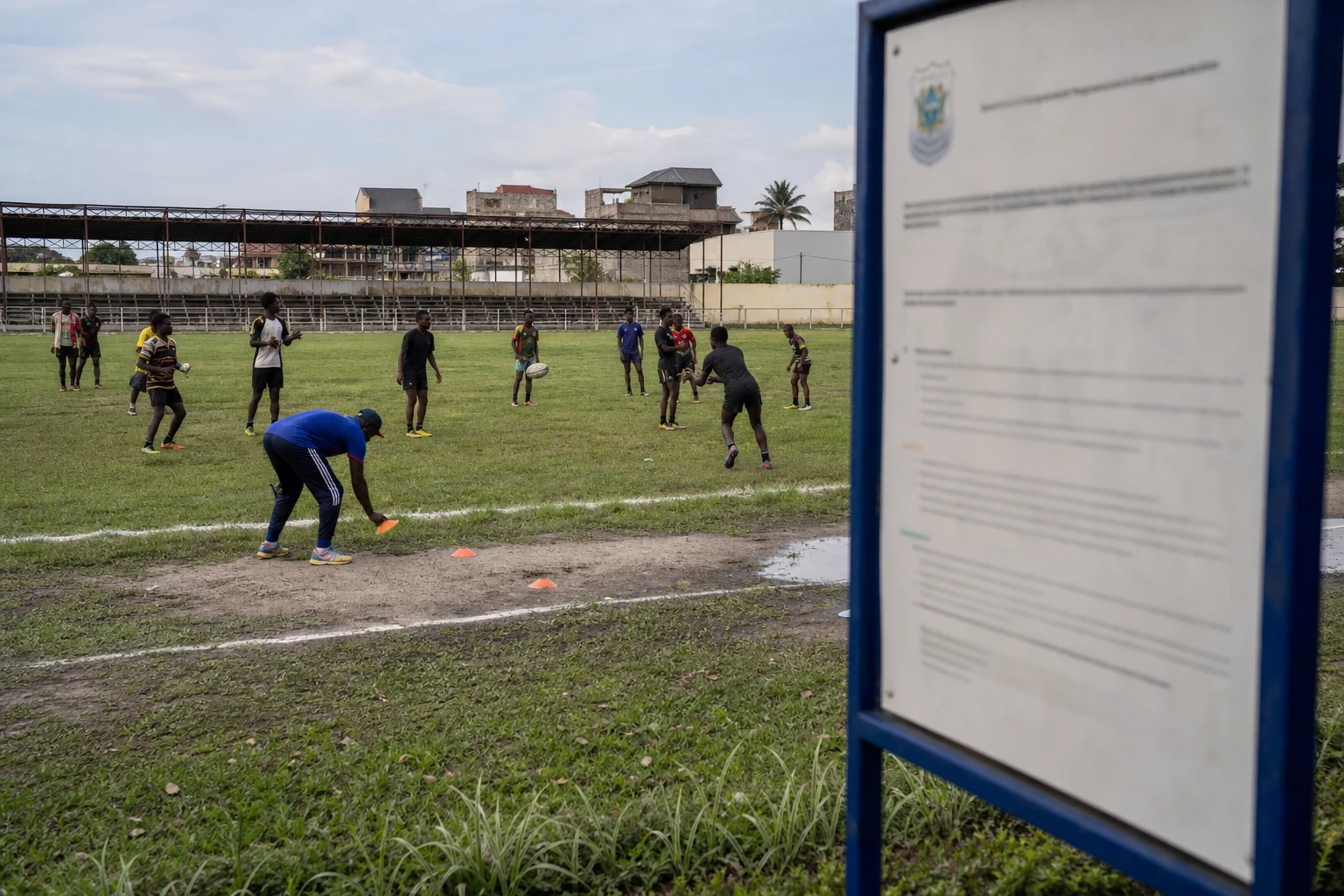
This matters because Congolese rugby remains little known internationally. The country is present in Rugby Africa and in the World Rugby sphere, but it does not yet have exposure comparable to that of the continent’s major rugby nations, led by South Africa. For DR Congo, the issue goes beyond prestige: it concerns access to facilities, youth training and the ability to develop sustainable careers.
In this respect, Tambwe’s message to Congolese young people resonates beyond sport. He speaks of hard work, endurance and confidence. In a country where many sports still operate with limited resources, this kind of success shows that a player trained abroad can remain a useful role model for young people in Kinshasa and for the Congolese diaspora in Europe. It is also a reminder that African sporting identity is not limited to the most visible national teams.
A career already making its mark, but with questions still open
Beyond the statistics, Tambwe has already left his mark. His Super Rugby records, consistency in France and impact in several major matches have built a reputation as a winger capable of changing the course of a game with a few plays. Top 14 official data now list him as a Bayonne player, with substantial playing time already this season, proof that he is more than a short-term signing.
The question of national selection remains unresolved. Tambwe says he does not control the coach’s decision and that his only lever is performance. In African rugby, this situation is common: diaspora careers often feed into national teams, but they also depend on administrative frameworks, schedules and federations’ ability to retain or persuade their players.
For the Democratic Republic of Congo, the stakes are broader than one individual case. Every player visible at the highest European level becomes a symbolic point of support. He is a reminder that a pathway exists, even if fragmented, between Central Africa and the major leagues. He also highlights the structural shortcomings in scouting and training networks. In the region, South Africa remains the dominant benchmark, but rugby is slowly spreading in West, East and Central Africa.
At continental level, Tambwe’s story therefore raises the same question as elsewhere in African sport: how can individual successes be turned into local pathways? How can we ensure that talent does not have to leave its environment too early to make its mark? The answer lies in training, clubs, federations and stable career paths. That is where Tambwe’s case goes beyond a simple player profile. It becomes a useful signal for thinking about a more structured, visible African rugby landscape, better connected to its national foundations.