Algeria
 Egypt
 Libya
 Morocco
 Sudan
 Tunisia
 Benin
 Burkina Faso
 Cabo Verde
 Côte d'Ivoire
 Ghana
 Guinea
 Guinea-Bissau
 Liberia
 Mali
 Mauritania
 Niger
 Nigeria
 Senegal
 Sierra Leone
 The Gambia
 Togo
 Cameroon
 Central African Republic
 Chad
 DR Congo
 Equatorial Guinea
 Gabon
 Republic of the Congo
 São Tomé and Príncipe
 Burundi
 Comoros
 Djibouti
 Eritrea
 Ethiopia
 Kenya
 Malawi
 Mauritius
 Mozambique
 Rwanda
 Seychelles
 Somalia
 South Sudan
 Tanzania
 Uganda
 Angola
 Botswana
 Eswatini
 Lesotho
 Namibia
 South Africa
 Zambia
 Zimbabwe
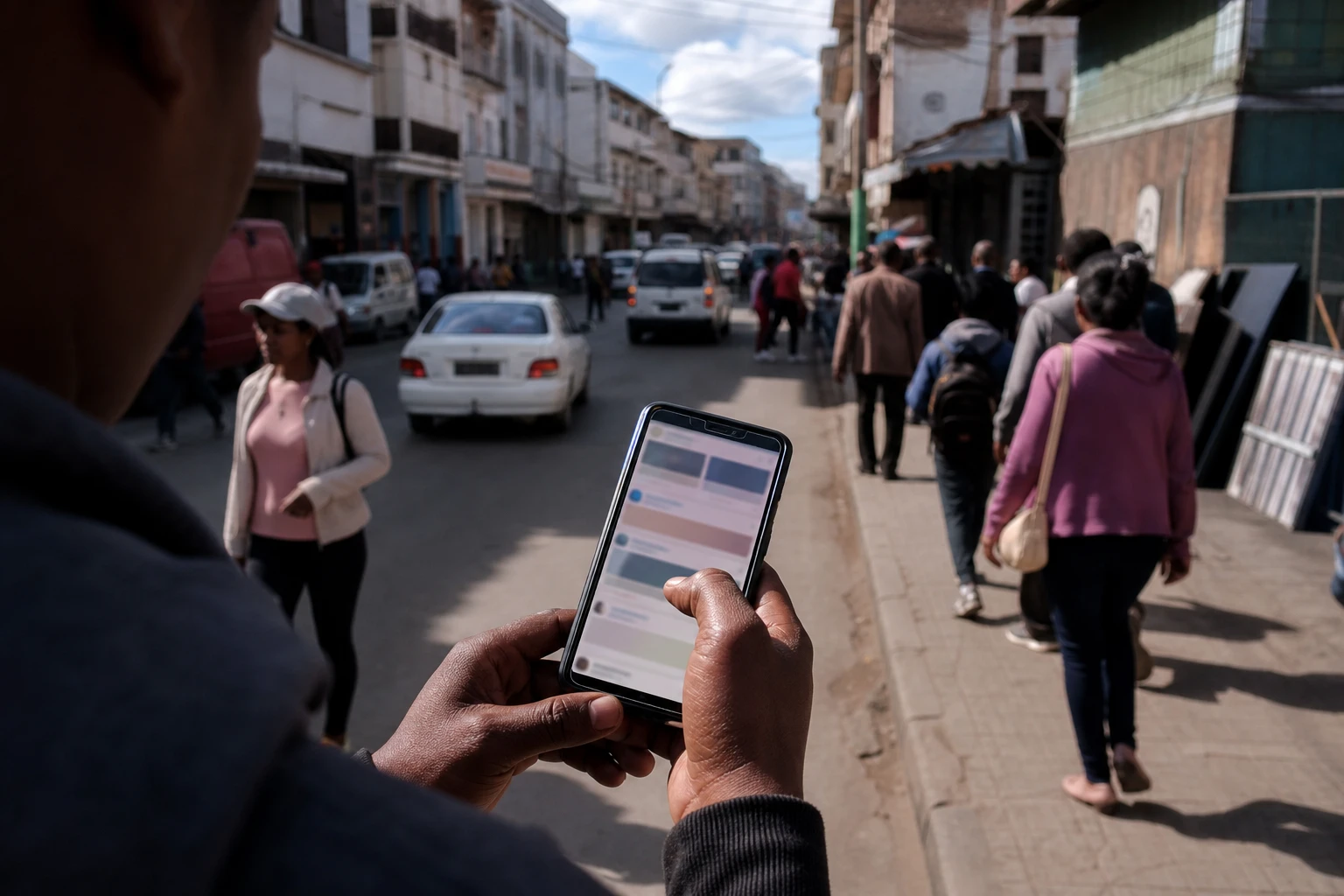
In Antananarivo, protests sparked by a water or power cut quickly moved beyond the issue of public services. They opened a crisis of power. A year after demonstrations began on 25 September 2025, young Malagasy people have secured Andry Rajoelina’s departure, but not yet the political break they demanded.
Social anger becomes a national crisis
The movement began with a very concrete problem. In several districts of the capital, residents were experiencing repeated interruptions to water and electricity supplies. The cuts made daily life harder for households, disrupted businesses and undermined essential services.
On 25 September 2025, thousands of people demonstrated in Antananarivo, despite the authorities’ ban. The Gen Z Madagascar collective, organised largely on social media, brought national visibility to the mobilisation. Rallies were also reported in other cities, including Antsirabe.
However, the protests were not only about infrastructure. They expressed broader distrust of governance, alleged corruption, unequal access to opportunities and weak institutions. The initial demonstrations thus evolved into a demand for political change.
Reported death tolls varied according to the source and the point in the crisis. Media outlets reported several deaths in the first days, while the United Nations later cited a higher figure. These numbers should remain attributed until an independent and comprehensive investigation has established responsibility. Early accounts of the September protests reported at least five deaths.
Andry Rajoelina’s fall has not resolved the crisis
Street pressure ultimately brought down President Andry Rajoelina. After several weeks of mobilisation, an elite military unit, CAPSAT, refused to support the government. The head of state left Madagascar on 12 October 2025, before being removed from office by the National Assembly two days later.
Colonel Michaël Randrianirina then announced that the military was taking control of the country. Some demonstrators welcomed the move, seeing it as a way to remove a president who had become deeply unpopular. But it turned a citizen uprising into a military-led transition.
Andry Rajoelina’s political trajectory makes this episode particularly sensitive. He had already come to power in 2009, amid a political crisis backed by the military. His departure in 2025 therefore recalls a precedent that has never been fully overcome: in Madagascar, popular protests can bring down a leader, but the military retains a central role in political succession.
The African Union called for a swift return to constitutional order and the establishment of a civilian transition. The Southern African Development Community, or SADC, which includes Madagascar and several countries in southern Africa, also called for inclusive national dialogue and preparations for credible elections.
Expectations remain focused on daily life
For residents, a change of leaders is not enough. Regular access to water and electricity remains the key issue. These services underpin the work of schools, health centres, businesses and small shops.
The consequences are unevenly distributed. Households with the means can buy generators, store water or turn to private services. Low-income families, market traders, artisans and small businesses bear the direct cost of the interruptions.
The divide is also geographical. Antananarivo is home to the institutions, media and part of the country’s economic activity. In the regions, difficulties accessing public services are often more longstanding and less visible. A transition limited to the capital would therefore risk leaving the root causes of the anger untouched.
Demonstrators also called for greater transparency and justice. Victims of violence during the rallies are waiting for credible investigations. Without clarity about who was responsible, the promise of a new beginning risks remaining a political slogan.
Freedom of expression is another test. The 2025 movement relied on social media to bypass traditional political structures. This ability to organise strengthened the mobilisation, but also exposes activists to surveillance, disinformation campaigns and legal pressure.
A mobilised youth, but shut out of decision-making
The generation that took to the streets helped shift the balance of power. It put issues long relegated to the background on the agenda: the quality of public services, leaders’ accountability and the need for political renewal.
Yet young people do not control the institutions that emerged from the crisis. Real power remains concentrated around the military apparatus and experienced political figures. This situation fuels a sense that the movement has been co-opted: the streets triggered the rupture, while others reaped the benefits.
The risk lies not only in the return of an old system. It also stems from the movement’s lack of clear representation. The mobilisation was broad but loosely organised. It brought together students, workers, entrepreneurs, civil society activists and citizens with no political affiliation. This diversity was its strength in the streets. It now makes it harder to negotiate a common programme.
The election timetable will be the decisive test
In 2026, the transition led by Colonel Michaël Randrianirina remains at the centre of discussions with SADC and the African Union. At its summit on 17 August, SADC called on Madagascar to continue a reform process led by Malagasy stakeholders, with a return to constitutional normality.
The transition authorities have announced a 24-month process of renewal. The timetable presented provides for a review of the institutional framework, reform of electoral governance and elections in 2027. Adherence to these deadlines will be crucial in assessing whether change is real.
SADC has already sent several mediation missions to Antananarivo. It is calling for open national dialogue, the participation of political forces and the peaceful return of exiles. The stakes extend beyond Madagascar: they concern the ability of African organisations to support a transition born of popular mobilisation without permanently legitimising a military seizure of power.
A year after 25 September 2025, the mobilised generation has therefore not been silenced. It has shown that a social demand can reshape the national agenda. But its success will remain incomplete as long as water and electricity are not reliably accessible, violence is not investigated and citizens cannot freely choose their leaders.
In Madagascar, the next stage will not be played out only in the transition’s offices. It will be measured in the districts of Antananarivo, in the regions and at the ballot box. That is where the promise of change held out by the 2025 mobilisation will be tested.