Algeria
 Egypt
 Libya
 Morocco
 Sudan
 Tunisia
 Benin
 Burkina Faso
 Cabo Verde
 Côte d'Ivoire
 Ghana
 Guinea
 Guinea-Bissau
 Liberia
 Mali
 Mauritania
 Niger
 Nigeria
 Senegal
 Sierra Leone
 The Gambia
 Togo
 Cameroon
 Central African Republic
 Chad
 DR Congo
 Equatorial Guinea
 Gabon
 Republic of the Congo
 São Tomé and Príncipe
 Burundi
 Comoros
 Djibouti
 Eritrea
 Ethiopia
 Kenya
 Malawi
 Mauritius
 Mozambique
 Rwanda
 Seychelles
 Somalia
 South Sudan
 Tanzania
 Uganda
 Angola
 Botswana
 Eswatini
 Lesotho
 Namibia
 South Africa
 Zambia
 Zimbabwe

In Antananarivo, a conviction does little to close a crisis that remains raw
In Madagascar, a protest that began in the streets has ended up in court. A year after major youth demonstrations in Antananarivo, the Malagasy justice system has handed down a sentence against a leading political figure: former Senate president General Richard Ravalomanana has been sentenced to 10 years of hard labour. The decision concerns more than one man. It also raises questions about how the state responded to demonstrations in September and October 2025, sparked by water and electricity cuts and later expanding into a broader challenge to the government.
The case unfolds against an already strained political backdrop. Madagascar is a member of SADC, the Southern African Development Community, and the African Union. Both regional frameworks emphasise the need for institutional stability, dialogue and respect for fundamental rights. In August 2025, SADC even held its summit in Antananarivo, a sign that the Malagasy capital remained central to the region’s diplomatic balance. Weeks later, the streets of Madagascar became the setting for a more acute crisis.
What the Malagasy court decided
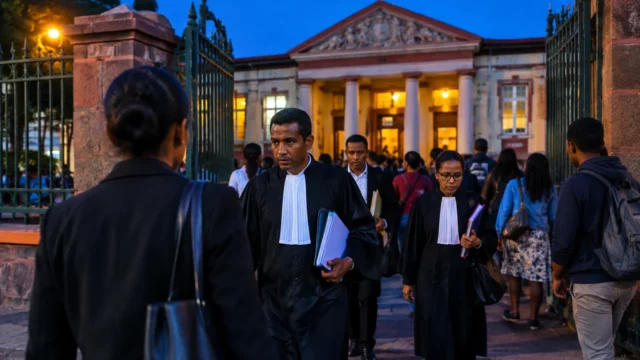
According to local media, the ordinary criminal court in Anosy, Antananarivo, sentenced Richard Ravalomanana to 10 years of hard labour on 1 September 2026. The former Senate president was charged with complicity in murder and intentional assault in connection with the crackdown on the September 2025 demonstrations. A third charge, relating to threats dating back to 2019, was not upheld because it was time-barred. His lawyer said he would appeal.
The conviction carries considerable symbolic weight. Richard Ravalomanana was no junior official. He held a major institutional position at the heart of the state’s architecture. The Malagasy Senate had, in fact, formally removed him from office in October 2025, after the first political tremors linked to the Gen Z movement. The court has therefore ruled against a figure who, until recently, embodied the continuity of the political establishment.
But the case’s context extends well beyond Ravalomanana himself. From 25 September 2025, protests by young Malagasy people spread across Antananarivo and then to several other cities. Demonstrators initially denounced water and electricity cuts. They later broadened their demands to include governance, corruption and the role of institutions. AFP reported that at least 22 people had been killed and dozens injured during the unrest, according to figures cited by the UN.
A court case, but also a question of political accountability
The verdict touches on a sensitive issue: the chain of command. In times of crisis, the question is not only who took to the streets. It is also necessary to establish who gave orders, who tolerated excesses and who allowed violence to take hold. In this case, the Malagasy justice system appears to have found responsibility linked to the use of force against demonstrators. This is precisely what makes the ruling historic in Madagascar, where prosecutions of leaders of this rank remain rare.
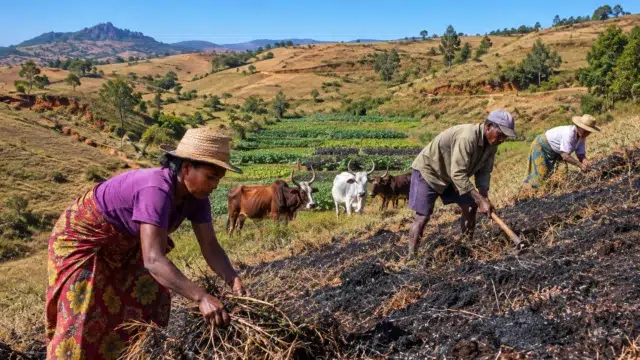
For the urban population, especially young people, the stakes are tangible. The 2025 protests were not about an abstract institutional issue. They expressed everyday exhaustion with failing services, shortages and a sense of impunity. Antananarivo residents experienced the crisis in the streets and neighbourhoods, amid roadblocks, dispersals and arrests. In rural areas, which are often less visible, the issue also speaks to unequal access to public services and the promise of a state able to meet its commitments beyond the capital.
Politically, Richard Ravalomanana’s conviction sends a message to Madagascar’s entire elite. It says that the handling of the 2025 unrest will not simply fade with time. It will remain in court records, in activists’ memories and in the calculations of political parties. It also serves as a reminder that institutions in Madagascar are regularly tested by cycles of tension: disputed elections, street protests, military or security interventions, followed by attempts to restore calm. The country has experienced similar episodes in 2009 and during other periods of political fragility.
Regional repercussions for SADC and the African Union
Regionally, the case reaches beyond Madagascar. SADC has made peace, security and economic integration among its pillars. At its August 2026 summit, the organisation again called on Malagasy actors to remain calm and engage in dialogue. This position shows that the crisis is not only a domestic matter: it also affects the credibility of a regional bloc seeking to promote institutional stability and development.
At African Union level, the case of Madagascar highlights a recurring tension across the continent: how to maintain public order without normalising repression, and how to punish possible abuses without turning the courts into a political tool. The answer matters to every country where young people are organising more actively, public services are deteriorating and institutions are struggling to absorb dissent. Madagascar is part of a wider group of African societies where the streets, courts and regional forums are all becoming arenas for managing conflict.
What is now at stake in Antananarivo is not simply the carrying out of a sentence. It is Madagascar’s ability to close a period of crisis without deepening the divide between those in power, young protesters and the security forces. What happens next will depend on appeals, the stance of institutions and how the state addresses the root causes of social anger: essential services, public trust and decision-makers’ accountability.