Algeria
 Egypt
 Libya
 Morocco
 Sudan
 Tunisia
 Benin
 Burkina Faso
 Cabo Verde
 Côte d'Ivoire
 Ghana
 Guinea
 Guinea-Bissau
 Liberia
 Mali
 Mauritania
 Niger
 Nigeria
 Senegal
 Sierra Leone
 The Gambia
 Togo
 Cameroon
 Central African Republic
 Chad
 DR Congo
 Equatorial Guinea
 Gabon
 Republic of the Congo
 São Tomé and Príncipe
 Burundi
 Comoros
 Djibouti
 Eritrea
 Ethiopia
 Kenya
 Malawi
 Mauritius
 Mozambique
 Rwanda
 Seychelles
 Somalia
 South Sudan
 Tanzania
 Uganda
 Angola
 Botswana
 Eswatini
 Lesotho
 Namibia
 South Africa
 Zambia
 Zimbabwe
When forests burn, the state is tested by the speed of the flames
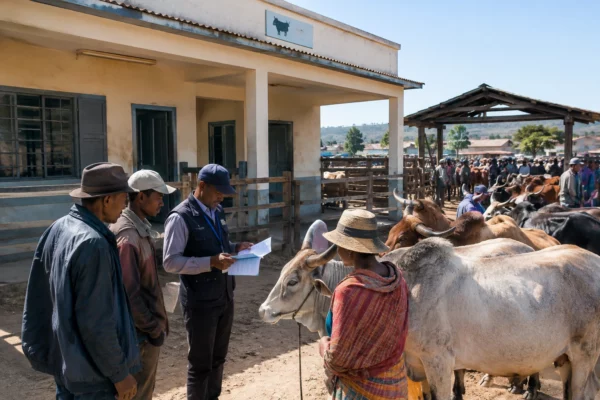
In Madagascar, fires do more than destroy hectares. They weaken villages, complicate life for neighbouring communities and put an already strained rural economy under pressure. In a country where forests are an ecological heritage, a resource for survival and an issue of sovereignty, every fire is a political test. The reminder is stark: protecting nature is not a matter of appearances, but of public order, justice and everyday security.
The issue extends beyond the borders of the Great Island. Madagascar belongs to SADC, the Southern African Development Community, which has made sustainable forest management and the fight against uncontrolled fires a regional priority. In Antananarivo, the African Union and the United Nations also maintain political and institutional oversight of the country, a sign that environmental issues there are now intertwined with governance, social cohesion and development.
A joint letter denounces fires and impunity
In early September, 90 Malagasy environmental organisations sent a letter to the transitional authorities calling for a tougher public response to forest fires and trafficking in natural resources. Their warning concerns several illicit or semi-licit trades: timber, minerals and tortoises, networks that thrive where administrative oversight is weak and sanctions appear inconsistent. The coalition did not target only the executive. It also challenged the judiciary, accusing it of insufficient resolve in environmental crimes.
This protest comes at a sensitive time for Madagascar. In August, tensions were again reported around the Makira protected area in the north-east of the country. An incident reported by specialist media showed how a local confrontation can escalate into reprisals against conservation organisations and communities involved in protecting the forest. The case highlights a central point: without judicial security and a state presence in remote areas, biodiversity protection often rests on volunteers, wardens and grassroots communities exposed to very high risks.
Makira, Ankeniheny-Zahamena and the fault lines of a vast territory
Makira is not just a name on a map. This protected area in the north-east is part of a major forest complex, at the heart of a region where land pressures, illegal exploitation and the movement of precious timber have intersected for years. Further south-east, the Ankeniheny-Zahamena forest corridor is also a crucial ecological passage. Environmental studies linked to infrastructure projects note that the planned route between Antananarivo and Toamasina crosses or borders particularly sensitive areas, prompting vigilance from NGOs and residents.
The debate over the planned motorway linking Antananarivo to Toamasina, the country’s main port, has crystallised these concerns. The signatory organisations are calling for the final route to be published, fearing further fragmentation of natural habitats and increased pressure on protected areas. The issue is as political as it is ecological: for the state, the project promises improved movement of goods and people; for residents and environmental defenders, the lack of transparency fuels mistrust and raises fears of irreversible damage.
Bush fires, shifting agriculture and weak sanctions
Fires in Madagascar do not have a single cause. They are linked to clearing land for fields, the search for new pasture, charcoal production, logging and the use of fire in agriculture. Global Forest Watch data indicate that the island lost 5.4 million hectares of tree cover between 2001 and 2025, or 32% of its 2000 tree cover. Earlier research also shows that in 1950 the country had about 7.6 million hectares of forest, compared with just 3.8 million in 1985. In other words, the trend is longstanding, but it continues.
In this context, sanctions are crucial. The NGOs are demanding more than speeches. They are calling for visible prosecutions, consistent judgments and a chain of accountability that does not stop with those who physically start the fires. They also say they want to mobilise local partners in the country’s 24 regions: gendarmerie brigades, churches, young people, women and farmers. This approach matters because fighting fires is not merely a technical task. It depends on the administration’s ability to work with the communities living closest to the burned areas.
What the mobilisation of Malagasy civil society reveals
The statements by these 90 NGOs highlight a clear shift: conservation is no longer confined to experts or donors. In Madagascar, it is becoming a national governance issue. Civil society is now talking about rights, impunity and local security. This shift matters because it connects forests to schools, courts, transport, rural employment and the credibility of institutions. In a capital such as Antananarivo, the debate is seen as a public policy issue. In forest districts, it is experienced as an immediate matter of protection.
At regional level, Madagascar shares a problem with several SADC countries: recurring fires, deforestation, soil degradation and competing claims over natural resources. The regional bloc has clearly identified forests as a climate and economic asset, but implementation remains highly uneven from one state to another. The Great Island offers a textbook case: when protected areas are far from decision-making centres, conservation depends on administrative continuity, community courage and the judicial response.
The next steps will play out on several fronts. The response of the transitional authorities, any action by prosecutors in the cases cited by civil society, and the level of transparency around the Antananarivo-Toamasina motorway project will all need to be monitored. For Madagascar, the stakes go beyond the fire season. They concern how the state protects its natural heritage, balances infrastructure and conservation, and ensures that the most vulnerable do not bear the cost of environmental degradation alone.