Algeria
 Egypt
 Libya
 Morocco
 Sudan
 Tunisia
 Benin
 Burkina Faso
 Cabo Verde
 Côte d'Ivoire
 Ghana
 Guinea
 Guinea-Bissau
 Liberia
 Mali
 Mauritania
 Niger
 Nigeria
 Senegal
 Sierra Leone
 The Gambia
 Togo
 Cameroon
 Central African Republic
 Chad
 DR Congo
 Equatorial Guinea
 Gabon
 Republic of the Congo
 São Tomé and Príncipe
 Burundi
 Comoros
 Djibouti
 Eritrea
 Ethiopia
 Kenya
 Malawi
 Mauritius
 Mozambique
 Rwanda
 Seychelles
 Somalia
 South Sudan
 Tanzania
 Uganda
 Angola
 Botswana
 Eswatini
 Lesotho
 Namibia
 South Africa
 Zambia
 Zimbabwe
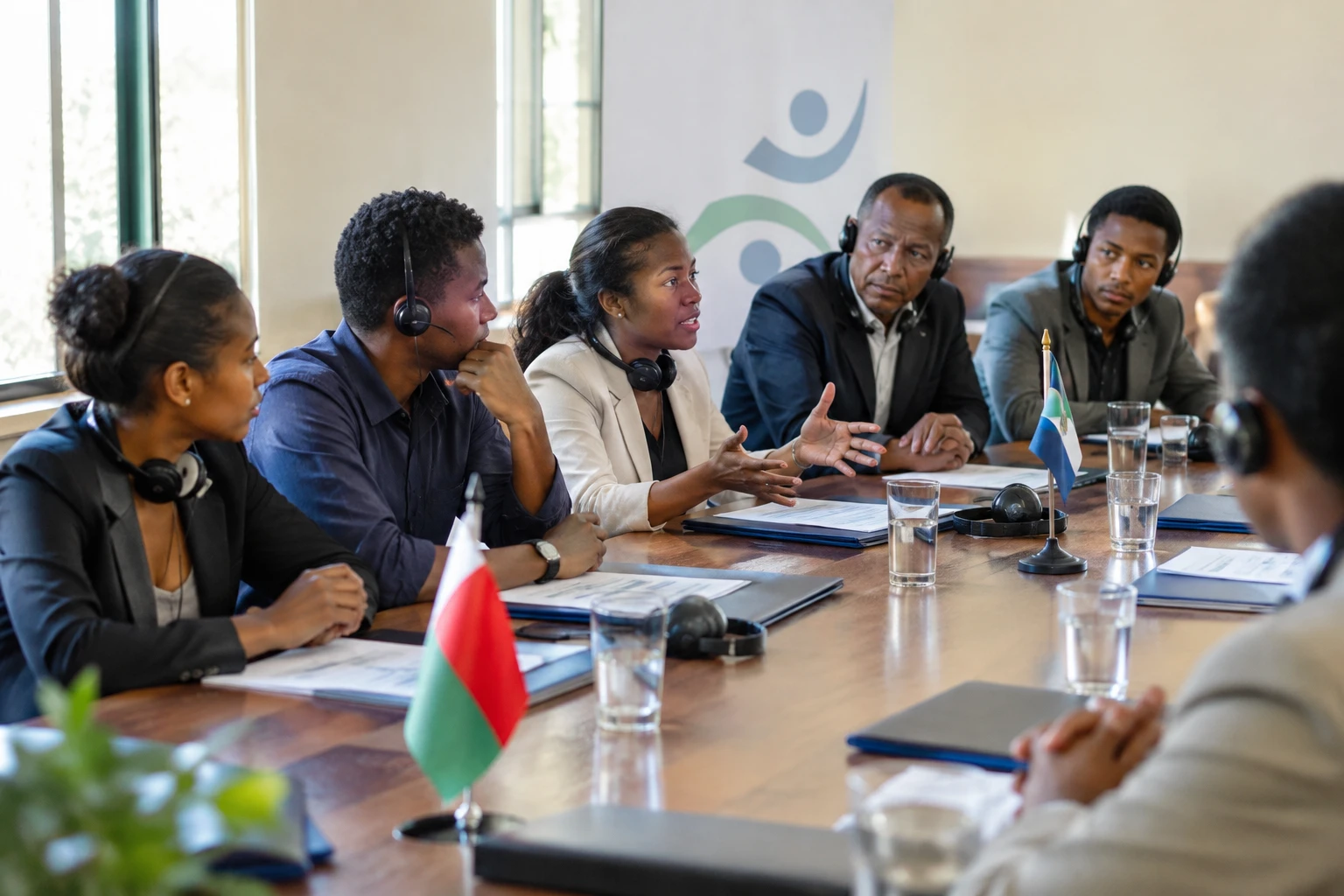
In Ihosy, the question is not simply whether Madagascar should put young people back in uniform or into civic service. It is also about the place the transition authorities will give them: participants in decision-making, or a generation to be corrected.
On 24 October 2026, President of the Refoundation Michaël Randrianirina raised the return of national service. He presented it as a way to instil discipline and respect for elders. But for some of the young people who mobilised in 2025, the urgent priorities lie elsewhere: education, jobs, public services and governance.
An old idea, a framework to clarify
Madagascar’s national service is not starting from scratch. Ordinance No. 78-002 of 16 February 1978 laid down its principles. The text envisaged a contribution to the country’s defence and development, within or outside the armed forces. It is therefore not accurate to automatically reduce the scheme to military training.
In practice, however, the obligation gradually fell away. In 2019, L’Express de Madagascar reported that national service was no longer applied as a general obligation, despite the retention of legal provisions. The newspaper distinguished the scheme from the military aptitude test then required of some young men.
The legal scope also needs clarifying. An observation by the International Labour Organization describes obligations for citizens aged 18 to 50, some of whose activities could last two years. This reference does not confirm the few-month duration mentioned in Ihosy; rather, it highlights that any plan to revive the scheme should specify the applicable rules, the groups concerned and any legal amendments required.
At a meeting with traditional representatives from the south on 24 October, Randrianirina said his government was reviewing the arrangements for national service outside the military framework. According to the remarks reported in the available material, he said a scheme lasting a few months would be necessary, arguing that young people had lost their sense of discipline and no longer gave up their seats to elders on public transport. These remarks have not been independently confirmed here by a second transcript.
The priorities voiced by young people
The reported response from Mihary Rakotondravelo, presented as a Gen Z representative, shifts the debate. He believes education, access to decent work and fundamental rights should come before a disciplinary programme. He also questions whether compulsory service could be used to politically control a generation that helped bring about a change of power.
This criticism comes amid a recent sequence of events. Protests in September and October 2025 began over water and electricity cuts, particularly in Antananarivo. They later broadened to include demands for action against poor governance and corruption. The Gen Z movement helped bring down President Andry Rajoelina, before the army took power and Randrianirina was sworn in on 17 October 2025.
A year later, those origins give the debate particular significance. Young protesters’ support for the overthrow of the previous regime does not mean they automatically approve of the decisions taken by the authorities that succeeded it. In March 2026, Amnesty International reported that Gen Z representatives felt their expectations had been ignored. This is the organisation’s assessment; it does not necessarily represent every viewpoint among Madagascar’s young people.
The question of national service also affects people in different ways. For an unemployed graduate, several months of service could delay a job search or entry into working life. For young people living outside the capital, access to quality education and public services may be a more immediate concern. Conversely, a paid programme offering training and useful civilian assignments could appeal to some participants. Much would depend on its content, funding and the safeguards provided.
The implementation test
At this stage, the announcement reported in Ihosy does not amount to a decision to implement the scheme. It remains to be seen whether it would be voluntary or compulsory, military or civilian, paid or unpaid. The age criteria, exemptions, duration, career pathways and monitoring mechanisms would also need to be defined. Without these details, it is impossible to assess the cost to the state or the effects on education and employment.
How the programme is designed will matter as much as its stated purpose. Consultation involving young people from different regions, associations, training institutions and employers would allow needs to be compared. By contrast, a policy decided without them could fuel distrust, especially if talk of discipline replaces practical responses to the difficulties they have denounced.
This tension is unfolding during a transition whose progress is being monitored by regional partners. Madagascar belongs to the Southern African Development Community, SADC. In December 2025, it called for inclusive national dialogue and reforms to prepare for new elections. The African Union, for its part, had rejected unconstitutional changes of government after the events of October 2025.
The debate in Ihosy therefore goes beyond the organisation of a possible service scheme. It tests the promise of a transition capable of involving young people in decisions that affect them. The next indicator will be concrete: will the government publish a text, a timetable and consultations that make it possible to assess how much weight is given to their proposals?
For Madagascar, the issue is not simply about teaching respect. It is also about showing how institutions respond to expectations voiced from Antananarivo to the regions. National service cannot be judged by its name alone: its objectives, rights, obligations and results must be made public.
For further reading, see the evolution of Madagascar’s national service as reported in 2019, the ILO’s observations on the legal framework, and SADC’s calls for dialogue and transition.