Algeria
 Egypt
 Libya
 Morocco
 Sudan
 Tunisia
 Benin
 Burkina Faso
 Cabo Verde
 Côte d'Ivoire
 Ghana
 Guinea
 Guinea-Bissau
 Liberia
 Mali
 Mauritania
 Niger
 Nigeria
 Senegal
 Sierra Leone
 The Gambia
 Togo
 Cameroon
 Central African Republic
 Chad
 DR Congo
 Equatorial Guinea
 Gabon
 Republic of the Congo
 São Tomé and Príncipe
 Burundi
 Comoros
 Djibouti
 Eritrea
 Ethiopia
 Kenya
 Malawi
 Mauritius
 Mozambique
 Rwanda
 Seychelles
 Somalia
 South Sudan
 Tanzania
 Uganda
 Angola
 Botswana
 Eswatini
 Lesotho
 Namibia
 South Africa
 Zambia
 Zimbabwe
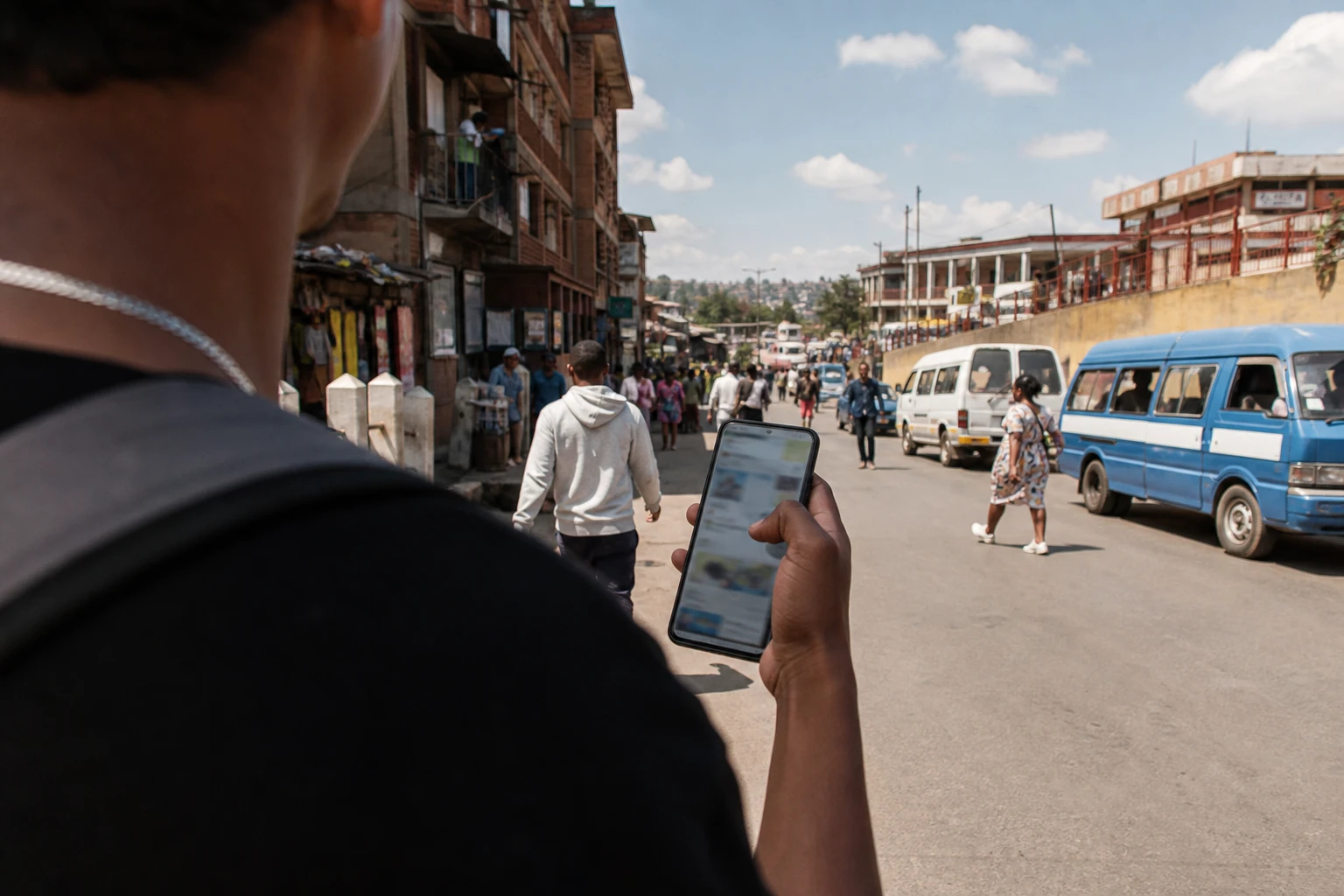
In Antananarivo, insecurity is no longer just a police matter
In Madagascar, fear spreads faster than rumours. In the capital, Antananarivo, and in several other cities, families are changing their habits, limiting children’s outings and questioning the state’s ability to protect people in their daily lives. In this climate, the national day of mourning declared for Friday 24 July is less a symbolic gesture than an admission of the seriousness of the situation.
The political signal is strong. Madagascar’s government has sought to respond to a series of disappearances and murders that have shocked public opinion, as the country goes through a period of institutional renewal following the change of regime in 2025. The president of the Refoundation, Colonel Michaël Randrianirina, has described the acts as intended to destabilise Madagascar, while security officials have promised a more visible response.
Serious incidents in a country already under strain
The toll cited by the authorities stands at 200 reported disappearances in six months, six of which ended in deaths. This figure should be treated with caution, as security services also acknowledge that not all reports involved confirmed abductions. Runaways and hasty alerts are also said to have contributed to the tally, without diminishing the reality of the tragedies that have occurred.
According to information reported in Madagascar, the six deaths cited by the Ministry Delegate in charge of the Gendarmerie included very different cases: fatal assaults, robberies followed by violence, revenge killings, suicides and, in some cases, incidents described as linked to sacrificial rituals. Here, too, attribution is essential: the authorities are referring to a range of disparate cases, not a single modus operandi.
In an effort to regain the initiative, the executive has announced the deployment of thousands of members of the defence and security forces, the creation of an operational command centre and an interministerial task force. The State Military Communications Office, dismantled in 2022, has also been reactivated to manage urban surveillance cameras and expand the network.
The national day of mourning was also accompanied by visible measures in public spaces: flags flown at half-mast, the cancellation of festive events, a ban on alcohol sales and an ecumenical service in Analakely, on the forecourt of Antananarivo’s city hall. This choice reflects the role of religion in Malagasy social life, but above all it conveys the authorities’ desire to provide a collective response to a crisis of confidence.
What this means for the Malagasy, and why the issue crosses borders
On the ground, the impact is primarily social. Urban households, more exposed to rumours and alerts circulated on social media, are adjusting their movements. Working-class families, who rely more heavily on daily travel and a large informal economy, feel the effects of road closures, fears about going out late and the rising emotional cost of urban life sooner.
The security response also has political implications. By presenting these cases as an attempt to destabilise the country, the government is seeking to prevent insecurity from becoming a crisis of legitimacy. But this interpretation places the executive under a clear obligation: to prove that the measures announced are producing tangible results, in neighbourhoods as well as in the regions. Otherwise, fear will fuel mistrust.
Madagascar is a member of SADC, the Southern African Development Community, which it joined in 2005. Within this regional organisation, peace, security and governance are part of its shared mandate. In other words, a lasting climate of insecurity in Antananarivo or the provinces is not just a domestic issue: it also affects the country’s regional image, the movement of people and investor confidence.
The institutional context adds to the significance of the issue. Since Colonel Michaël Randrianirina took power in October 2025, Madagascar has entered a period of political renewal. In this context, security has become an immediate test of public authority. The question is therefore not only who controls the security apparatus, but whether it can protect the population in the long term without fuelling new tensions.
A test for Madagascar’s renewal and for SADC
The case has continental significance for one simple reason: Madagascar shows how a local security crisis can quickly become an issue of national and then regional governance. In an African landscape where political transitions, social grievances and criminal networks intersect, the ability to document disappearances, protect minors and investigate swiftly is an indicator of the state’s credibility.
This case will also show whether Madagascar’s renewal remains a slogan or becomes a measurable public policy. The coming weeks will be decisive: the actual implementation of the command centre, the effectiveness of urban surveillance, the judicial handling of cases and the restoration of confidence in neighbourhoods. In a country where Antananarivo often sets the tone, the response to this wave of anxiety will have an impact far beyond the single day of mourning.