Algeria
 Egypt
 Libya
 Morocco
 Sudan
 Tunisia
 Benin
 Burkina Faso
 Cabo Verde
 Côte d'Ivoire
 Ghana
 Guinea
 Guinea-Bissau
 Liberia
 Mali
 Mauritania
 Niger
 Nigeria
 Senegal
 Sierra Leone
 The Gambia
 Togo
 Cameroon
 Central African Republic
 Chad
 DR Congo
 Equatorial Guinea
 Gabon
 Republic of the Congo
 São Tomé and Príncipe
 Burundi
 Comoros
 Djibouti
 Eritrea
 Ethiopia
 Kenya
 Malawi
 Mauritius
 Mozambique
 Rwanda
 Seychelles
 Somalia
 South Sudan
 Tanzania
 Uganda
 Angola
 Botswana
 Eswatini
 Lesotho
 Namibia
 South Africa
 Zambia
 Zimbabwe
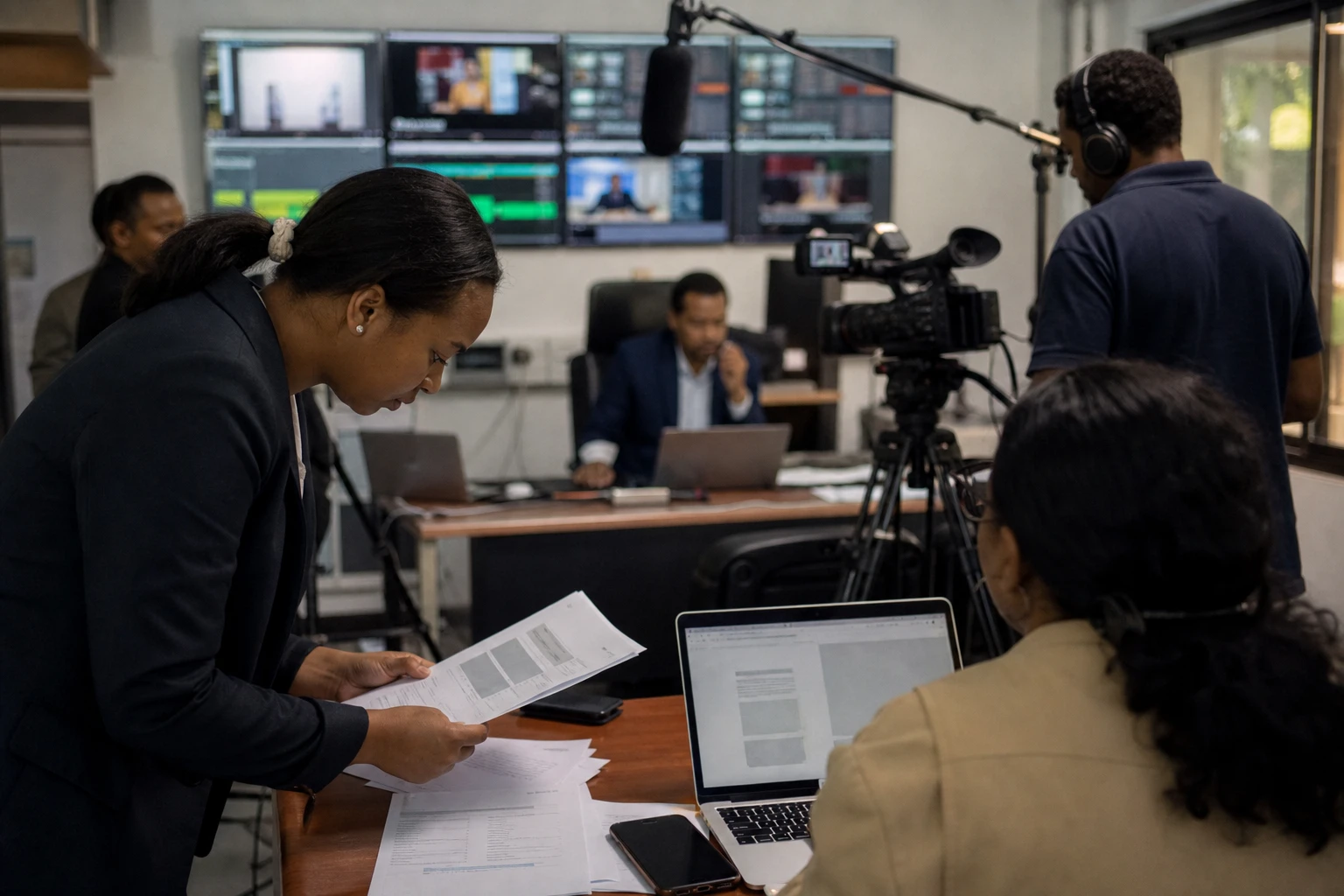
In Antananarivo, the transition is also about timing
In a political transition, timing matters as much as words. In Madagascar, the national dialogue led by the Council of Christian Churches in Madagascar is finally moving towards a concrete phase, after months of delays, adjustments and negotiations over its leadership. The issue goes beyond the capital, Antananarivo: it concerns how Malagasy people want to rebuild the rules of the political game after the unconstitutional change of government in October 2025, according to the African Union.
The current sequence is unfolding within a specific regional framework. Madagascar belongs to SADC, the Southern African Development Community, which has closely followed the crisis and called for an inclusive national dialogue led by Malagasy people themselves. The African Union, for its part, has also advocated a return to constitutional order, in coordination with SADC.
In this context, the roadmap unveiled by the FFKM is not simply an administrative timetable. It sets out stages, responsibilities and a political sequence intended ultimately to lead to a refoundation of institutions, a new electoral framework and a renewed constitutional text.
A religious roadmap, but an issue of public importance
The FFKM does not act as a political party. It brings together the country’s main Christian denominations, in a country where churches remain trusted actors and mediators in society. This gives it a distinctive role: it can serve as a mediator, but it must also win support beyond religious circles. The transitional authorities have entrusted it with a central role in organising the national dialogue, with material support from the state.
The timetable made public by the FFKM in late June and then detailed in August provides for consultations to begin at fokontany level, the basic units of local administration, before moving up to a major national dialogue. The field phase is expected to run for several months. The FFKM has given itself until March 2027 to complete the discussions, while other refoundation documents refer to closer alignment with the institutional deadlines for 2027.
On 27 August 2026, the FFKM presented a structure dedicated to managing the process: a 13-member board, a technical committee and an advisory group of 16 people. This structure is intended to provide a clearer framework for the dialogue, after several delays had fuelled doubts about the process and its pace.
This set-up follows an important logistical step: four buildings in Village Voara, in Andohatapenaka, were handed over to the FFKM to serve as its headquarters. In a country where the organisation of dialogue is itself a political signal, the move reflects a desire to anchor the process in a recognised, visible and stable location.
What this dialogue can change, and for whom
For the transitional authorities, the national dialogue is a test of credibility. It must show that the period opened after the ousting of President Andry Rajoelina is not merely a change of power by circumstance, but will lead to new institutions. For opposition groups and part of civil society, the challenge is the opposite: to prevent a dialogue presented as inclusive from merely endorsing decisions already taken. This tension runs through the entire process.
The timetable is, in this context, a political issue in its own right. According to the refoundation programme published by the presidency, the process is intended to lead to a reform of electoral governance, the drafting of a national policy document, then a new Constitution and elections. But the gap between the consultation stages and the announced deadlines raises a simple question: will there be enough time to turn the proposals gathered into legal text, and then into a credible election?
This question also concerns cities and rural areas. In Antananarivo, the debate is framed in terms of institutional legitimacy, timing and power dynamics. In communes and fokontany, it will take more concrete form through access to a voice, and the presence of local leaders, churches, women, young people and local business representatives. If consultation remains too centralised, it risks missing its target. If it is genuinely decentralised, it could instead bring to the surface long-unheard social demands.
The issue also has an economic dimension. Madagascar is emerging from a political crisis that continues to undermine investment, public services and confidence in the rules. A clearer transition can reassure formal businesses, but it matters just as much to the informal economy, which is dominant in the country, where administrative stability, movement and local decisions have a direct impact on incomes. Institutional debates are therefore not abstract: they affect everyday life.
A Malagasy process, watched by SADC and the African Union
The situation in Madagascar extends beyond the island’s borders. SADC called for an inclusive national dialogue, a preparatory report and a roadmap, and then scheduled periodic updates for 2026. The African Union, too, has stressed the need for coordination with SADC and for technical and financial support for a legitimate process to restore constitutional order. This means the course of the dialogue will be watched as a regional precedent: can dialogue truly help a country emerge from an institutional crisis without becoming a mere formality?
The rest of 2026 will therefore be decisive. The next expected steps must clarify the method, the scope of the consultations, the place of former leaders, the role of civil society and the legal form of the recommendations. In Madagascar, the national dialogue is not just a political event. It is a moment of collective definition: who speaks, on whose behalf, and with what effect on the institutions of tomorrow.