Algeria
 Egypt
 Libya
 Morocco
 Sudan
 Tunisia
 Benin
 Burkina Faso
 Cabo Verde
 Côte d'Ivoire
 Ghana
 Guinea
 Guinea-Bissau
 Liberia
 Mali
 Mauritania
 Niger
 Nigeria
 Senegal
 Sierra Leone
 The Gambia
 Togo
 Cameroon
 Central African Republic
 Chad
 DR Congo
 Equatorial Guinea
 Gabon
 Republic of the Congo
 São Tomé and Príncipe
 Burundi
 Comoros
 Djibouti
 Eritrea
 Ethiopia
 Kenya
 Malawi
 Mauritius
 Mozambique
 Rwanda
 Seychelles
 Somalia
 South Sudan
 Tanzania
 Uganda
 Angola
 Botswana
 Eswatini
 Lesotho
 Namibia
 South Africa
 Zambia
 Zimbabwe
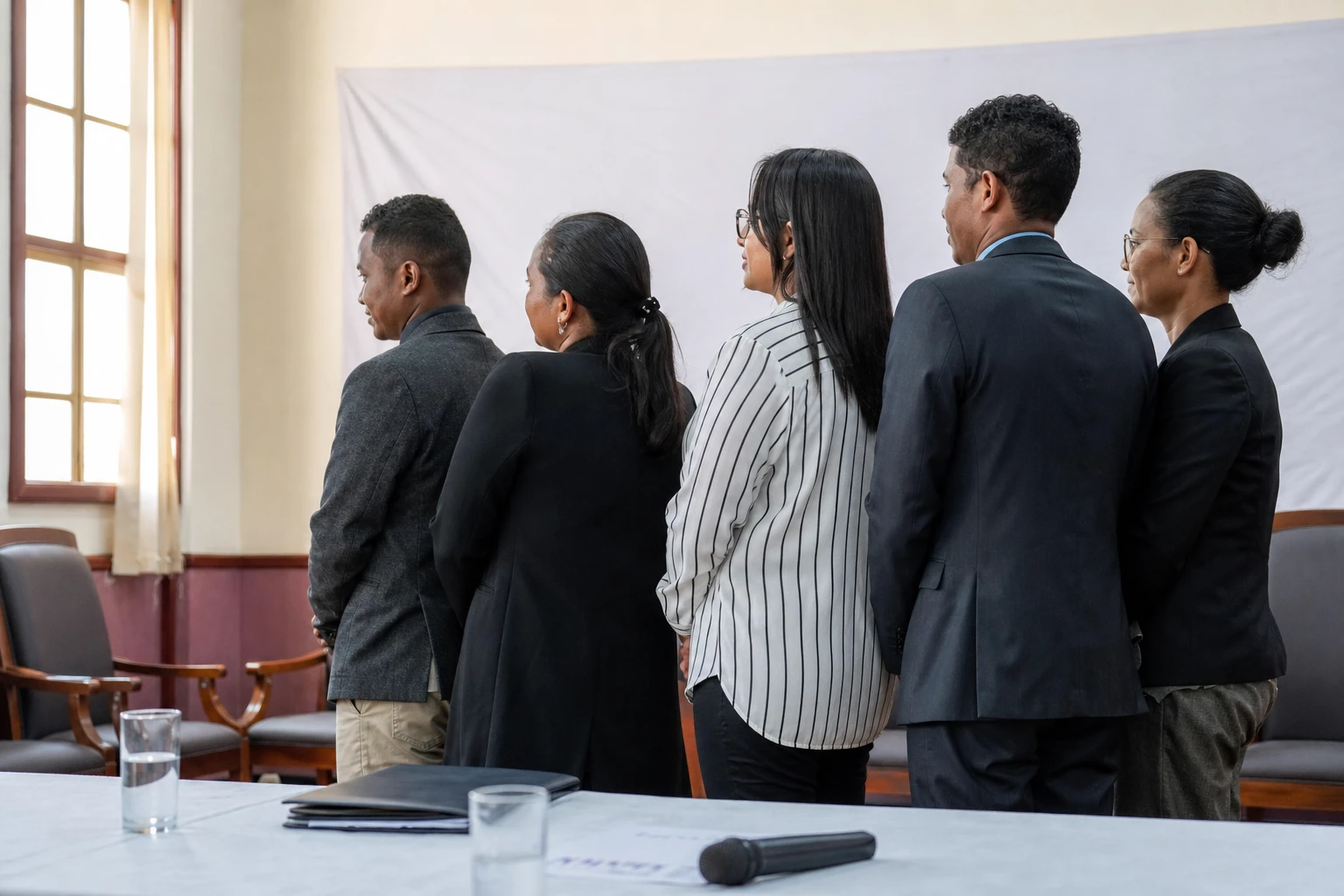
In Antananarivo, the first anniversary of the Gen Z Madagascar movement is about more than celebrating the fall of a president. It raises a more demanding question: what remains of a mobilisation born of water and electricity cuts when power changes hands without transforming daily life ?
On 25 September 2026, ceremonies marked the first anniversary of the uprising that shook Madagascar from September 2025. A monument was unveiled in the Malagasy capital. A march and a speech by transitional president Michaël Randrianirina were also planned for 13 May Square, an iconic site of the country’s major political protests.
A movement born of failing public services
The movement began with very concrete demands. In several cities, residents denounced repeated power cuts and difficulties accessing water. The protests quickly widened to include corruption, nepotism and a lack of transparency in the running of the state.
The mobilisation, driven largely by university students, secondary-school pupils and young workers, was organised extensively online. However, the Gen Z Madagascar collective never formed a fully unified bloc. That diversity helps explain the current differences of opinion over the record of the military transition.
The United Nations reported at least 22 deaths and more than 100 injuries during the first weeks of unrest. The Malagasy government disputed this toll. Amnesty International called for investigations into the use of force against protesters.
These figures therefore remain tied to the sources that established them. Nevertheless, they have created a lasting demand: victims’ families want to know the precise circumstances of the deaths and whether security forces were responsible.
Political change has not brought social change
The turning point came in October 2025, when soldiers from Capsat, a Malagasy army unit responsible in particular for administrative and technical functions, joined the protesters. President Andry Rajoelina left the country after part of the security apparatus broke with his government.
Colonel Michaël Randrianirina was subsequently sworn in to lead a transition on 17 October 2025. He had promised national reconstruction and elections within two years. The pledge initially raised hopes of a swift return to a renewed institutional order.
A year later, however, relations between the authorities and the young protesters have become strained. Some members of Gen Z Madagascar continue to support the colonel. Others believe the army has appropriated a popular mobilisation without addressing its fundamental demands.
The central criticism is therefore not just about the date of future elections. It concerns the way the country is governed. Activists fear a return to the practices they opposed: decisions made without consultation, top-down communication and the concentration of power in a small circle.
This distrust is also expressed in the debate over official commemorations. For some participants, the ceremony pays tribute to the victims and recognises the role of young people. For others, it turns a citizens’ protest into a founding narrative controlled by the authorities.
Visible progress, but not enough
Accounts from Madagascar describe a partial improvement in the situation. Water and electricity cuts are said to be less frequent in some areas. This change is not enough to erase the economic difficulties facing households.
In Fort-Dauphin, in the south-east of the island, residents point to the gap between announcements of a recovery in harvests and the reality of everyday expenses. Higher or stable agricultural output does not automatically guarantee better incomes for families.
This gap matters. In Antananarivo, demands often focus on public services, prices and political accountability. In the regions, they are combined with concerns about access to markets, roads, healthcare and agricultural outlets.
The transition will therefore be judged on several fronts. Residents of major cities expect more regular water and electricity supplies. Workers in the informal economy hope for less pressure on their purchasing power. Rural areas are watching prices, harvests and access to infrastructure above all.
The transition’s institutional test
The electoral timetable is the main focus of scrutiny. The authorities have mentioned elections before the end of 2027. This deadline will need to be clarified, with guarantees on voter rolls, candidacies, election administration and press freedom.
The challenge is also to prevent a transition born of a popular crisis from becoming a lasting military government. Madagascar’s experience is a reminder that changing a leader is not enough to rebuild the state. Institutions capable of overseeing the executive must also be strengthened.
The High Constitutional Court, Parliament, local authorities and civil society organisations will all have an essential role. Young people’s participation cannot be confined to the streets or social media. It must find expression in public debate, political parties, trade unions and the next elections.
A signal for East Africa
Madagascar is a member of the Southern African Development Community, SADC, which brings together several countries in southern Africa and the Indian Ocean. The Malagasy crisis therefore has a direct bearing on the stability of this regional area, even as the island also maintains close ties with countries in the Indian Ocean and East Africa.
SADC will need to follow the transition closely. Its task is not only to condemn or support a change of power. It must also check whether electoral commitments, civil liberties and the protection of civilians are being upheld.
Across Africa, the Malagasy case illustrates a now familiar pattern: connected young people turn a public-services crisis into political protest. But it also shows the limits of this dynamic. Bringing down a government is one step. Building credible institutions, funding essential services and ensuring accountability is another.
The next anniversary will not be judged by the number of ceremonies held. It will depend on more tangible results: the truth about the deaths in 2025, reliable public services, meaningful participation by young people and credible elections. These are the benchmarks against which the promise of change will ultimately be measured.