Algeria
 Egypt
 Libya
 Morocco
 Sudan
 Tunisia
 Benin
 Burkina Faso
 Cabo Verde
 Côte d'Ivoire
 Ghana
 Guinea
 Guinea-Bissau
 Liberia
 Mali
 Mauritania
 Niger
 Nigeria
 Senegal
 Sierra Leone
 The Gambia
 Togo
 Cameroon
 Central African Republic
 Chad
 DR Congo
 Equatorial Guinea
 Gabon
 Republic of the Congo
 São Tomé and Príncipe
 Burundi
 Comoros
 Djibouti
 Eritrea
 Ethiopia
 Kenya
 Malawi
 Mauritius
 Mozambique
 Rwanda
 Seychelles
 Somalia
 South Sudan
 Tanzania
 Uganda
 Angola
 Botswana
 Eswatini
 Lesotho
 Namibia
 South Africa
 Zambia
 Zimbabwe

In Antananarivo, the promise of a break with the past has collided with an old political reality in Madagascar: those in power change, but the methods sometimes remain the same. A year after the mobilisation that precipitated Andry Rajoelina’s departure, the young activists who led the protests are now denouncing arrests, threats and a process of reform they consider too slow.
A popular victory that quickly became a military gamble
The Gen Z Madagascar movement was born on 25 September 2025. At first, protesters were demonstrating against water and electricity cuts. Their anger soon spread to corruption, the cost of living and the functioning of institutions. Trade unions, associations and citizens from several generations then joined the rallies.
The mobilisation changed in character when soldiers from the Corps of Administration of Personnel and Technical Services, known by the acronym Capsat, joined protesters in Antananarivo. On 14 October 2025, Colonel Michaël Randrianirina announced that the army was taking control of the country. On the same day, the National Assembly voted to impeach Andry Rajoelina, who had left Madagascar a few days earlier. The account of the protests and the president’s downfall then confirmed the scale of the political rupture.
The High Constitutional Court subsequently recognised the military authority charged with exercising the functions of head of state. The new leadership presented itself as a transitional government tasked with reforming institutions and preparing for a new political phase. This formula fuelled hopes of an orderly exit from the crisis. It also confronted young protesters with an immediate question: had they secured a change of regime, or merely facilitated the replacement of civilian rule with military leadership?
Madagascar’s history makes this question particularly sensitive. In 2009, Capsat had already played a decisive role in Marc Ravalomanana’s downfall and Andry Rajoelina’s rise to power. In 2025, the same unit helped end the regime it had indirectly helped install 16 years earlier. This continuity weighs on the transition’s credibility.
Activists arrested in the name of state security
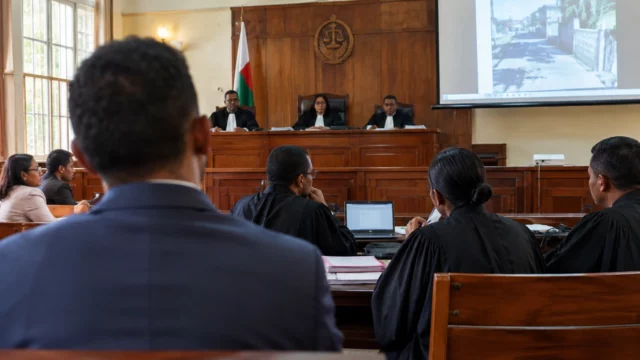
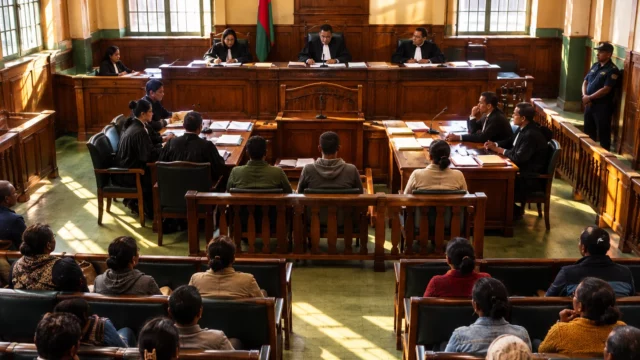
Disillusionment accelerated in spring 2026. Several activists were arrested after calling for protests against the slow pace of “refoundation”. The authorities accused them, among other things, of alleged offences against state security, a criminal charge often used in Madagascar during periods of acute political tension.
Six people were detained in April, according to information available. Some were released quickly. Others described harrowing detention conditions. Herizo Andriamanantena, a prominent figure in the movement, said he had spent 13 days in police custody. Nomena Ratsihorimanana, for his part, said he had been subjected to violence and threats during his arrest. These accounts must be examined by the courts, but they illustrate the breakdown in trust between part of the youth and the new leadership.
Their statements have also reignited debate over the continuity of security practices. Their lawyer says the charge of endangering state security remains a way of silencing opponents. This criticism echoes concerns raised by Amnesty International about arbitrary arrests and restrictions targeting former supporters of the protests.
The military leadership rejects the idea of systematic repression, however, and says it wants to preserve public order. The problem now is one of evidence. Without independent investigations, transparent access to case files and judicial safeguards, every arrest risks being interpreted as political punishment. Yet a transition that promises to rebuild institutions cannot reproduce the opaque practices it claims to be correcting.
A mobilised youth, but no united leadership
Madagascar’s Gen Z is not a political party. The movement brings together activists, entrepreneurs, students, informal workers and citizens mobilised through social media. This diversity made it a force on the streets. Today, it complicates efforts to define a common position.
Some participants want to keep up the pressure on the junta. Others still hope for dialogue with the authorities. Many are above all opposed to traditional political figures co-opting the mobilisation. This mistrust explains the divisions that emerged after Rajoelina’s fall. It also prevents the movement from turning its popularity into a structured political programme.
Political scientist Ketakandriana Rafitoson has described a movement divided into numerous subgroups. This fragmentation is not merely an organisational problem. It reflects a deeper disagreement over the nature of the change being sought. Some young people are calling for swift elections. Others want administrative, judicial and electoral rules reformed first. Still others are demanding immediate improvements to public services.
These priorities do not lead to the same alliances. Transition leaders can buy time by promising institutional reforms. Households, meanwhile, judge those in power on more tangible measures: the reliability of electricity, access to water, prices, jobs and security. In Antananarivo, anger is expressed in the streets and on digital platforms. In the regions, it is measured more by difficulties in accessing services, transport and economic opportunities.
The regional test for Madagascar’s transition
Madagascar is a member of the Southern African Development Community, or SADC, a regional organisation that includes several countries in southern Africa and the Indian Ocean. The transition in Madagascar therefore concerns more than Antananarivo. It is unfolding in a region already alert to changes of power brought about by street protests or military intervention.
SADC and the African Union generally view military takeovers with caution. They uphold the principle of constitutional order while also having to take account of the legitimacy crises that fuel overthrows. The Madagascar case highlights this dilemma: a government may be constitutional on paper while gradually losing social legitimacy; a junta may present itself as a temporary corrective while risking an extended stay in power.
The official document setting out the refoundation programme now provides a framework for the transition and the announced reforms. The roadmap published by Madagascar’s presidency will need to be tested against a precise timetable, oversight mechanisms and genuine participation by the social forces that triggered the crisis.
The next stage will therefore be decisive. The authorities will have to clarify the duration of the transition, the conditions for a credible vote and the army’s place in the future political order. Activists, for their part, will have to overcome their divisions without losing their capacity for civic oversight. In Madagascar, the question is no longer simply who overthrew Andry Rajoelina. It is whether popular mobilisation can still influence the power it helped bring into being.