Algeria
 Egypt
 Libya
 Morocco
 Sudan
 Tunisia
 Benin
 Burkina Faso
 Cabo Verde
 Côte d'Ivoire
 Ghana
 Guinea
 Guinea-Bissau
 Liberia
 Mali
 Mauritania
 Niger
 Nigeria
 Senegal
 Sierra Leone
 The Gambia
 Togo
 Cameroon
 Central African Republic
 Chad
 DR Congo
 Equatorial Guinea
 Gabon
 Republic of the Congo
 São Tomé and Príncipe
 Burundi
 Djibouti
 Eritrea
 Ethiopia
 Kenya
 Madagascar
 Malawi
 Mauritius
 Mozambique
 Rwanda
 Seychelles
 Somalia
 South Sudan
 Tanzania
 Uganda
 Angola
 Botswana
 Eswatini
 Lesotho
 Namibia
 South Africa
 Zambia
 Zimbabwe
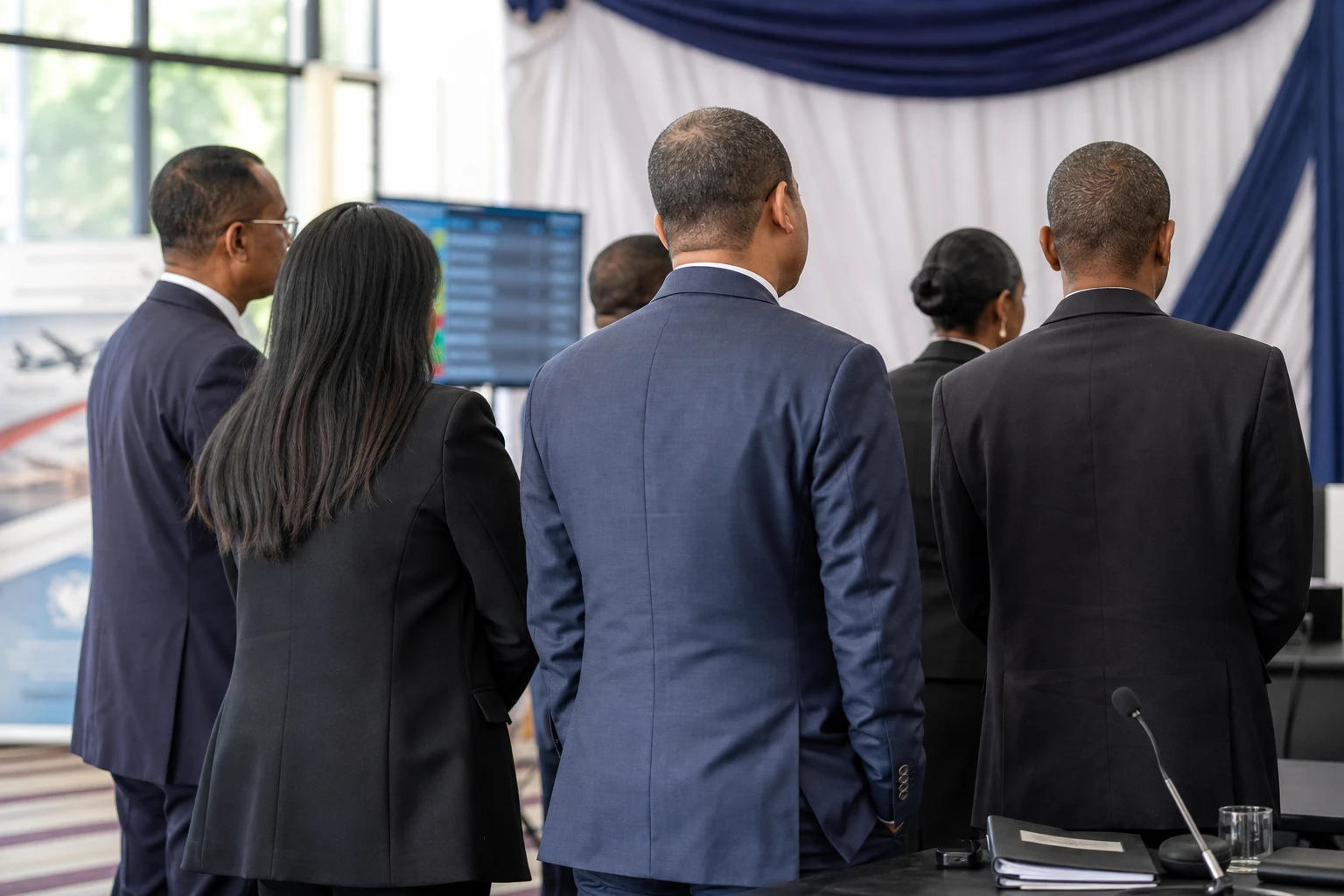
A route that tells more than the story of a flight
Between Antananarivo and Moroni, the return of an aircraft does not simply signal that an airline is resuming a service. Above all, it is a reminder of how much the movement of people, goods and families matters to daily life in the western Indian Ocean, where sea journeys remain slow, irregular and sometimes costly. The resumption of the route also reflects a more peaceful political moment between Madagascar and the Union of the Comoros, after several years of tension.
For Madagascar, this service forms part of a regional space broader than its bilateral relationship alone. The country belongs to SADC, the Southern African Development Community, and the Indian Ocean Commission, which brings together the Comoros, Madagascar, Mauritius, Seychelles and Réunion, as part of France. In this region, air links matter as much for trade as for the mobility of diasporas.
What the reopening of the Antananarivo–Moroni route changes
Madagascar Airlines reopened its service to Moroni on Thursday 30 July 2026. The airline has scheduled two return flights a week on the Antananarivo–Mahajanga–Moroni route, with Mahajanga as an intermediate stop. Its published flight schedule lists regular services in August, followed by a gradual increase from autumn 2026.
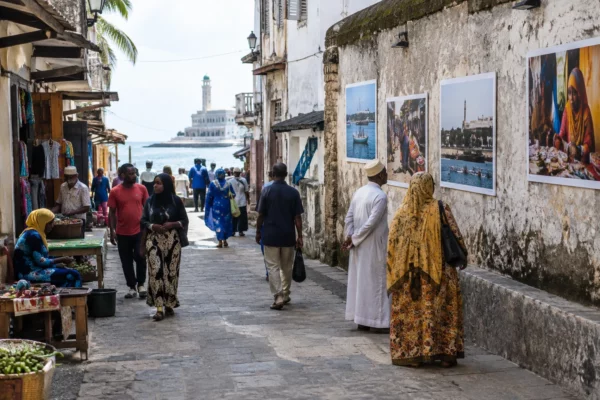
The choice of Mahajanga is no coincidence. The city in north-western Madagascar has long served as a transit point to the Comorian archipelago and Mayotte. It also handles some of the tourist and family traffic with neighbouring islands. Local tourism officials see it as a direct boost for restaurants, taxis, accommodation and small businesses that depend on short-stay visitors.
The Malagasy diaspora in the Comoros, estimated at about 20,000 people by Madagascar’s foreign ministry, welcomed the resumption as a relief. This population is not marginal to the economic ties between the two countries. It facilitates family travel, urgent medical care and small-scale goods exchanges.
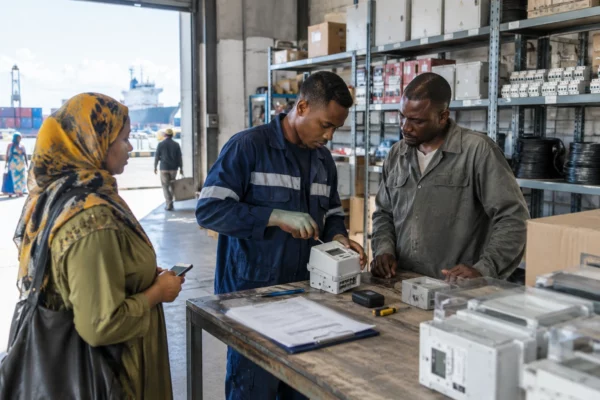
Cost also mattered. Indirect connections via Nairobi or Addis Ababa made tickets more expensive and journeys longer. In an island region where transport already takes a heavy toll on household budgets, the resumption of a more direct route can reduce costs and journey times. This is a tangible change for families, as well as for traders and small businesses that rely on regional movement.
A diplomatic signal, an economic impact
The service has resumed after a period of rapprochement between Antananarivo and Moroni. In March 2025, the Comoros returned 49 kilos of gold bars seized at Moroni airport in late 2021 to Madagascar, according to official sources and several regional media outlets. Madagascar’s customs authorities also referred in April 2025 to the return of 25.5 kilos of gold from Mauritius, showing that customs diplomacy and judicial cooperation have once again become a visible area of action for the Malagasy state.
The gold case had long strained relations between the two countries. Its partial resolution created more favourable conditions for the resumption of civilian exchanges. In practice, the states are seeking to close their most sensitive disputes while reopening channels that serve the real economy, starting with air transport.
The route’s reopening could also benefit Mahajanga, a port city where tourism, trade and services are closely linked. In this urban economy, the impact of a new air route is measured not only by passenger numbers. It can be seen in hotel occupancy, market sales, restaurant business and the mobility of workers in the informal sector.
Another airline, Royal Air, is also planning to open a regular service between the two countries. This could create a small but useful degree of competition in a still limited market. For travellers, a wider choice of services matters as much as the price. For tourism operators, it raises the destination’s profile and reduces reliance on a single airline.
What the resumption says about Madagascar in the Indian Ocean
This route is part of a broader phase of reopening and repositioning by Madagascar in its maritime neighbourhood. In 2025, Antananarivo hosted the 45th SADC summit and took over the organisation’s rotating presidency. The country is therefore seeking to combine regional diplomacy, economic appeal and domestic stabilisation.
In the Indian Ocean, mobility remains a strategic issue. The IOC works on cooperation between island states, while regional discussions also cover maritime security, trade, fisheries and the movement of people. In this context, a single air route can become an indicator of trust between neighbours.
For the Comoros, Madagascar is a neighbouring partner, but also a place of departure, transit and reception for part of its diaspora. For Malagasy people, the Comoros represents a longstanding destination for people and trade, often forgotten when relations between states become strained. The resumption of flights is a reminder that in island Africa, accessibility is not a technical detail: it is a condition for development.
The points to watch now are whether the announced schedule is maintained, whether frequencies remain stable and how fares evolve. If flights remain regular and affordable, the Antananarivo–Mahajanga–Moroni route could become more than a symbol of rapprochement. It could establish itself as a genuine corridor for movement in the south-western Indian Ocean, with lasting effects on tourism, families and local trade.