Algeria
 Egypt
 Libya
 Morocco
 Sudan
 Tunisia
 Benin
 Burkina Faso
 Cabo Verde
 Côte d'Ivoire
 Ghana
 Guinea
 Guinea-Bissau
 Liberia
 Mali
 Mauritania
 Niger
 Nigeria
 Senegal
 Sierra Leone
 The Gambia
 Togo
 Cameroon
 Central African Republic
 Chad
 DR Congo
 Equatorial Guinea
 Gabon
 Republic of the Congo
 São Tomé and Príncipe
 Burundi
 Comoros
 Djibouti
 Eritrea
 Ethiopia
 Kenya
 Madagascar
 Malawi
 Mauritius
 Mozambique
 Rwanda
 Seychelles
 Somalia
 South Sudan
 Tanzania
 Angola
 Botswana
 Eswatini
 Lesotho
 Namibia
 South Africa
 Zambia
 Zimbabwe
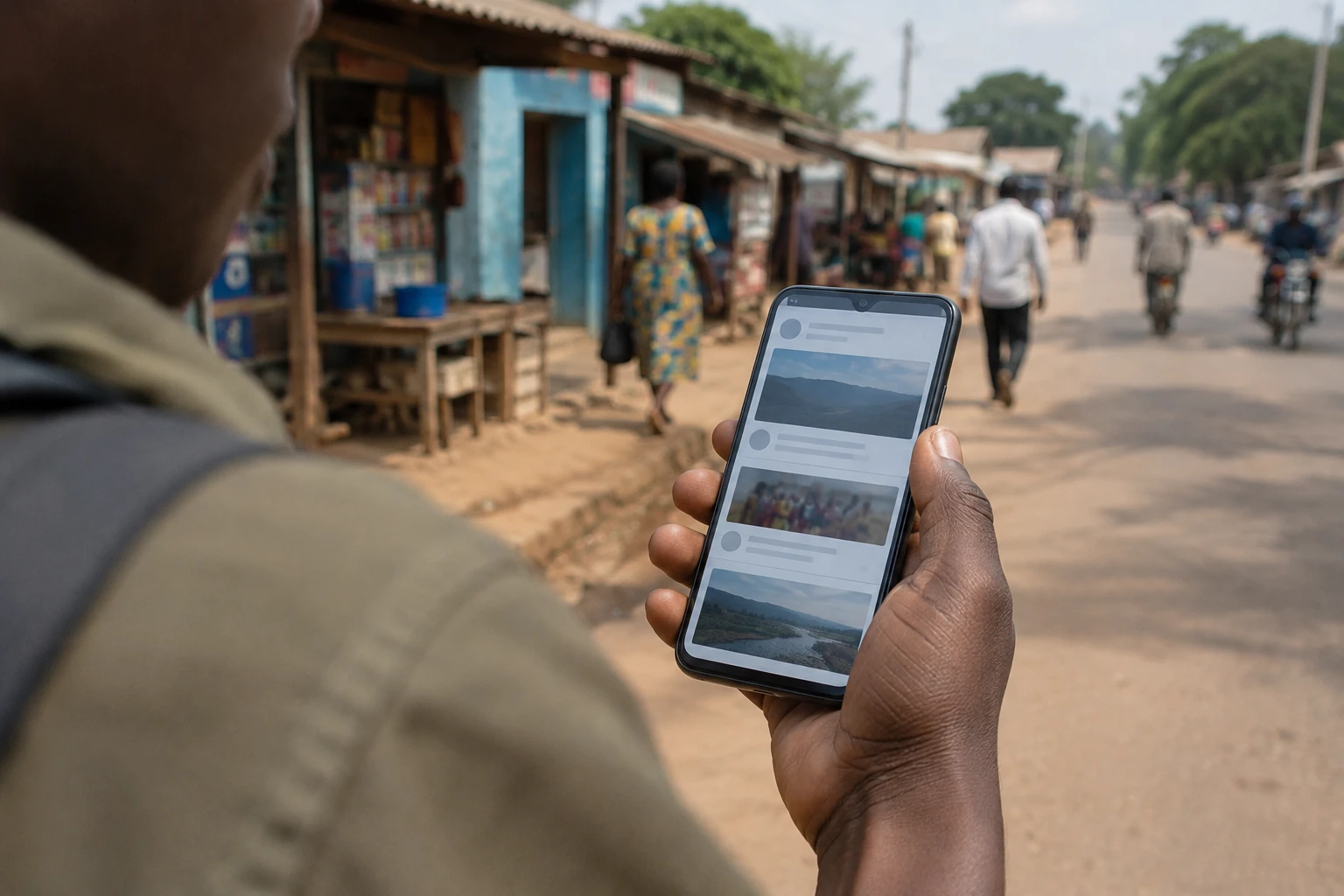
In the east of the Central African Republic, kidnappings attributed to the Lord’s Resistance Army (LRA) are a reminder that a weakened group can still have a profound impact on the lives of isolated communities. For families in Haute-Kotto and Mbomou, the resumption of incursions means more than a return to the headlines: it threatens journeys to fields, mining sites and markets.
Attacks reported around Yalinga and Nzacko
Several kidnappings were reported in eastern Central African Republic in June and July 2026. In Yalinga, Haute-Kotto, eleven young people were reportedly captured on 29 June as they were going to the fields, about five kilometres from the town. Further kidnappings were subsequently reported near artisanal mining sites. These incidents were reported by Radio Ndeke Luka and later detailed by TV5MONDE, which cited, among others, the MP for the Yalinga constituency. The figures and circumstances are therefore based on local testimonies relayed by these media outlets.
Further south, in Mbomou, a Central African media outlet reported on 27 July that eight children had been abducted in the village of Konon, near Nzacko. It also referred to an earlier abduction in the area. These incidents are not the same as those reported in Haute-Kotto, but they point to a range of threats across several areas in the east of the country. So far, not all local accounts have been confirmed by an accessible independent source. They should therefore be treated with caution.
The LRA, founded in Uganda in 1987 by Joseph Kony, is known for attacks on civilians, kidnappings and the forced recruitment of children. Its historic presence in the border areas between the Central African Republic, the Democratic Republic of the Congo and South Sudan enabled it to move through hard-to-reach territories. The UN Security Council has documented its abuses and activities in eastern Central African Republic for years.
A smaller but mobile group
The recent incidents do not necessarily mean that the LRA is regaining its former strength. The movement has fragmented after years of military operations, defections and internal divisions. Some fighters have left the group, while other cells have become more autonomous. But a weakened organisation can still pose a threat if it retains weapons, knows the terrain and can disperse after an attack.
Geography plays a central role here. The areas concerned are far from Bangui, the capital, and lie in places where travel is costly and protection resources are limited. Residents may be exposed on agricultural tracks as well as around mining sites. An attack or a rumour of a kidnapping can disrupt activities, keep families away from their fields and reduce trade. The consequences therefore extend beyond those captured: they affect the incomes and movement of entire communities.
Natural resources are also a security concern. Gold- and diamond-bearing areas attract workers and trade, but their remoteness makes them difficult to monitor. The Security Council has previously reported LRA attacks on mining sites and looting to obtain food or goods. This context alone does not make it possible to attribute each incident to a specific economic motive. It does, however, underline that civilian protection also depends on the ability to secure roads and local activities.
A regional manhunt and an unprecedented legal process
Joseph Kony remains wanted by the International Criminal Court (ICC), which issued an arrest warrant against him in 2005. In November 2025, judges confirmed charges of war crimes and crimes against humanity. This legal step is not a conviction and does not yet allow a trial to be held in his absence: the ICC says Kony must be present before the Court for the trial to proceed. The proceedings are therefore moving forward without resolving the essential question of his whereabouts.
The security response, too, extends beyond the borders of the Central African Republic. The LRA has operated across several countries in Central and East Africa. Cooperation between the countries concerned, information-sharing and the protection of people in border areas remain crucial. Previous regional operations have failed to capture Kony, while fighters’ movements and neighbouring crises have made their movements harder to track.
For the Central African authorities, the challenge is to ensure that local alerts do not go unheeded until another incursion takes place. The presence of security forces, residents’ access to reliable reporting channels and support for people who have been released or escaped matter as much as military operations. In areas far from Bangui, an effective response also requires understanding communities’ needs and maintaining essential services.
What the coming months will help establish
Reports from 2026 show that the threat persists, but they are not enough to establish that Kony personally directs every operation or that all reported attacks belong to a single chain of command. Caution is especially necessary because the incidents have taken place in areas that are difficult for journalists and observers to access. The authorities and organisations on the ground will need to clarify the circumstances, the perpetrators’ identities and the fate of those abducted.
At regional level, the challenge is to turn information-sharing into tangible protection for people in border areas. In the legal arena, confirmation of the charges against Kony keeps up the pressure, but his arrest remains essential for a trial to begin. For people in eastern Central African Republic, the immediate measure of security is closer to home: being able to go to the fields, work in a mine or travel to another town without fear of being abducted.
Background sources: TV5MONDE’s reporting on Yalinga and the LRA, local reports from Mbomou, the UN Security Council’s summary on the LRA and Joseph Kony’s ICC case file.