Algeria
 Egypt
 Libya
 Morocco
 Sudan
 Tunisia
 Benin
 Burkina Faso
 Cabo Verde
 Côte d'Ivoire
 Ghana
 Guinea
 Guinea-Bissau
 Liberia
 Mali
 Mauritania
 Nigeria
 Senegal
 Sierra Leone
 The Gambia
 Togo
 Cameroon
 Central African Republic
 Chad
 DR Congo
 Equatorial Guinea
 Gabon
 Republic of the Congo
 São Tomé and Príncipe
 Burundi
 Comoros
 Djibouti
 Eritrea
 Ethiopia
 Kenya
 Madagascar
 Malawi
 Mauritius
 Mozambique
 Rwanda
 Seychelles
 Somalia
 South Sudan
 Tanzania
 Uganda
 Angola
 Botswana
 Eswatini
 Lesotho
 Namibia
 South Africa
 Zambia
 Zimbabwe
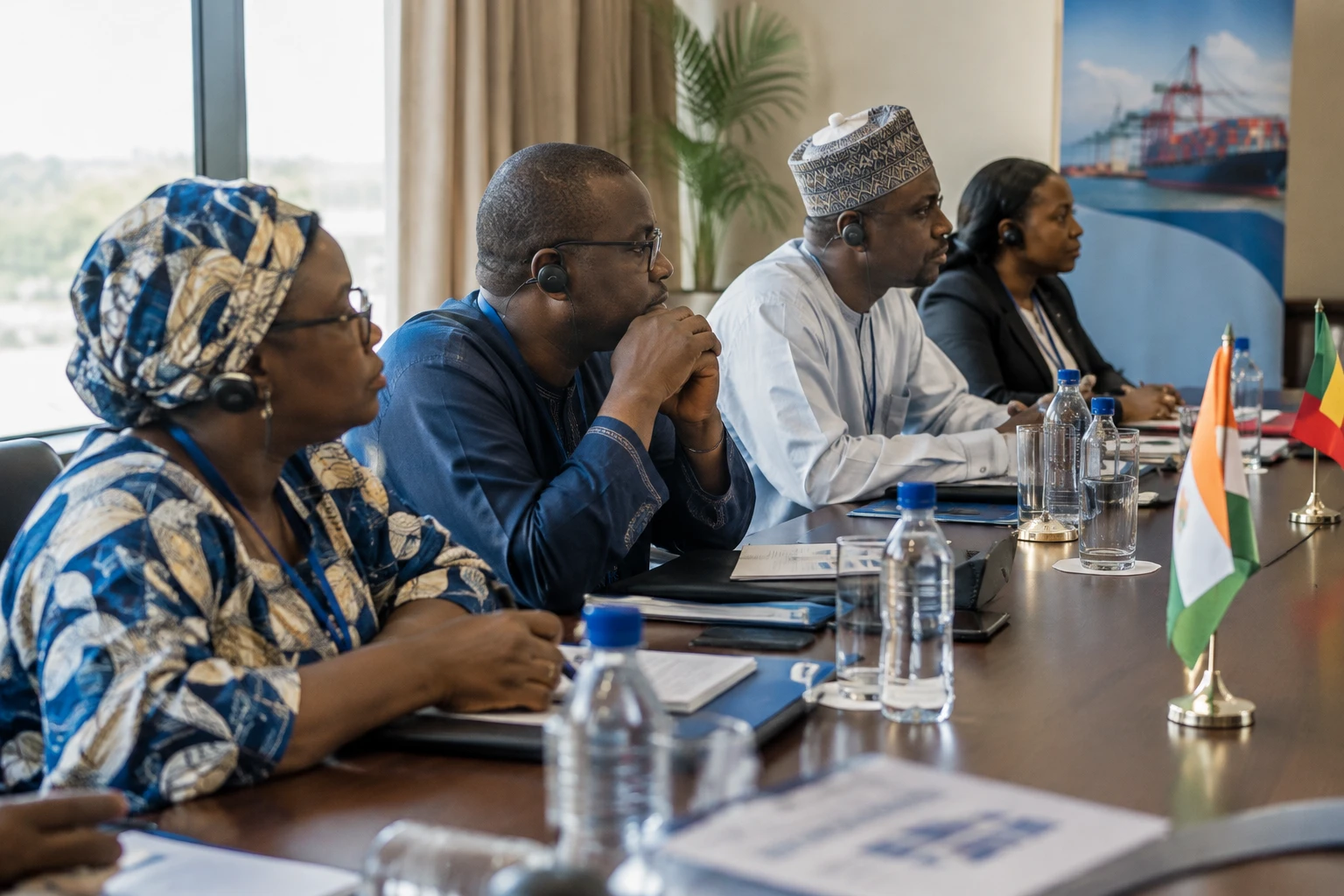
For an importer in Niamey, choosing a seaport is not simply a matter of distance. Transport costs, customs formalities, delivery times and the reliability of the route matter just as much. These are the criteria on which Lomé is seeking to strengthen its ties with Sahelian markets.
Markets beyond Togo’s coastline
Niger, Burkina Faso and Mali have no access to the sea. Their traders therefore depend on land corridors to receive imported goods and transport exports to ports on the Gulf of Guinea or other coastlines. Lomé, in Togo, is one such gateway, alongside Cotonou, Tema and Abidjan, among others.
The three Sahelian countries make up the Alliance of Sahel States (AES), a confederation established by Mali, Burkina Faso and Niger. They have also left the Economic Community of West African States (ECOWAS), the regional organisation that brings together some West African states. These political changes do not erase their trade interdependence with their coastal neighbours.
Togo maintains relations with the AES authorities and commercial links with these countries. But diplomatic proximity alone is not enough to guarantee that a route is competitive. Hauliers and shippers assess the costs, journey times and practical constraints of each corridor.
A three-stop trade mission
The Alliance for the Promotion of the Port of Lomé (A2PL), which brings together public and private actors in the port supply chain, has launched a mission to meet business operators in the three countries. The first stop is Niamey, Niger, from 4 to 9 October 2026. The delegation is due in Ouagadougou, the capital of Burkina Faso, from 18 to 24 October, followed by Bamako, the capital of Mali, from 2 to 8 November.
The stated aim is to present the port’s services and strengthen relations with shippers, freight forwarders and local partners. The A2PL, established to coordinate actors on the port platform and promote Lomé in hinterland countries, regularly undertakes this kind of commercial outreach. The Port Autonome de Lomé outlines the A2PL’s remit.
The mission comes as the port has activity figures to point to. In 2024, it handled 30.64 million tonnes of goods. Transshipment — the transfer of containers from one ship to another before they reach their final destination — accounted for about 20.23 million tonnes. The figures were released by the port and reported by independent Togolese media. Data published by the Togolese government are also presented by Africa Supply Chain.
In 2025, container traffic reportedly reached 2.4 million TEUs, up from 2.06 million in 2024. A TEU, or twenty-foot equivalent unit, is the standard measure of container capacity. Lloyd’s List’s 2026 ranking places Lomé 91st worldwide. Togo First details the port’s performance.
Competitiveness also depends on the road
These figures alone do not show what share of goods is destined for Niger, Burkina Faso or Mali. Transshipment in particular measures maritime connections, not necessarily flows transported into the continent’s interior. To win over Sahelian operators, Lomé must therefore link its port capacity to favourable transit conditions all the way to final destinations.
Logistical difficulties remain a practical concern. At a meeting in Lomé in April 2026, Togolese and Burkinabe officials discussed demurrage costs, delays at the port and in customs, and the need to improve administrative arrangements on the Lomé-Ouagadougou corridor. The Burkinabe government reported on the discussions. Commercial promotion will therefore need to be accompanied by practical solutions, particularly for hauliers and businesses that bear the costs and delays.
The benefits of an efficient corridor are not distributed evenly. Large importing companies can negotiate contracts and manage stocks. Small businesses, traders and independent hauliers often have less room to absorb delays or unexpected costs. In Niger, Burkina Faso and Mali, these expenses can feed through to the prices of imported goods. In Togo, port activity supports handling, transit and transport services, but the benefits also depend on regular flows.
Regional competition to watch
The mission is part of a contest between ports and corridors, not just maritime terminals. For AES countries, diversifying routes can strengthen their ability to choose. For Lomé, retaining customers means proving that transit through Togo remains predictable and competitive, beyond political ties.
Progress will be measured by the commitments made to operators and the improvements seen on roads, at border posts and in customs procedures. The mission is still due to visit Ouagadougou in October, then Bamako in November 2026. These stops will offer a clearer indication of how business operators in each country assess Lomé’s offer.