Algeria
 Egypt
 Morocco
 Sudan
 Tunisia
 Benin
 Burkina Faso
 Cabo Verde
 Côte d'Ivoire
 Ghana
 Guinea
 Guinea-Bissau
 Liberia
 Mali
 Mauritania
 Niger
 Nigeria
 Senegal
 Sierra Leone
 The Gambia
 Togo
 Cameroon
 Central African Republic
 Chad
 DR Congo
 Equatorial Guinea
 Gabon
 Republic of the Congo
 São Tomé and Príncipe
 Burundi
 Comoros
 Djibouti
 Eritrea
 Ethiopia
 Kenya
 Madagascar
 Malawi
 Mauritius
 Mozambique
 Rwanda
 Seychelles
 Somalia
 South Sudan
 Tanzania
 Uganda
 Angola
 Botswana
 Eswatini
 Lesotho
 Namibia
 South Africa
 Zambia
 Zimbabwe
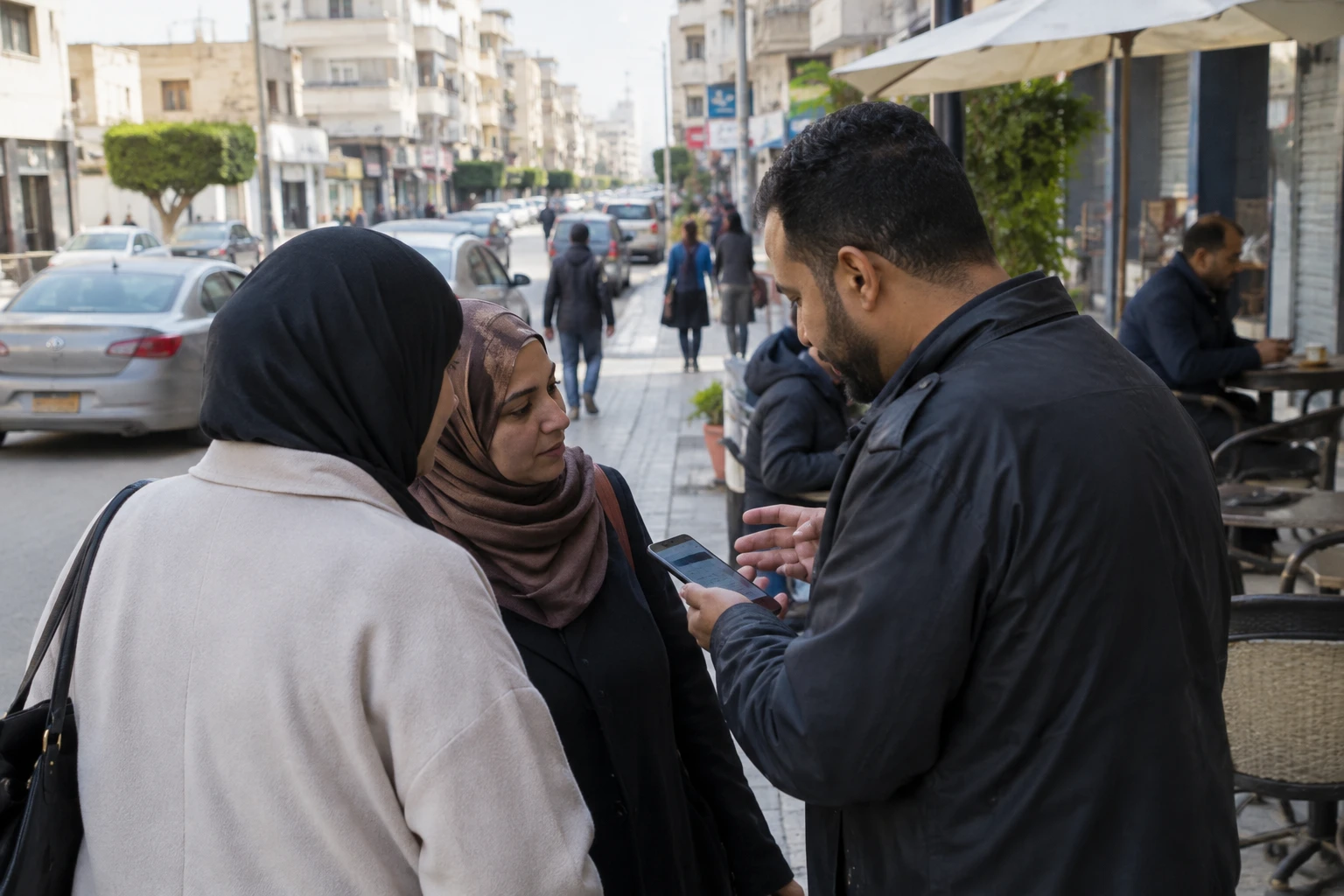
In Tripoli and Benghazi alike, unifying the army remains as much a political promise as a security challenge. The simultaneous presence in Paris of two military chiefs from rival camps opens up a new opportunity for dialogue, but does not yet prove that an agreement is within reach.
A possible meeting, not yet confirmed
Lieutenant General Salah al-Dine al-Namroush, chief of staff linked to the Tripoli-based government, and Lieutenant General Khaled Haftar, who represents the eastern military command, are in Paris this week. They are attending Euronaval, the exhibition devoted to naval defence and maritime security, held from 3 to 6 November 2026 at Paris Nord Villepinte.
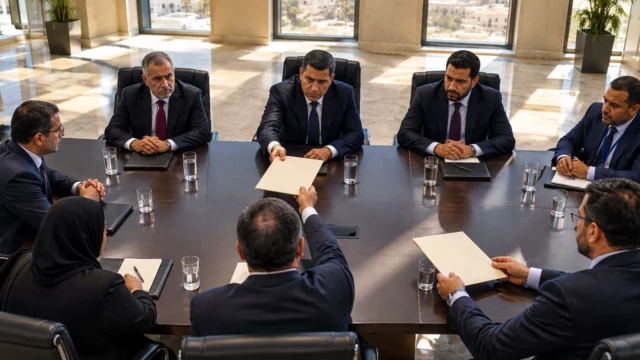
The two officials were received separately by French General Fabien Mandon. Libyan military sources cited by Libyan media outlet Al-Wasat say that discussions between them are being considered under French mediation. They could focus on practical steps towards military unification. No date has been announced, and the meeting would be neither official nor public. It is therefore important to distinguish between the separate meetings reported in Paris and a bilateral meeting that remains to be confirmed.
Communications from the two camps present their visits as serving different priorities. The Tripoli representative refers to defence co-ordination between the two countries. The eastern command highlights the exchange of expertise and regional security challenges. These formulations describe stated aims; they do not constitute proof of an agreement on a shared chain of command.
A division rooted in institutions
Since the fall of Muammar Gaddafi’s regime in 2011, Libya has not restored unified political and military authority. The division has become entrenched between rival institutions in the west, around Tripoli, and the eastern authorities, where Khalifa Haftar’s command exerts strong influence. Local balances also differ: the west remains divided among several armed forces, while the east is more structured around a centralised command.
This rift is not simply a matter of two military commands. It concerns who would have the final say in a national army, control of units and equipment, and the political authority to which the military would answer. Unifying organisational charts without resolving these questions could create a common institution on paper, but one that remains divided in practice.
The Joint Military Commission, known as the “5+5” and supported by the United Nations Support Mission in Libya, brings together five representatives from each camp. It provides a forum for dialogue between western and eastern forces. In July, a meeting in Sirte brought together al-Namroush and Haftar, among others. Libyan news agency LANA reported that the Presidential Council had described the meeting as a step towards dialogue and military unification. This precedent confirms that institutional contacts exist, without showing that fundamental disagreements have been resolved.
From military dialogue to concrete guarantees
A meeting in Paris would have an immediate impact that was primarily political: it would show that officials can maintain a channel of communication outside Libyan territory. But the venue and French involvement cannot replace a shared Libyan mandate. The participation of civilian authorities, the Presidential Council and UN mechanisms will affect the legitimacy and implementation of any arrangement.
For residents, the effects of unification would be measured less by statements than by observable changes: fewer clashes between rival forces, co-ordination at checkpoints and more predictable security for people travelling. The consequences could also vary between the capital, western cities, the east and the south, where armed groups and local authorities face different balances of power.
The process will also have to address a sensitive question: how to ensure civilian control of the army. After the Sirte meeting, the Presidential Council stressed that military arrangements must be grounded in institutions and the rule of law. This requirement is a reminder that merging military commands is not enough if the forces’ accountability to the state remains unresolved.
Observers also note that joint exercises and technical meetings can improve co-operation without integrating chains of command. The debate is therefore as much about rules and responsibilities as it is about operational co-ordination. Any announcement should be assessed against verifiable decisions, not merely the symbolism of a handshake.
An issue that extends beyond Libya
Libyan stability directly affects North Africa and its Sahelian neighbours. The movement of weapons and fighters, trade routes and border issues make the fragmentation of the forces significant for regional security. For the African Union, which supports territorial integrity and the political settlement of crises, a reunified Libyan military institution could help consolidate the state. It cannot, however, take the place of an inclusive political agreement.
The next step to watch is therefore clear: whether the proposed meeting actually takes place, followed by the possible publication of decisions attributable to both sides. For now, Paris offers an opportunity for dialogue; no independent evidence yet allows a formal meeting or an agreement on unification to be presented as a done deal.