Algeria
 Egypt
 Libya
 Morocco
 Sudan
 Tunisia
 Benin
 Burkina Faso
 Cabo Verde
 Côte d'Ivoire
 Ghana
 Guinea
 Guinea-Bissau
 Liberia
 Mali
 Mauritania
 Niger
 Senegal
 Sierra Leone
 The Gambia
 Togo
 Cameroon
 Central African Republic
 Chad
 DR Congo
 Equatorial Guinea
 Gabon
 Republic of the Congo
 São Tomé and Príncipe
 Burundi
 Comoros
 Djibouti
 Eritrea
 Ethiopia
 Kenya
 Madagascar
 Malawi
 Mauritius
 Mozambique
 Rwanda
 Seychelles
 Somalia
 South Sudan
 Tanzania
 Uganda
 Angola
 Botswana
 Eswatini
 Lesotho
 Namibia
 South Africa
 Zambia
 Zimbabwe
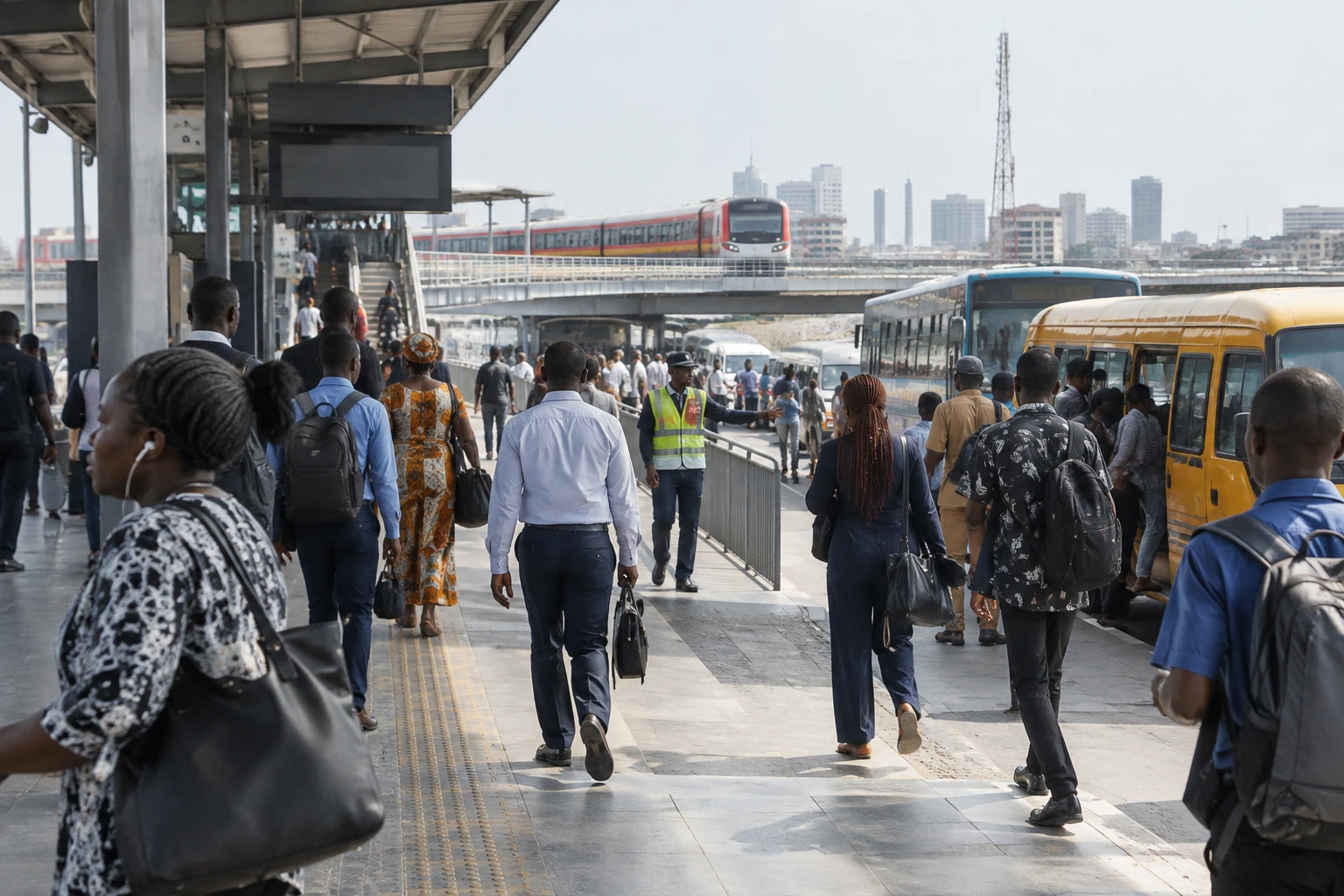
For residents of northern Lagos, saving time on the road will depend less on the arrival of new trains than on how often they actually run. The delivery of new trainsets strengthens the Red Line, but their effect on daily journeys remains to be seen.
A rail corridor between Agbado and Oyingbo
Lagos, Nigeria’s economic hub, extends far beyond its historic island. Journeys between residential neighbourhoods, business districts and commercial centres are still largely made by road. In this metropolis, delays and unreliable transport weigh on employees, traders and workers juggling several jobs.
Lagos’s urban rail network is part of a multimodal transport strategy that brings together rail, buses and waterways. The Blue Line, which opened to passengers in September 2023, links Marina to Mile 2. The Red Line serves the northern corridor between Agbado and Oyingbo, spanning about 27 kilometres and eight stations.
The network’s development also depends on cooperation between levels of government. Lagos State is leading the project through the Lagos Metropolitan Area Transport Authority (LAMATA), while the Nigerian Railway Corporation oversees the operation of the railway tracks. This division reflects a national challenge: enabling states to develop urban transport while coordinating their use of the federal railway network.
Trainsets delivered, but not yet in service
On 11 November 2026, Lagos authorities began unloading three new trainsets for the Red Line. They comprise 24 carriages in total. Their arrival was announced by Jubril Gawat, digital communications adviser to Governor Babajide Sanwo-Olu. The state government says the trains were acquired with the support of the federal government.
The delivery fulfils a target announced by LAMATA in February 2026: to add three eight-car trainsets to the existing fleet. The timeline then envisaged the third quarter of the year. The trains arrived in November, after that deadline. At the time of the announcement, they had not yet been officially unveiled or entered commercial service.
Each trainset could carry up to 2,000 passengers per journey, according to figures provided for the acquisition. This is a maximum capacity, not the number of passengers carried each day. The practical impact will depend in particular on the number of departures, service reliability and demand on the Agbado–Oyingbo route.
The Red Line was inaugurated in February 2024, but regular passenger service began on 15 October that year. In July 2026, LAMATA said the arrival of additional rolling stock was expected to increase daily services from nine to 24. The agency then estimated that the line could carry more than 200,000 passengers a day when fully operational. This potential figure is not current ridership.
Frequency: the real test for passengers
For passengers, the issue is not simply whether more trainsets are available. They need to run often enough, and stations must be accessible from surrounding neighbourhoods. Workers travelling to Ikeja, Oshodi or Yaba could benefit from more predictable connections. But residents who live far from stations will remain dependent on buses, minibuses and other feeder services.
The Blue Line demonstrates both the value of rail and its limitations. In 2025, it carried about 3.5 million passengers, according to figures presented by the Lagos government. Authorities increased the number of services as ridership grew. Yet road transport remains central to travel across the metropolis.
Rail alone will not replace the minibuses and tricycles that serve areas without stations and meet local transport needs. Effective integration requires straightforward connections, affordable fares and reliable information. Without these links, the new trainsets may improve journeys along the rail corridor without transforming the overall trip.
Blue Line passengers’ experience also highlights the importance of time and cost. Regular rail services can make work schedules more predictable and reduce dependence on traffic jams. But the benefits vary according to the distance to the station and households’ ability to pay for the whole journey, including connections.
A Nigerian challenge that extends beyond Lagos
The project places Lagos at the centre of a wider debate about urban mobility in Nigeria. In 2026, the Nigerian Railway Corporation issued LAMATA a permanent licence to continue operating the network under a track-sharing agreement. Lagos is thus the first Nigerian state government authorised to operate a complete set of rail services, according to railway authorities.
Across West Africa, the experience is of interest to major cities grappling with rapid urbanisation and overstretched transport networks. ECOWAS, the region’s economic integration organisation, does not manage these urban lines, but mobility in major cities affects trade, employment and access to services. Lagos therefore illustrates a shared challenge, although solutions cannot be transferred unchanged from one city to another.
The next step will be to verify that the trainsets enter service and to track changes in frequency. The announced capacity figures alone will not show whether the train becomes a practical alternative for more Nigerians. The decisive test will be how well stations connect with local transport and everyday destinations in a city where most journeys still rely on the road.