Algeria
 Egypt
 Libya
 Morocco
 Sudan
 Tunisia
 Benin
 Burkina Faso
 Cabo Verde
 Côte d'Ivoire
 Ghana
 Guinea
 Guinea-Bissau
 Liberia
 Mali
 Mauritania
 Niger
 Nigeria
 Senegal
 Sierra Leone
 The Gambia
 Togo
 Cameroon
 Central African Republic
 Chad
 DR Congo
 Equatorial Guinea
 Gabon
 Republic of the Congo
 São Tomé and Príncipe
 Burundi
 Comoros
 Djibouti
 Eritrea
 Ethiopia
 Kenya
 Madagascar
 Malawi
 Mauritius
 Mozambique
 Rwanda
 Seychelles
 Somalia
 South Sudan
 Tanzania
 Uganda
 Angola
 Botswana
 Eswatini
 Lesotho
 Namibia
 South Africa
 Zambia
 Zimbabwe
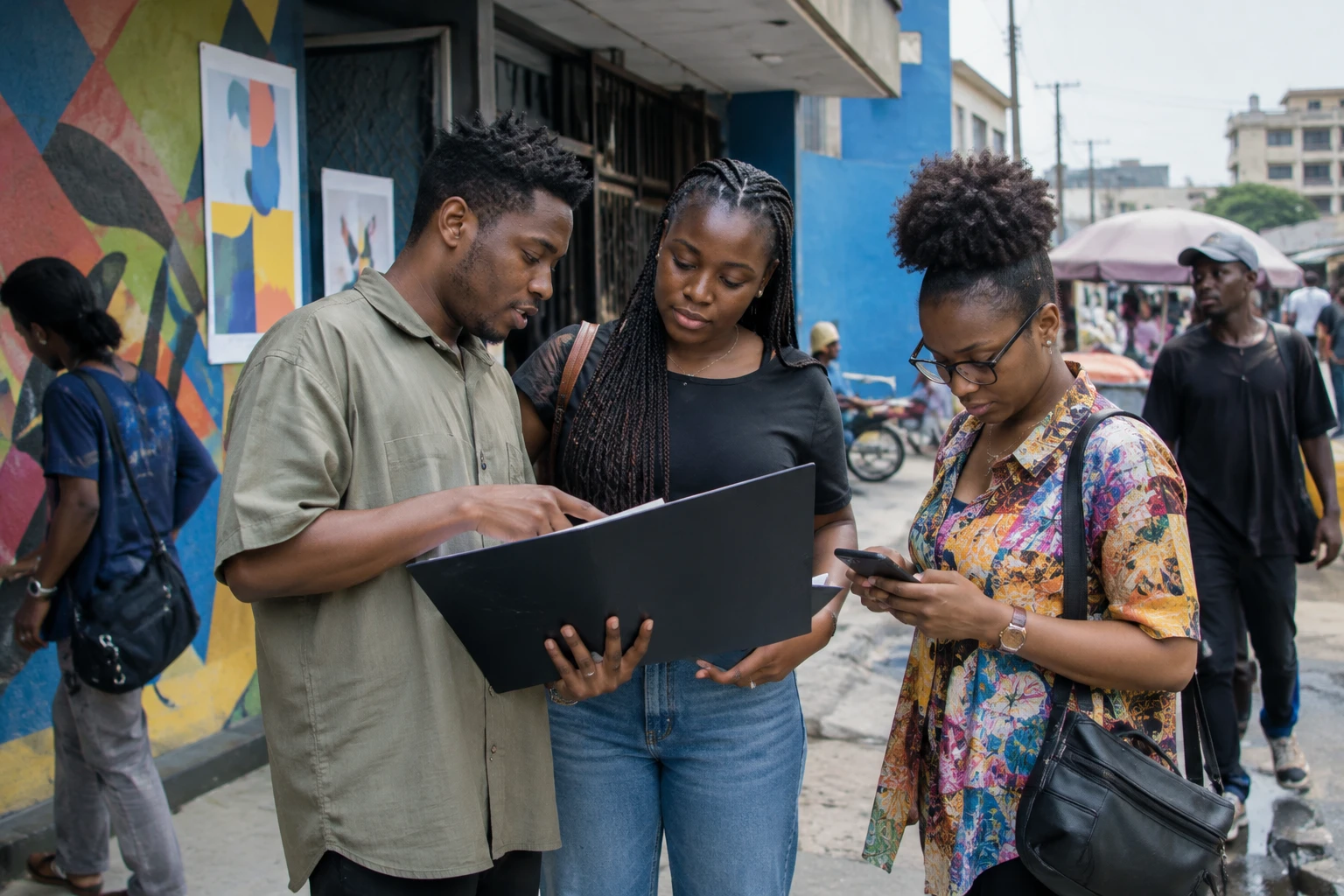
A film can fill cinemas and a song can circulate everywhere without its creators receiving a regular share of the revenue. This gap between cultural visibility and economic value gives discussions about financing Africa’s creative industries their full significance.
In Lagos, Nigeria, CANEX WKND 2026 was held from 5 to 8 November. The event brought together creators, investors and policymakers around an Afreximbank commitment to mobilise $2 billion for the cultural and creative industries between 2024 and 2027. But an announced allocation does not, on its own, show how much will actually be lent or invested, or which businesses will then be able to make a living from their productions.
Financing must cover the entire value chain
The problem is not limited to finding money to shoot a film or record an album. A creative business must also finance promotion, distribution and access to markets. It may own works, brands or rights, but these assets are often difficult to value and use as collateral for a bank loan.
Revenue sometimes arrives long after the initial spending. It is also uncertain: a project may appeal to an audience without generating enough income to repay a loan with fixed instalments. This mismatch makes it harder to access conventional credit, especially for small businesses and creators without a solid financial track record.
Financing must therefore be tailored to the different stages of a project. Loans, equity investment and infrastructure support can meet distinct needs. But without clear contracts, reliable distribution channels and royalty collection, even suitable financing may fail to generate sustainable revenue.
A deal concluded in 2024 illustrates the range of needs. Afreximbank signed a €245 million facility with New World TV, a Togo-based television company, to help finance the acquisition of sports broadcasting rights in Africa. These rights cover competitions organised by FIFA, UEFA and the Confederation of African Football, among others. The financing is therefore not only for creating content, but also for distributing it across several markets.
The bank had also said that the 2024 edition of CANEX WKND, held in Algiers, had facilitated more than $540 million in trade and investment agreements. This figure measures transactions facilitated or agreed at the event; on its own, it is not an account of funds actually disbursed to businesses.
Growing but concentrated markets
Recorded music revenues show both the sector’s potential and the limits of its markets. According to the International Federation of the Phonographic Industry’s 2026 report, recorded music revenues in sub-Saharan Africa reached $120 million in 2025, up 15.2%. South Africa accounted for 78.1% of that total.
This figure covers neither all the worldwide revenues of African artists nor the entire music economy. It concerns recorded music in the region. Nevertheless, it points to a high concentration of revenue: regional growth does not mean that income is distributed equally among countries, businesses and artists.
Nigeria, Ghana, Kenya and Côte d’Ivoire, among others, have vibrant music scenes, but audiences, platforms and payment systems do not yet form a borderless continental market. Languages, regulations, distribution costs and income disparities affect the ability of content to circulate and be monetised beyond its home market.
At regional level, the African Continental Free Trade Area (AfCFTA), which aims to facilitate trade between African countries, could open up opportunities. For cultural businesses, however, this ambition depends on distribution agreements, accessible cross-border payments and compatible copyright rules. The circulation of a work does not, in itself, guarantee that its creator will be paid.
Intellectual property remains difficult to value
Intellectual property includes, among other things, the rights that protect a work, a brand or a creation. When contracts are incomplete or royalties are poorly tracked, future revenues remain difficult to predict. Financiers are then reluctant to consider these rights as collateral or as a source of repayment.
The consequences vary between players. A large production company may negotiate with international platforms or broadcasters. By contrast, an independent artist or a small production house often has fewer resources to track contracts, defend its rights and secure payments in several countries. Financing must therefore go hand in hand with legal expertise and rights-management mechanisms.
Public institutions also have a role to play: clarifying the rules, strengthening collection bodies and making it easier for businesses to formalise their operations. This does not replace private or bank investment, but it can make projects more transparent to financiers and increase the share of revenue that goes to creators.
The test: from announcements to sustainable revenue
CANEX WKND brings creators, buyers and investors together. At the 2026 edition, discussions also focused on distribution, intellectual property and access to markets. The Nigerian government said that potential transactions worth more than $500 million were under discussion during the event. These were projects being discussed, not a sum confirmed as already invested.
The next measure of success will therefore not be only the volume announced at meetings. It will be necessary to track financing actually disbursed, the businesses supported and the revenue generated after works are released. The central question is one of continuity: will creative companies be able to reinvest their income and grow without depending on a new injection of external funding at every stage?
For African countries, the stakes go beyond cultural promotion. They concern business creation, employment and the ability to negotiate the value of works in international markets. The next Intra-African Trade Fair, scheduled to take place in Nigeria in 2027, could provide another opportunity to build commercial connections. It remains to be seen whether these meetings will lead to executed contracts and a fairer distribution of revenue along the creative value chain.
Details of the facility granted to New World TV · Data from the IFPI’s 2026 report · Coverage of CANEX 2026 by the Ivorian Press Agency · Afreximbank institutional information on CANEX