
 Algeria
 Egypt
 Libya
 Morocco
 Sudan
 Tunisia
 Benin
 Burkina Faso
 Cabo Verde
 Ghana
 Guinea
 Guinea-Bissau
 Liberia
 Mali
 Mauritania
 Niger
 Nigeria
 Senegal
 Sierra Leone
 The Gambia
 Togo
 Cameroon
 Central African Republic
 Chad
 DR Congo
 Equatorial Guinea
 Gabon
 Republic of the Congo
 São Tomé and Príncipe
 Burundi
 Comoros
 Djibouti
 Eritrea
 Ethiopia
 Kenya
 Madagascar
 Malawi
 Mauritius
 Mozambique
 Rwanda
 Seychelles
 Somalia
 South Sudan
 Tanzania
 Uganda
 Angola
 Botswana
 Eswatini
 Lesotho
 Namibia
 South Africa
 Zambia
 Zimbabwe
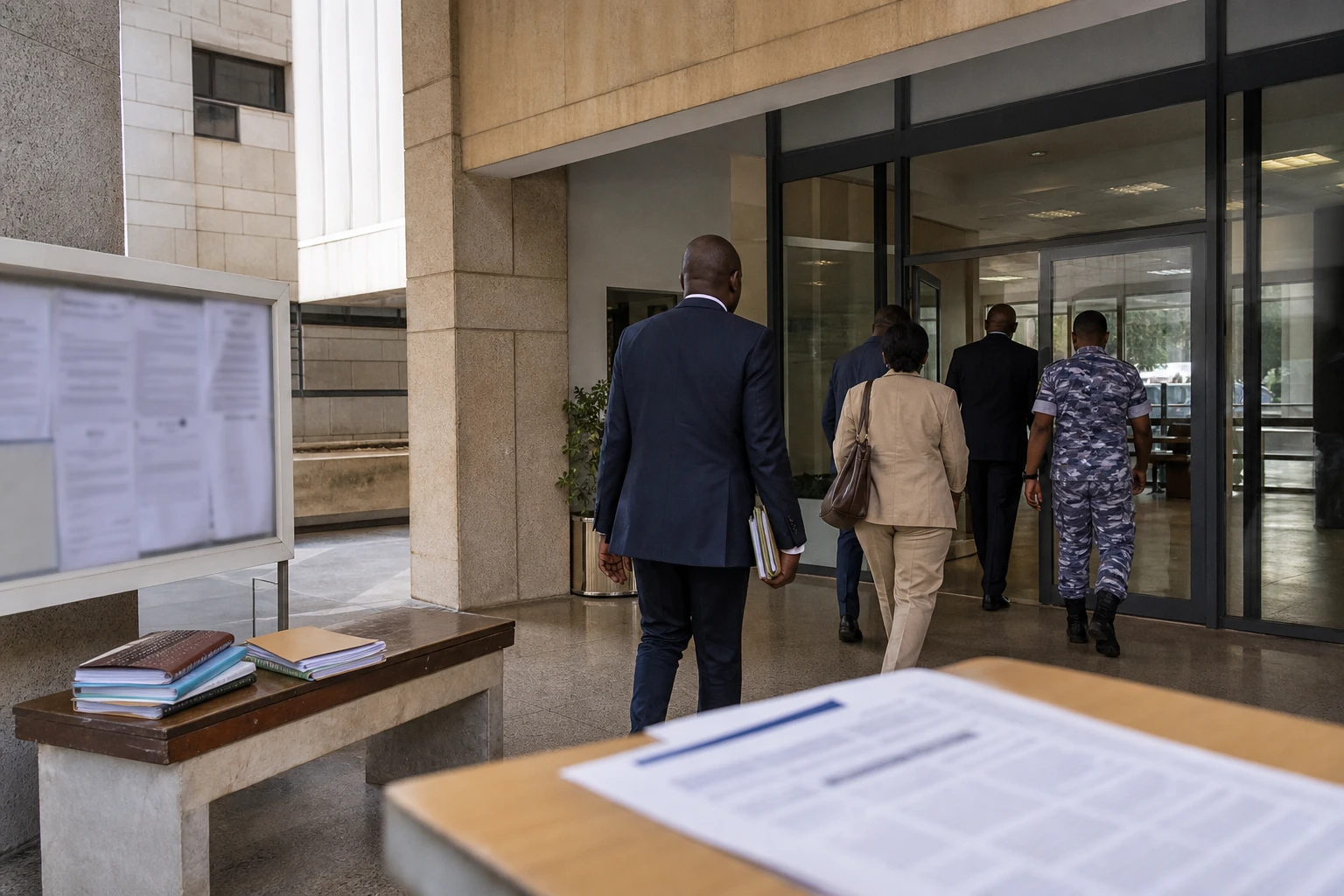
In Koumassi, a clearance operation becomes a matter of state
In Abidjan, demolitions are no longer just a question of urban planning. They now touch on the decision-making chain, public accountability and trust between the state and residents. In the Koumassi Campement neighbourhood, the destruction of homes and businesses on 3 June 2026 left hundreds of families homeless, with effects still visible months later in schools and temporary reception sites.
The case has particular significance because it is unfolding in Côte d’Ivoire’s economic capital, with Yamoussoukro as its political capital, in an area under intense land pressure where urban reorganisation operations have become commonplace. In the Autonomous District of Abidjan, the authorities say they aim to tackle uncontrolled occupation and risks in low-lying areas, particularly along the lagoon. But in Koumassi, the methods used, the scale of the demolitions and the legal basis for the operation immediately fuelled controversy.
What the investigation has found, three months after the bulldozers
On Wednesday 16 September 2026, Oumar Braman Koné, the public prosecutor at the Abidjan Court of First Instance, gave an update on the investigation opened on 10 June. According to the prosecution, 15 other people have been questioned since the case was opened, and several possible lines of responsibility have emerged during the hearings. Those named include the minister-governor of the Autonomous District of Abidjan, Ibrahima Cissé Bacongo, who was questioned on 24 June 2026.
The prosecutor says Mr Bacongo explained that the operation was carried out under the ORSEC plan, the national disaster prevention and management system. In his account, the aim was to clear rights-of-way and demolish illegal structures. However, the prosecution says it found several plots with deeds of ownership, renewing questions about how to distinguish precarious occupation, recognised land rights and mere presence in an area deemed at risk.
The same case is also examining the role of the police on the day of the demolitions. The prosecutor says the Abidjan district requisitioned the security forces. It remains to be determined whether the deployment was indeed intended for Koumassi Campement, in the precise terms of the instructions given. Investigations are continuing on this point, showing that the issue is not only the execution of an operation but also its administrative and security classification.
Another sensitive aspect concerns Jacques Alloui Brou, who is currently in detention. The prosecution disputes the claim that a court ruling authorised a general demolition. According to details provided by the prosecutor, the document cited did not allow the buildings to be razed, but only authorised the clearance of five homes. This point is central, as it pits a narrow reading of the court order against a much broader interpretation that was used as the basis for the operation on the ground.
The investigation is also looking at an MP for Gouméré/Tabagne, whom the prosecution describes as a suspected participant in coordinating and financing the operation. The prosecutor has asked for the National Assembly bureau to be referred to, in order to obtain authorisation to prosecute—a standard procedure when an elected official has protection linked to their mandate. This step gives the case an institutional dimension and shows that it goes beyond a neighbourhood dispute.
Urban urgency, land rights and social consequences
In Koumassi, the fundamental issue remains housing. For several months, the Autonomous District of Abidjan has justified urban reorganisation operations in several areas deemed sensitive, including Koumassi Campement. The authorities present these actions as a response to flooding, poor sanitation and occupation of risk-prone areas. But the episode has also revealed the other side of clearance policy: families displaced in the middle of the rainy season, children temporarily out of school, and households forced to resettle in schools or makeshift reception spaces.
The government quickly put assistance in place. On 28 June 2026, the Minister for National Cohesion, Myss Belmonde Dogo, announced an aid scheme for 400 displaced households, while other public and community organisations provided food, social support and temporary assistance. These measures softened the immediate shock without resolving the underlying issues: lasting security of land tenure, relocation and the prevention of sudden evictions.
The Koumassi case also highlights a wider problem in major West African cities: the coexistence of rapid urban growth, a shortage of land reserves and unclear property titles. In the Abidjan metropolitan area, as in other ECOWAS cities, governments are under pressure to balance security, sanitation, housing and social stability. When that balancing act is opaque, demolition becomes an instrument of public power that the affected communities find difficult to accept.
Politically, the case is sensitive. Ibrahima Cissé Bacongo is no peripheral figure. A former mayor of Koumassi, he knows the area and its dynamics. His questioning therefore puts at the centre of the debate the responsibility of those who run the city on behalf of the state. For residents, the question is not only who gave the order. It is also why plots with deeds were affected, and why implementation was faster than guarantees of rehousing.
A local case, but a regional signal
In Côte d’Ivoire, the case tests the institutions’ ability to handle an urban crisis without blurring the line between administrative policing and respect for rights. Across West Africa, it is a reminder that fast-growing cities can no longer manage informal housing with bulldozers alone. ECOWAS, often associated with political crises, is also indirectly affected by these urban tensions, which weigh on mobility, informal employment and social cohesion in regional capitals.
The next turning point will be judicial and institutional. The prosecution says it has serious evidence against at least one MP, and the National Assembly could be asked to authorise possible prosecutions. At the same time, investigations must still clarify the precise legal basis for the demolitions, the chain of command and the status of the land rights claimed by some occupants. In this case, the justice system’s response will say much about how the Ivorian state intends to reconcile the reorganisation of Abidjan with residents’ legal security.



