Algeria
 Egypt
 Libya
 Morocco
 Sudan
 Tunisia
 Benin
 Burkina Faso
 Cabo Verde
 Côte d'Ivoire
 Ghana
 Guinea
 Guinea-Bissau
 Liberia
 Mali
 Mauritania
 Niger
 Nigeria
 Senegal
 Sierra Leone
 The Gambia
 Togo
 Cameroon
 Central African Republic
 Chad
 Equatorial Guinea
 Gabon
 Republic of the Congo
 São Tomé and Príncipe
 Burundi
 Comoros
 Djibouti
 Eritrea
 Ethiopia
 Kenya
 Madagascar
 Malawi
 Mauritius
 Mozambique
 Rwanda
 Seychelles
 Somalia
 South Sudan
 Tanzania
 Uganda
 Angola
 Botswana
 Eswatini
 Lesotho
 Namibia
 South Africa
 Zambia
 Zimbabwe
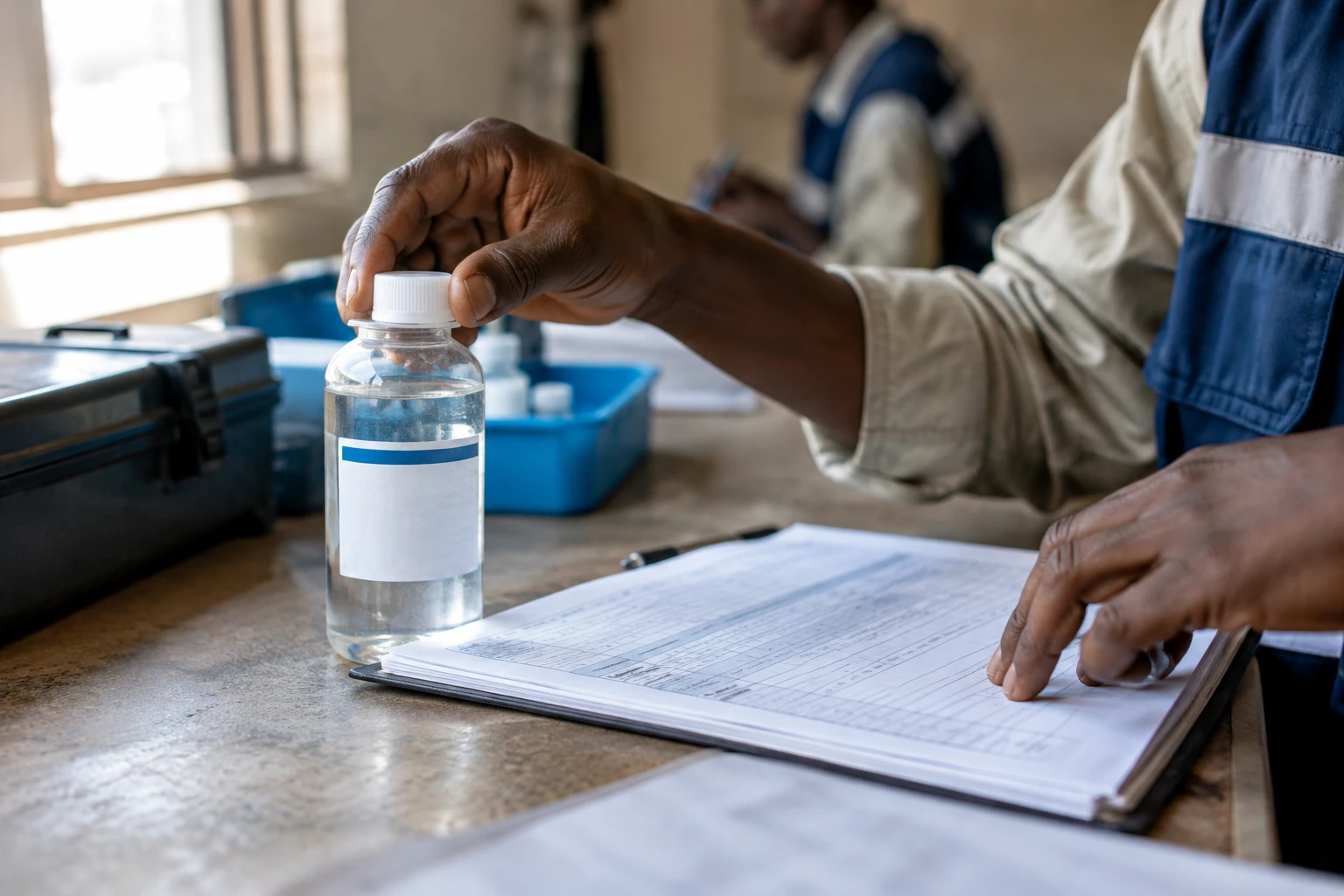
In Kolwezi, the stakes go beyond the amount claimed in court. For families living near mining facilities, the question is who should measure the risks, protect residents and repair the damage when an industrial activity is called into question.
Hearing adjourned before facts examined
On 3 November 2026, the Commercial Court of Kolwezi, in Lualaba province, held an initial hearing in a case against the Compagnie minière de Musonoie Global (COMMUS), which operates in copper and cobalt. The plaintiffs are also taking the Congolese state and the Congolese Environment Agency (ACE) to court, accusing them of failing to adequately monitor mining activities and enforce environmental rules.
The number of claimants varies among available reports: some count 29, others 27. Information also differs on the number of children affected. These discrepancies will need to be clarified as the proceedings continue. Residents are seeking about $1.3 million in compensation and $5 million to restore the environment. They are also calling for measures to improve access to drinking water and reduce alleged pollution.
The first hearing did not address the substance of the case. COMMUS’s lawyers challenged the presence of a commercial judge, citing a dispute between the judge and the company. The court adjourned the hearing so that this question about its composition could be examined. At this stage, the courts have established no liability.
Concerning measurements, but health link still to be established
Residents report health problems and a deterioration in their living environment. These accounts, some given anonymously, are not in themselves enough to prove that the mine caused each illness or complication mentioned. Establishing a medical link requires rigorous health investigations capable of distinguishing between exposures, medical histories and other possible factors.
Environmental measurements nevertheless provide verifiable evidence for the debate. A study by Source International, conducted with RAID and the Congolese organisation AFREWATCH, reports that at Galaxy school, located near mining facilities, the daily concentration of PM2.5 fine particles reached 44 micrograms per cubic metre. This is almost three times the World Health Organization’s daily guideline of 15 micrograms. Researchers also found metals in dust, as well as high acidity and elevated metal concentrations in a community well.
Another study published by AFREWATCH says daily particle levels exceeded WHO recommendations at several mining sites in the region. It notes, however, that its own measurements do not constitute an epidemiological study and cannot, on their own, attribute a specific illness to a given exposure. This distinction matters: environmental data can substantiate concerns and warrant further investigation without replacing a diagnosis or a court ruling.
COMMUS disputes the allegations. In a response published in July 2026, the company says it complies with Congolese regulations and points to several possible sources of pollution, including historical mining activities and local geological characteristics. It also says it has taken measures to control dust and manage wastewater. These arguments will need to be assessed against samples, measurement methods and evidence presented to the court.
A question of public oversight in Lualaba
Kolwezi lies at the heart of the Congolese copper and cobalt belt, an area where industrial mining operates alongside neighbourhoods, schools and livelihoods. The alleged impacts are not evenly distributed. Residents closest to waste dumps and processing sites are directly exposed to dust and problems accessing water. Children, people who are ill and households dependent on local resources may be particularly vulnerable.
State oversight is therefore central to the dispute. Communities are seeking not only redress, but also access to environmental data and credible monitoring. A joint report by RAID and AFREWATCH published in 2024 had already highlighted concerns about water, complaints mechanisms and enforcement of regulations in several communities near mines in south-eastern Congo. It also documented cases brought before local courts. The COMMUS case is thus part of a broader history of seeking legal remedies, rather than an isolated incident.
Congolese law sets out environmental obligations for mining operators. But their practical effect depends on regular inspections, accessible data and enforceable decisions. For the authorities, the case raises a question of capacity: how can air and water quality be independently verified, and how should they respond when results are disputed? For the company, it puts the transparency of its measurements and trust with residents at stake.
A test watched beyond the DRC
The case will be followed by other mining communities and by actors across the copper and cobalt supply chain. These metals are in demand, particularly for batteries and electrical equipment. Their role in the energy transition does not remove obligations to people living near extraction sites. The issue is also regional: the mining belt stretches across south-eastern Democratic Republic of the Congo and into Zambia, while local impacts depend on each country’s rules and oversight.
The next step will first be procedural: the court must address the challenge to the composition of the panel before considering the evidence and the parties’ claims. The expert assessments, the response from the ACE and the state, and any announced or ordered monitoring measures will need to be followed. The case has yet to determine COMMUS’s liability. It has already highlighted a key requirement for mining governance in the DRC: environmental data must be accessible, verifiable and taken into account by the courts.
Background documents: Congolese report on the hearing and residents’ demands ; environmental data and COMMUS response reported by Source International ; air quality findings published by AFREWATCH and its partners ; report on environmental concerns in mining communities in the DRC.