Algeria
 Egypt
 Libya
 Morocco
 Sudan
 Tunisia
 Benin
 Burkina Faso
 Cabo Verde
 Côte d'Ivoire
 Ghana
 Guinea
 Guinea-Bissau
 Liberia
 Mali
 Mauritania
 Niger
 Nigeria
 Senegal
 Sierra Leone
 The Gambia
 Togo
 Cameroon
 Central African Republic
 Chad
 Equatorial Guinea
 Gabon
 Republic of the Congo
 São Tomé and Príncipe
 Burundi
 Comoros
 Djibouti
 Eritrea
 Ethiopia
 Kenya
 Madagascar
 Malawi
 Mauritius
 Mozambique
 Rwanda
 Seychelles
 Somalia
 South Sudan
 Tanzania
 Uganda
 Angola
 Botswana
 Eswatini
 Lesotho
 Namibia
 South Africa
 Zambia
 Zimbabwe
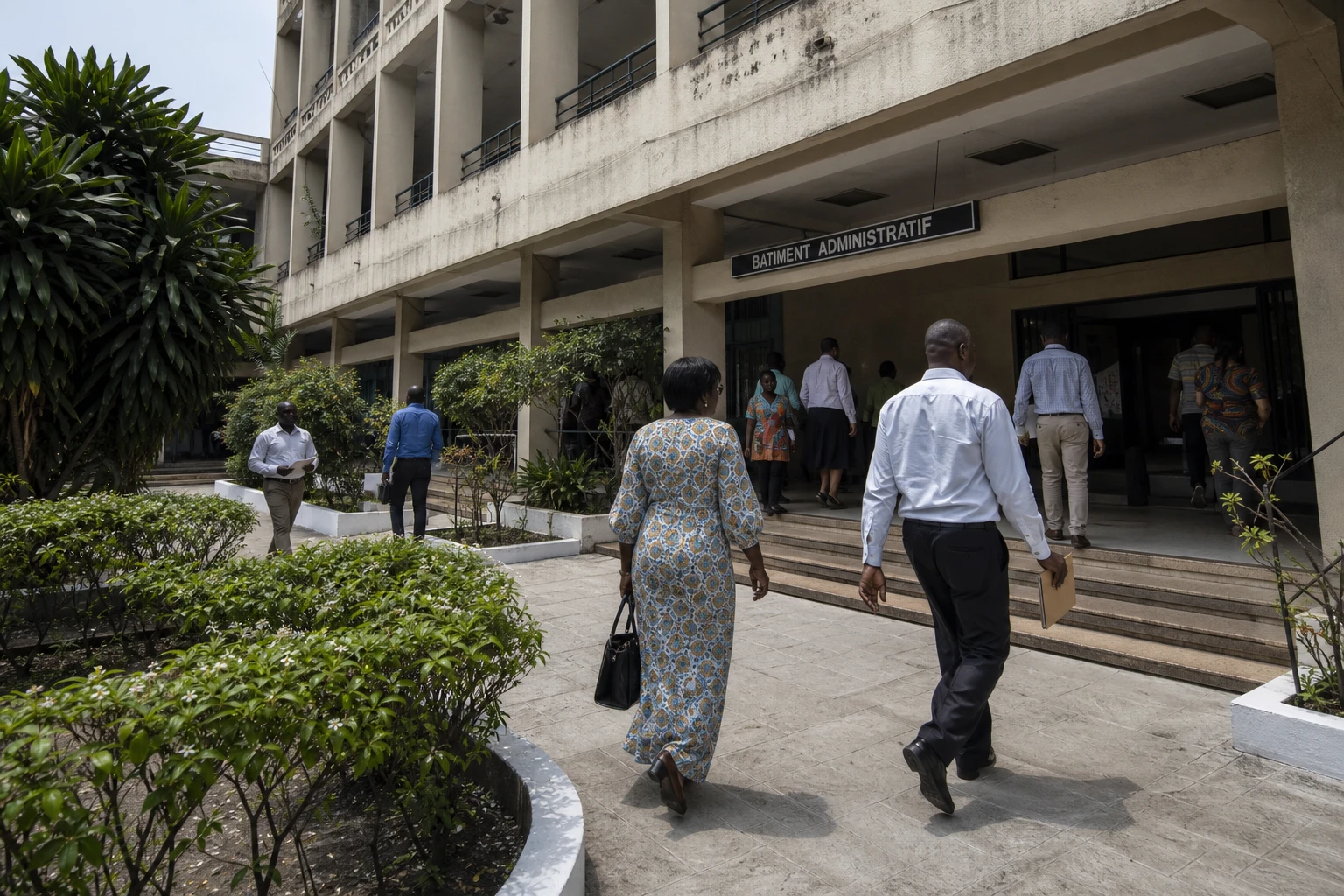
In Kinshasa, a demonstration intended to take the constitutional debate onto the streets descended into violence. The death of Manassé Lomboto Bomengola, a senior figure in ADD Congo, has put the question of responsibility at the centre of the confrontation between the authorities and the opposition.
A mobilisation born of the constitutional battle
The Article 64 Coalition, or C64, had called for a demonstration on 15 September 2026 against any proposed amendment to the Constitution. The platform brings together several prominent figures in the Congolese opposition, including Martin Fayulu, Moïse Katumbi, Delly Sesanga and Augustin Matata Ponyo.
Its name refers to Article 64 of the Congolese Constitution. It recognises citizens’ duty to thwart any individual or group that seizes power by force or exercises it in violation of the Constitution.
The mobilisation comes amid an already tense political climate. President Félix Tshisekedi’s second term ends in 2028. The opposition fears that a constitutional revision could pave the way for another candidacy. The authorities, for their part, argue that the debate must follow the procedures laid down by the institutions.
The demonstration was not confined to Kinshasa. Gatherings or incidents were also reported in several cities, notably Lubumbashi and Kindu. The authorities had stepped up security arrangements amid restrictions linked to the spread of Ebola virus disease.
Manassé Lomboto’s death at the heart of the allegations
Manassé Lomboto Bomengola was in charge of security at ADD Congo, the party led by opposition figure Prince Epenge. He was reportedly assaulted during clashes that accompanied the march in Kinshasa.
According to several Congolese media outlets, he succumbed to his injuries on the evening of 15 September after being taken to a hospital. The precise circumstances of his death have yet to be established by an independent inquiry.
The opposition accuses young people described as close to the “Force du progrès”, a youth organisation associated with the UDPS, the president’s party. It says these activists attacked marchers in Limete, notably in the area between several streets running perpendicular to Boulevard Lumumba.
The coalition has also criticised the conduct of the security forces. It accuses them of using tear gas against demonstrators while hostile groups were allegedly involved in the clashes. These allegations have not, at this stage, been confirmed through any public judicial process.
The government has rejected the account of a planned crackdown. Spokesman Patrick Muyaya recalled that the right to demonstrate is recognised by the Constitution, while accusing the opposition of disrupting the country’s activities and, he said, spreading misleading information about school closures.
The timeline of the 15 September demonstration describes a heavy security presence and difficulties in getting some gatherings under way. Congolese media subsequently reported Manassé Lomboto’s death and his party’s calls for an inquiry.
Calls for an inquiry, but also the risk of escalation
In its assessment of the events, the C64 is calling for those involved in the violence to be prosecuted. It is also demanding the disbanding of the “Force du progrès”, which it describes as a militia linked to the authorities.
The coalition says the violence was not confined to a single clash. It cites injured activists, arrests it considers arbitrary, political figures targeted and party headquarters damaged. The exact number of people detained remains difficult to establish in the absence of a consolidated public register.
The C64 has now raised the prospect of resorting to “legitimate self-defence” to protect its members during future actions. This is a consequential formulation. In a country where political demonstrations can quickly turn into street clashes, it risks fuelling confrontation between partisan groups.
The central issue, then, remains judicial. A credible inquiry should establish who initiated the violence, what weapons were used, the circumstances in which Manassé Lomboto was injured and exactly how the police intervened.
It should also examine the arrests made during and after the march. For the victims’ families and public officials alike, the transparency of the process will be decisive. An inquiry limited to the demonstrators alone would not address the allegations made by the opposition.
Kinshasa under pressure, region watching
The political crisis comes as the Democratic Republic of the Congo faces severe security pressure in the east of the country. Fighting involving M23 and other armed groups is occupying much of the state apparatus. This situation is limiting the government’s room for political manoeuvre, but it does not suspend civil liberties.
The DRC is a member of the Southern African Development Community, SADC, and the East African Community, EAC. Both regional bodies are already following the situation in the Congo because of the security crisis in the east. A further deterioration of the political climate in Kinshasa could complicate regional stabilisation efforts.
The issue also goes beyond the confrontation between the C64 and the authorities. It concerns the ability of Congolese institutions to hold a constitutional debate without intimidation, violence or recourse to partisan groups.
The next step will therefore be twofold. The authorities must clarify the framework for the constitutional process. The courts, in turn, must establish who was responsible for the violence of 15 September. Without a credible response, Manassé Lomboto’s death could become another marker of political polarisation in the Congo.