Algeria
 Egypt
 Libya
 Morocco
 Sudan
 Tunisia
 Benin
 Burkina Faso
 Cabo Verde
 Côte d'Ivoire
 Ghana
 Guinea
 Guinea-Bissau
 Liberia
 Mali
 Mauritania
 Niger
 Nigeria
 Senegal
 Sierra Leone
 The Gambia
 Togo
 Cameroon
 Central African Republic
 Chad
 DR Congo
 Equatorial Guinea
 Gabon
 Republic of the Congo
 São Tomé and Príncipe
 Burundi
 Comoros
 Djibouti
 Eritrea
 Ethiopia
 Kenya
 Madagascar
 Malawi
 Mauritius
 Mozambique
 Seychelles
 Somalia
 South Sudan
 Tanzania
 Uganda
 Angola
 Botswana
 Eswatini
 Lesotho
 Namibia
 South Africa
 Zambia
 Zimbabwe
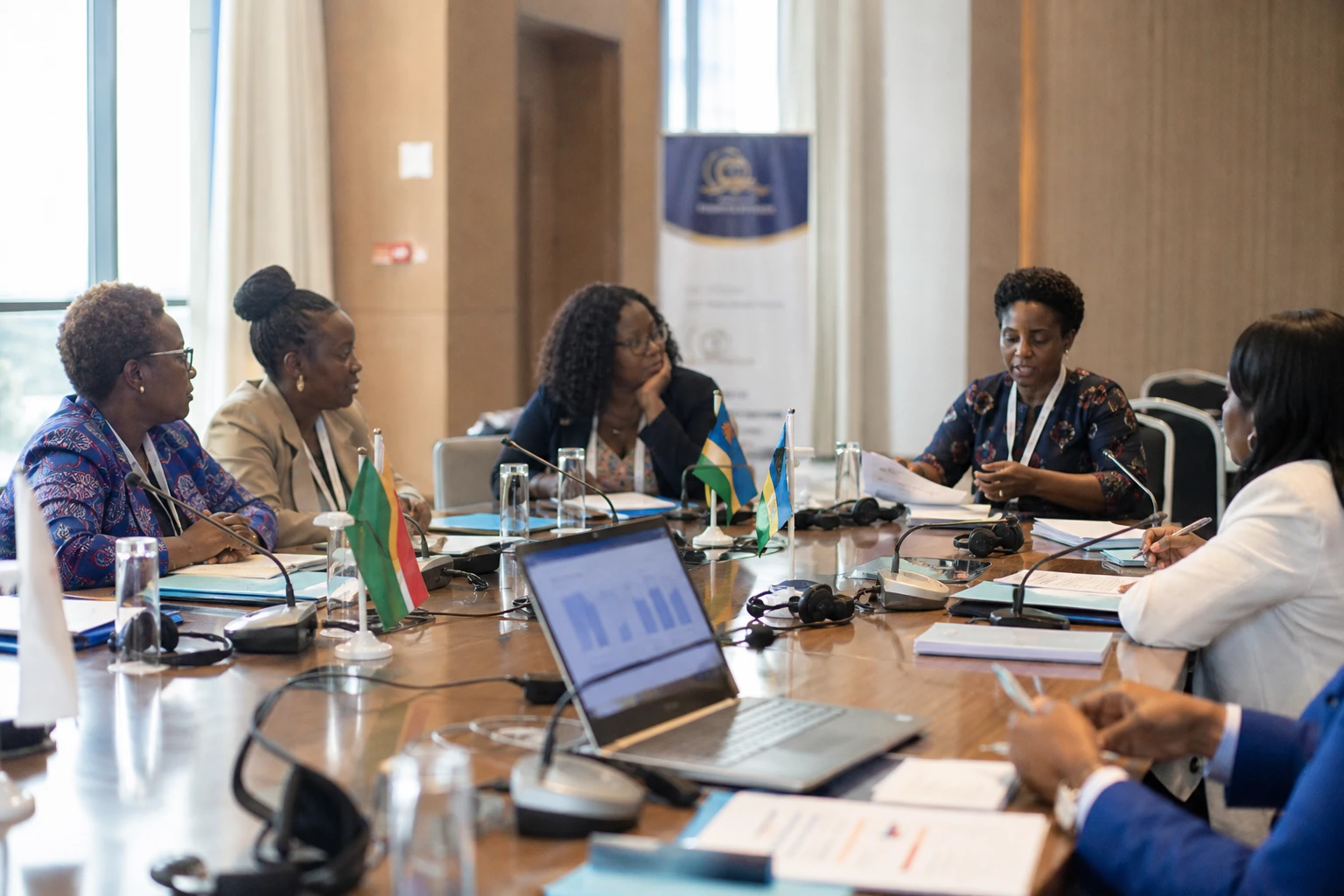
Kigali, a continental testing ground for women seeking influence
In Kigali, power is exercised not only in parliamentary chambers. It is also prepared in classrooms, mentoring networks and spaces where coalitions are forged. It is in this spirit that the African Academy for Women in Political Leadership is taking shape, designed as a training tool for women leaders expected to take on positions of responsibility and remain in them.
The choice of Rwanda’s capital is no accident. For several years, Kigali has hosted pan-African initiatives related to governance, training and citizen participation. Rwanda, meanwhile, remains a frequently cited case for women’s representation in Parliament: women occupy 63.75% of seats in the Chamber of Deputies, according to official data from the Rwandan Parliament and the Inter-Parliamentary Union.
This reality does not tell the whole story, but it provides a framework. When a country has turned women’s presence in institutions into a visible political marker, it becomes a reference point for regional programmes seeking to move from symbolism to practice.
Training designed for decision-making, not just visibility
The Academy was announced in Kigali on 27 April 2026 by the United Nations Development Programme, in partnership with the African School of Governance, the African Union Commission and the African Women Leaders Network. The programme is presented as continental, fully funded and structured over four weeks, with online modules, a residential session, mentoring and peer exchanges.
The first cohort is expected to bring together 30 women leaders. The call for applications said that participants from all five African regions were sought, with particular attention to women aged 21 to 35 and countries due to hold elections in the following 12 to 36 months. The initial launch attracted more than 1,300 applications, showing the scale of demand for structured political training opportunities on the continent.
Programme officials say they want to address a familiar problem: women enter politics, but too few consolidate their place in decision-making circles. The aim, then, is less to create a showcase than to strengthen practical skills: strategy, political communication, coalition-building, campaign financing, legislative work and ethical leadership.
The initiative is part of a broader framework. The African Union adopted its 2018-2028 Strategy for Gender Equality and Women’s Empowerment. Pillar 4 explicitly addresses leadership, voice and visibility, and stresses that representation has lasting impact only when it translates into real influence where decisions are made.
What the project says about Africa’s balance of power
The launch of this academy tells us one simple thing above all: the question is no longer just women’s access to politics, but their ability to remain in the sphere of power. In many countries, women are present in parties, local assemblies, civil society and governments, but they remain less visible in the positions where crucial decisions are negotiated.
The challenge is as much institutional as cultural. Formal rules have advanced in several countries. But influence networks, access to funding, party discipline and social norms continue to weigh heavily. An academy cannot correct these imbalances on its own. It can, however, reduce isolation, professionalise careers and provide tools to endure in often closed political environments. This interpretation follows from the programme’s content and the continental strategy on women’s leadership.
The message for African capitals is clear. Women’s participation can no longer be limited to quotas on paper or occasional appointments. Institutions seeking to accelerate political transformation will also have to invest in preparation, the health of political parties, the quality of public debate and the passing on of experience between generations. This is precisely the purpose of having the UNDP, the African Union, the African Women Leaders Network and the African School of Governance involved.
The Rwandan case gives this initiative additional significance. The country has established itself as a point of comparison for women’s representation, but it also serves as a platform for training and governance diplomacy. This dual role strengthens its regional importance in the Great Lakes region and, more broadly, in East Africa, where Kigali hosts an increasing number of political, academic and institutional gatherings.
Continental resonance beyond Kigali
The academy also speaks to Agenda 2063, the African Union’s roadmap. Aspiration 6 places women and young people at the heart of development driven by the people themselves. It also links the ambition of equality to effective participation in public decision-making. The Academy is therefore aligned with an existing continental framework, though one that is still applied unevenly across countries.
The task remains immense. Across the continent, progress in women’s representation is not enough on its own to guarantee real power. The next steps will therefore be decisive: following the first cohort, seeing whether participants go on to elected, government or party roles, and determining whether the model is replicated in other African capitals. The real test will not be the launch ceremony, but the programme’s ability to produce lasting political careers.
On a continent where governance is shaped as much in institutions as in the making of elites, Kigali has just opened another space. Modest in size, but strategic in purpose: preparing women to govern, not merely to represent.