Algeria
 Egypt
 Libya
 Morocco
 Sudan
 Tunisia
 Benin
 Burkina Faso
 Cabo Verde
 Côte d'Ivoire
 Ghana
 Guinea
 Guinea-Bissau
 Liberia
 Mali
 Mauritania
 Niger
 Nigeria
 Senegal
 Sierra Leone
 The Gambia
 Togo
 Cameroon
 Central African Republic
 Chad
 DR Congo
 Equatorial Guinea
 Gabon
 Republic of the Congo
 São Tomé and Príncipe
 Burundi
 Comoros
 Djibouti
 Eritrea
 Ethiopia
 Madagascar
 Malawi
 Mauritius
 Mozambique
 Rwanda
 Seychelles
 Somalia
 South Sudan
 Tanzania
 Uganda
 Angola
 Botswana
 Eswatini
 Lesotho
 Namibia
 South Africa
 Zambia
 Zimbabwe
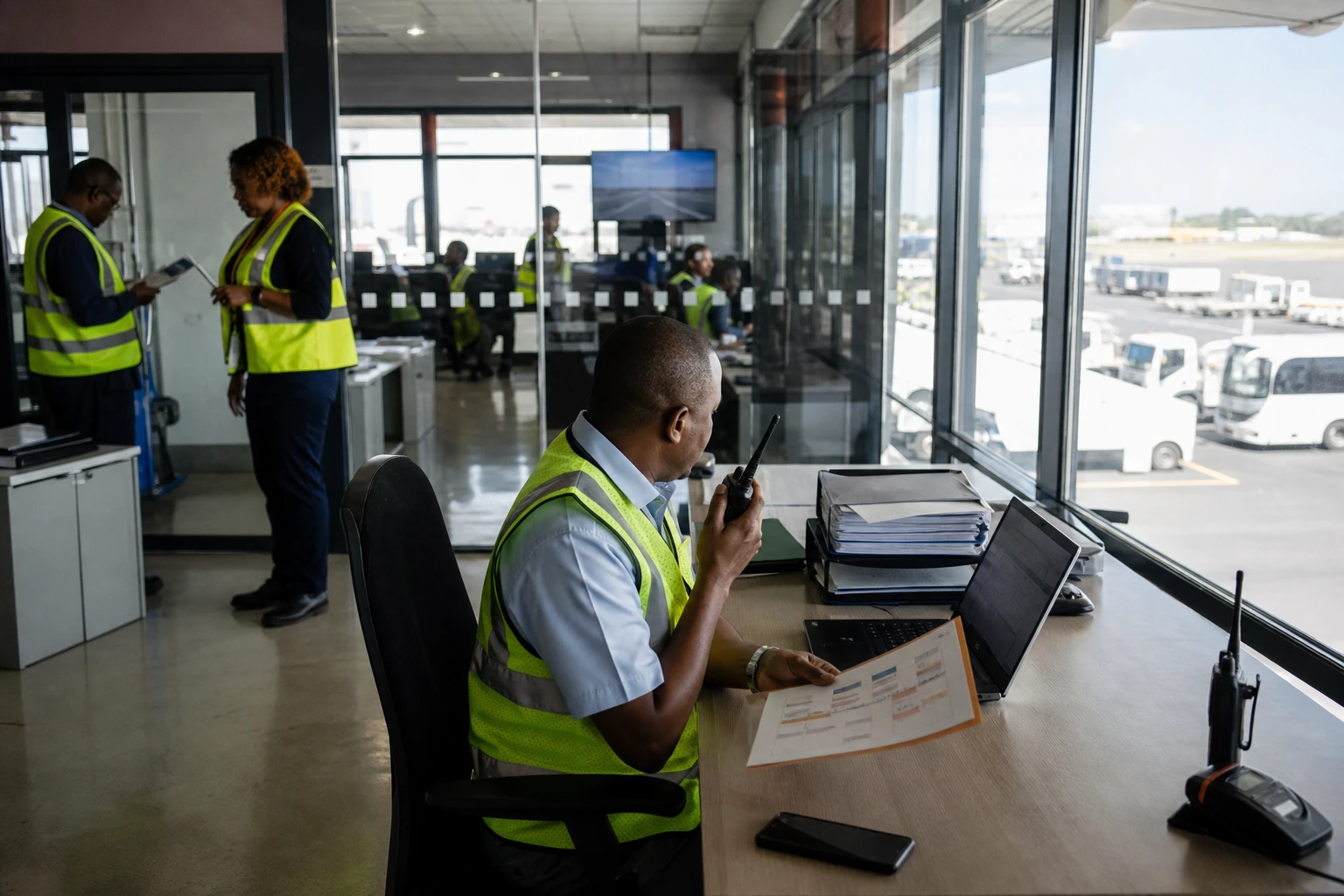
A ticket levy becomes a public policy tool
In Kenya, every airline ticket already carries a small share of the country’s ambitions. The question now is not simply how to collect the levy, but how to channel it back into airports, aviation safety and tourism appeal without making travel even more expensive for Kenyan passengers and visitors.
The issue matters because Nairobi wants to turn its skies into an economic advantage. The country aims to strengthen its role as a hub in East Africa, a sub-region where air mobility, tourism and logistics services are playing an increasingly important part in competition between capitals. This strategy is part of the East African Community, where states are seeking to smooth trade, even as capacity and investment progress at different rates across the region.
What the reform adopted in Nairobi provides for
On 27 August 2025, Kenya’s National Assembly approved the Air Passenger Service Charge Bill in plenary. The bill then went through the legislative process before its final adoption and assent in October 2025 as the Air Passenger Service Charge (Amendment) Act, 2025. It changes how the revenue is allocated, with the stated aim of better funding institutions linked to aviation and tourism.
The levy itself is already familiar to travellers: 600 Kenyan shillings for a domestic flight and $50 for an international flight. Before the reform, the law and allocation rules already directed funds to the Kenya Airports Authority, the Kenya Civil Aviation Authority and the Tourism Promotion Fund. The 2025 reform broadens the circle of recipients to meet sector needs, also including the Kenya Meteorological Service Authority and the Tourism Fund in the allocation framework.
That is the turning point: the contribution is no longer viewed simply as a departure tax, but as an operating tool. The authorities want to link the revenue more directly to the services provided. In short, what passengers pay should help run airports, secure airspace, improve weather monitoring and support tourism promotion.
Why Nairobi is relying on this revenue
Kenya has set ambitious targets. The government aims to attract 5 million international visitors a year by 2027, up from about 2.4 million in 2024, according to figures publicly cited by the presidency and the tourism ministry. This trajectory requires greater terminal capacity, more precise regulation and smoother services for travellers.
Meanwhile, the modernisation of Jomo Kenyatta International Airport remains a central project. Kenya Airports Authority documents and statements refer to a long-term increase in capacity to 22 million passengers a year, from a far lower baseline today. This projection explains the pressure on sector revenues: accommodating more people requires more screening, equipment and maintenance.
The rationale is also budgetary. By earmarking part of the levy for bodies that depend on air traffic, the state hopes to prevent the revenue from being diluted in the general budget. For the Kenya Civil Aviation Authority, this could support oversight and compliance with international standards. For the Kenya Airports Authority, it could help fund infrastructure. For weather services, it meets a very practical need: aviation depends on reliable information, especially in an environment where weather disruptions affect punctuality and safety.
Between budget efficiency and the risk of extra costs
The reform could, however, have a downside. The more beneficiaries there are, the more challenging it becomes to govern the funds. If priorities are not clearly ranked, money could be spread across several urgent needs. The result would be paradoxical: a better-targeted levy, but more fragmented resources.
For passengers, the question is simpler and more immediate: what do they get in return for this charge? If infrastructure improves, delays fall, safety is strengthened and the travel experience becomes more reliable, the contribution is more likely to be accepted. If, on the other hand, tickets remain expensive without visible improvements, Kenya’s competitiveness could suffer against other destinations in the region. This also affects airlines, tour operators and the informal economy around traveller flows in major cities and along tourist coastlines.
There is also a social dimension to consider. A business traveller does not bear the same burden as a student, a family or a small domestic tourism operator. Kenya also wants to develop domestic travel, not just international arrivals. The reform’s success will therefore depend on its real effect on the accessibility of air transport within the country.
A Kenyan policy with regional reach
This reform says something broader about Kenya’s economic choices. Nairobi is not simply waiting for traffic to increase. The country is seeking to organise and fund it, and turn it into sustainable revenue. This is a form of sectoral sovereignty: ensuring that activity finances part of its own infrastructure and regulation.
Across East Africa, the stakes go beyond accounting. In a region where hubs are compared, travellers make quick choices and tourism depends on reliable connections, Kenya is playing a clear card: turning Nairobi into a stronger gateway for business, leisure and connections. The passenger levy reform is therefore part of a regional competitiveness contest, but also of a period of reorganising public finances around concrete goals.
What happens next will depend on implementation. The law has been adopted and received assent, but its effectiveness will depend on institutions’ ability to allocate funds transparently, improve infrastructure quickly and make travel smoother. This is what Nairobi will be judged on: not the tax itself, but the visible results it delivers at airports, in tourism and in Kenya’s standing as an African aviation hub.