Algeria
 Egypt
 Libya
 Morocco
 Sudan
 Tunisia
 Benin
 Burkina Faso
 Cabo Verde
 Côte d'Ivoire
 Ghana
 Guinea
 Guinea-Bissau
 Liberia
 Mali
 Mauritania
 Niger
 Nigeria
 Senegal
 Sierra Leone
 The Gambia
 Togo
 Cameroon
 Central African Republic
 Chad
 DR Congo
 Equatorial Guinea
 Gabon
 Republic of the Congo
 São Tomé and Príncipe
 Burundi
 Comoros
 Djibouti
 Eritrea
 Ethiopia
 Madagascar
 Malawi
 Mauritius
 Mozambique
 Rwanda
 Seychelles
 Somalia
 South Sudan
 Tanzania
 Uganda
 Angola
 Botswana
 Eswatini
 Lesotho
 Namibia
 South Africa
 Zambia
 Zimbabwe
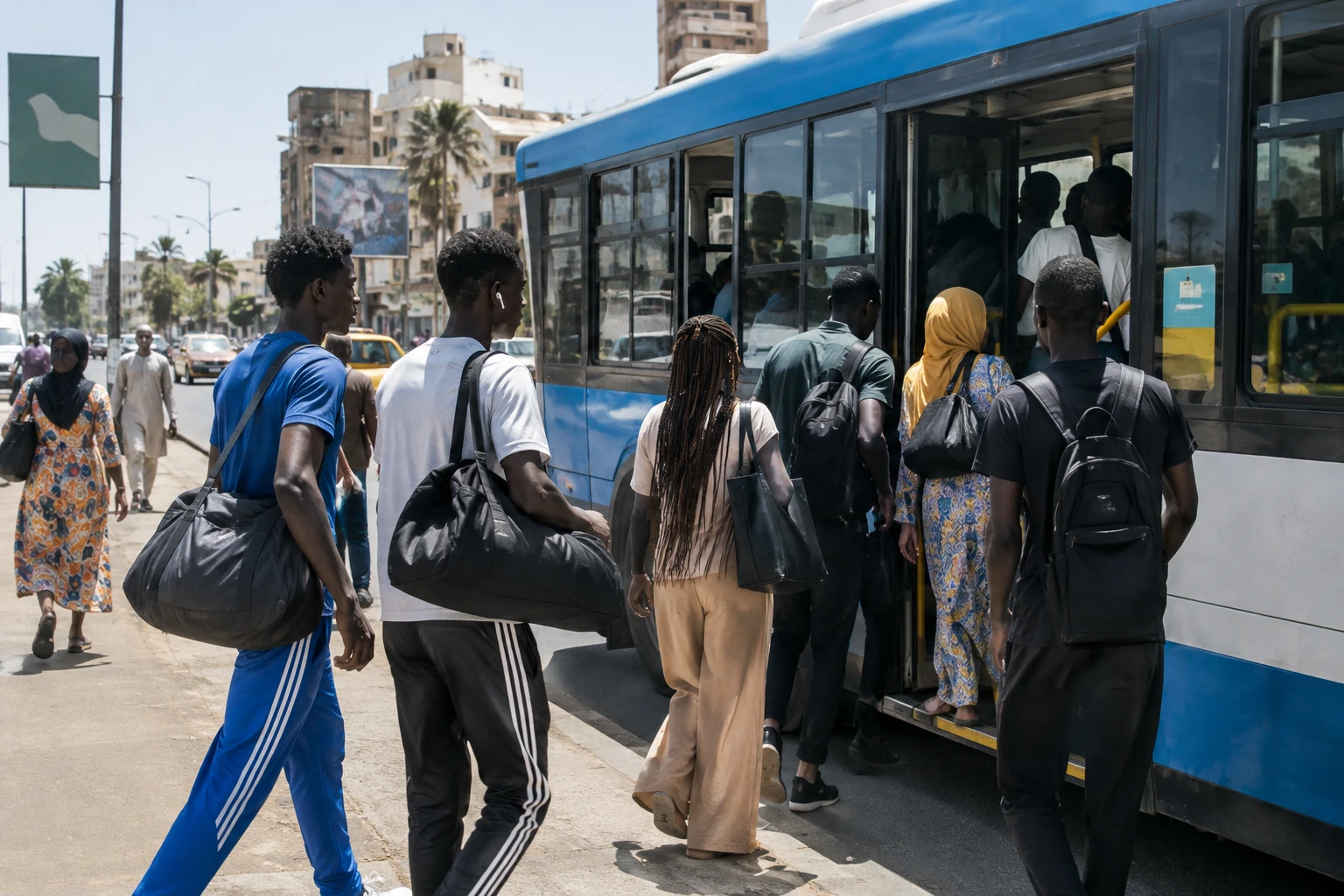
In Dakar, thousands of young athletes are preparing to bring a historic chapter to a close. A few hundred kilometres to the north, on the Louga coast, families are mourning passengers from a capsized pirogue. These two realities coexist in Senegal: the momentum of a continental event and the persistent urgency of perilous journeys to Europe.
Dakar, Africa’s first Olympic stage
The Youth Olympic Games (YOG) end on Friday 13 November. Held in Dakar, Diamniadio and Saly since 31 October, this edition is the first Olympic sporting event to take place on African soil. Around 2,655 athletes aged 14 to 17 took part in the competitions, according to data from the International Olympic Committee (IOC).
The programme combined Olympic sports with disciplines less familiar at this level, including beach wrestling and futsal. Beyond the medals, organisers highlighted youth participation and equality between female and male athletes. The closing ceremony is due to take place in Dakar, at Place de la Nation.
The choice of several venues linked the capital with Diamniadio and Saly. The athletes’ village, located on the campus of Amadou-Mahtar-Mbow University, is due to return to its university function. The IOC also says public transport, including the Regional Express Train and Bus Rapid Transit, contributed to travel during the Games. The real test begins now: maintaining the use of the facilities and sustaining the opportunities opened up for young Senegalese athletes.
Death toll rises on the Louga coast
On the north-western coastline, the death toll from the sinking of a pirogue carrying people seeking to migrate irregularly rose to 43, according to an update from the authorities reported on 12 November by the Senegalese Press Agency. Only one survivor had been reported. Search operations and the identification of victims were continuing.
The vessel sank off Lompoul, in the Kébémer department of the Louga region. The toll rose over several days: the APS reported 39 deaths on 9 November, then 42 on 11 November. The Associated Press also reported 39 deaths on 9 November, citing Senegalese authorities. The figures are therefore dated and provisional, but their progression has been confirmed by separate sources.
The Atlantic crossing to the Canary Islands remains a dangerous route for people trying to reach Europe. Senegalese authorities have referred to the activities of networks organising these departures. The response, however, is not limited to search operations or arrests: it also concerns economic prospects, opportunities for legal mobility and the safety of coastal communities. Bereaved families, meanwhile, face loss and uncertainty over those still missing.
The contrast with the Games does not mean that one erases the other. Dakar is attracting international attention and mobilising infrastructure, volunteers and sports federations. At the same time, departures continue from towns far from the capital, where the effects of major events and public investment are not necessarily felt in the same way.
Health vigilance that extends beyond borders
Another signal from the continent underscores the importance of regional cooperation. In Kenya, the last patient treated for Ebola left hospital on 11 November, the Kenyan Ministry of Health and the World Health Organization (WHO) announced. The Kenyan national news agency reported the same milestone. This does not yet mean that the country has officially been declared free of the disease.
The authorities have begun a 42-day surveillance period, twice the maximum incubation period for the virus. If no new cases are detected, Kenya could announce the end of the outbreak on 23 December. Two people died among the recorded cases; seven others recovered, according to the WHO. Kenya’s first confirmed case was linked to travel from the Democratic Republic of the Congo via Uganda, a reminder that epidemiological surveillance must track movement across borders.
Legacies to be measured after the ceremonies
For Senegal, a member of the Economic Community of West African States (ECOWAS), the days after the closing ceremony will show what Dakar 2026 really leaves behind. The benefits will depend in particular on young people’s access to facilities, the continuity of sports programmes and the use of venues outside competition periods. An international showcase does not, by itself, guarantee lasting benefits for residents.
The significance of the Games nevertheless extends beyond Senegal’s borders: hosting an Olympic event in Africa raises the profile of the continent’s ability to stage major competitions. But tragedies at sea are a reminder that this visibility does not encompass all public priorities. From sporting legacy to the safety of crossings and health cooperation, the issues vary according to the regions and populations concerned. The next step for Dakar will be to turn the attention it has received into results that can be measured over time.
Details verified with the Senegalese Press Agency on the Lompoul shipwreck, the APS on the YOG closing ceremony, the IOC on the Games’ figures, the WHO Africa on Ebola surveillance in Kenya and the Kenyan national news agency.