Algeria
 Egypt
 Libya
 Morocco
 Sudan
 Tunisia
 Benin
 Burkina Faso
 Cabo Verde
 Côte d'Ivoire
 Ghana
 Guinea
 Guinea-Bissau
 Liberia
 Mali
 Mauritania
 Niger
 Nigeria
 Senegal
 Sierra Leone
 The Gambia
 Togo
 Cameroon
 Central African Republic
 Chad
 DR Congo
 Equatorial Guinea
 Gabon
 Republic of the Congo
 São Tomé and Príncipe
 Burundi
 Comoros
 Djibouti
 Eritrea
 Ethiopia
 Madagascar
 Malawi
 Mauritius
 Mozambique
 Rwanda
 Seychelles
 Somalia
 South Sudan
 Tanzania
 Uganda
 Angola
 Botswana
 Eswatini
 Lesotho
 Namibia
 South Africa
 Zambia
 Zimbabwe
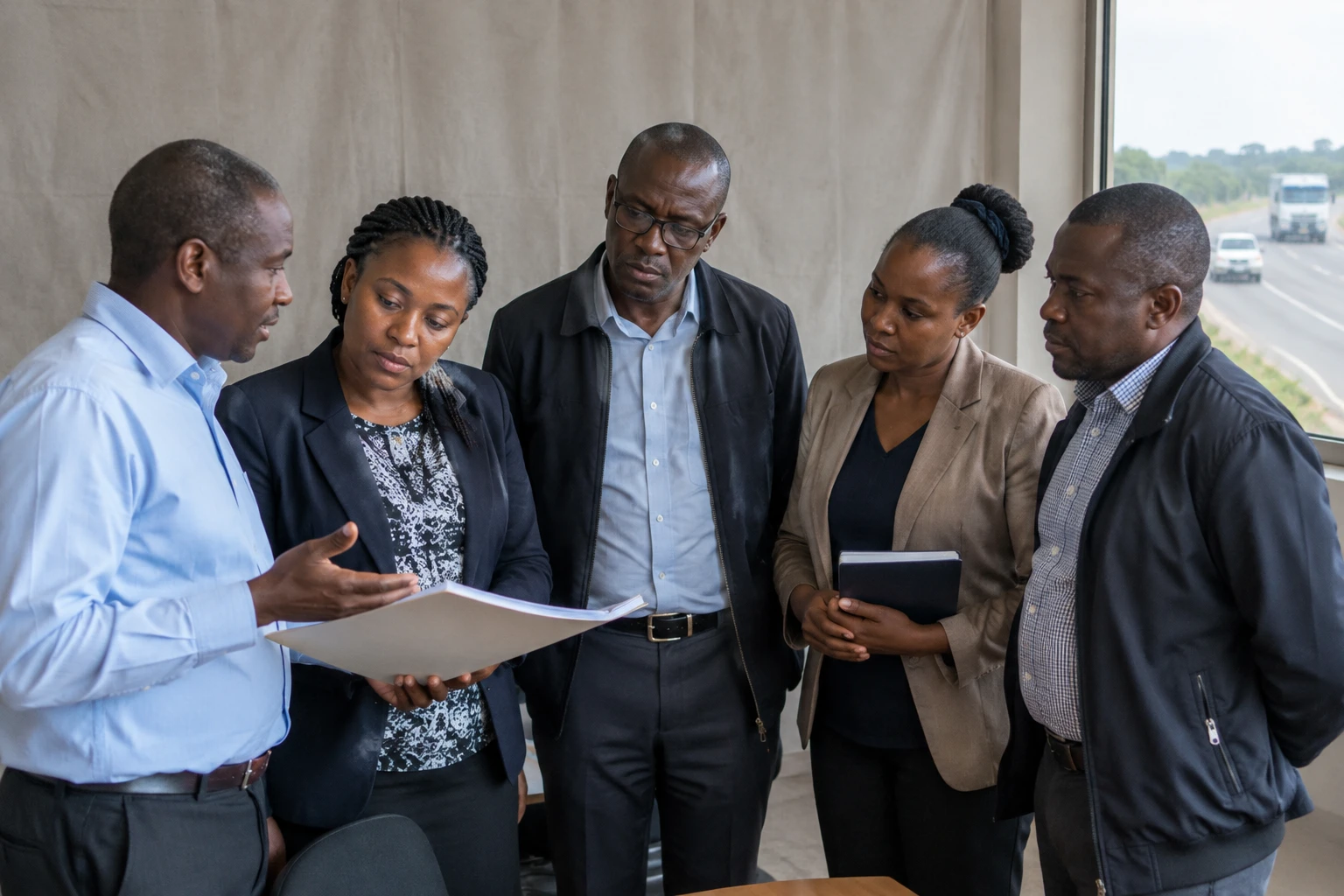
The route linking Nairobi to Mombasa carries people and goods that sustain an essential part of Kenya’s economy. But recurring deadly collisions serve as a reminder of the human cost of a corridor shared by buses, lorries and private vehicles.
Another crash on a vital route
On Sunday 25 October, a bus and a lorry collided near Mtito Andei, in Makueni County, on the Nairobi–Mombasa road. The toll reported by police and carried by several media outlets stood at at least 24 dead. Injured people were taken to Mtito Andei Hospital. Early local reports did not all give the same toll, which changed as people were treated.
The bus passengers were returning to Mombasa after a funeral in western Kenya. The Reverend Spencier Mdave, a survivor, said the lorry had reportedly hit the bus from behind, before it overturned. Other witnesses described an attempted overtaking manoeuvre interrupted by a vehicle coming from the opposite direction. These accounts describe possible circumstances, but the investigation has yet to establish exactly how the collision unfolded.
President William Ruto offered his condolences to the bereaved families and called for public transport vehicles to be inspected. He also urged drivers to obey the rules of the road. The National Transport and Safety Authority of Kenya, the NTSA, for its part, described the situation as an emergency and called for road accidents to be declared a national disaster.
A road already scarred by tragedy
The crash came less than a month after another fatal collision on the same route. On 3 October, an accident involving several vehicles near Salama killed 17 people, according to authorities cited by Kenyan and international media. Two tragedies so close together heighten concerns about the safety of a major road, but are not enough to establish that they had the same causes.
The NTSA reports around 20,000 accidents and more than 5,000 deaths a year in Kenya. These figures are the authority’s own and have not been independently confirmed here against a comparable statistical series. They nevertheless convey the scale of the issue raised by the agency: accidents affect families, hospital services and everyday journeys.
Speeding, dangerous overtaking, vehicle condition and road conditions are regularly cited as risk factors. In the case of the 25 October collision, no cause should be presented as established before the investigation’s findings. The NTSA has referred, as a preliminary possibility, to an improper overtaking manoeuvre; the available accounts do not replace investigators’ findings.
The human cost of an economic corridor
The Nairobi–Mombasa road is a vital link between the capital, the port of Mombasa and the country’s interior. It carries passengers, products and goods. A closure or slowdown after an accident therefore also affects drivers, traders, transport companies and households that depend on these exchanges. The consequences are not limited to large companies: small traders and workers travelling between cities can also lose time and income.
The inspections announced by the presidency can check the condition of public vehicles. On their own, they do not resolve other possible problems: driving behaviour, compliance with driving-time limits, enforcement of overtaking rules or safety on high-risk stretches. For passengers, prevention also depends on the authorities’ ability to enforce the rules consistently and take action at dangerous locations.
The death toll also highlights the role of emergency services and hospitals along the route. Injured people were treated in Mtito Andei, among other places. The speed of the response and the resources available in communities far from major centres can affect the care provided, although the available information does not allow the response times or hospital capacity deployed to be assessed here.
An issue that extends beyond Kenya’s borders
Kenya is a member of the East African Community (EAC), a regional organisation bringing together several East African countries and facilitating cooperation among them. Kenyan roads form part of exchanges that extend beyond national borders. Road safety is therefore a concern for regional travellers and transport operators, even though this crash occurred on Kenyan territory.
The 3 October crash and the 25 October collision make the concrete follow-up to official announcements particularly important: the investigation’s findings, the promised checks and any measures on dangerous sections. The challenge is national, but it also concerns regional corridors linking ports, cities and markets. For the victims’ families, the urgency is first and foremost human; for the authorities, it is also about turning repeated warnings into verifiable prevention.
The reported facts and tolls were cross-checked against accounts by Kenyan media and the Associated Press. The NTSA’s annual figures and the causes of the crash remain attributed to their sources.