Algeria
 Egypt
 Libya
 Morocco
 Sudan
 Tunisia
 Benin
 Burkina Faso
 Cabo Verde
 Côte d'Ivoire
 Ghana
 Guinea
 Guinea-Bissau
 Liberia
 Mali
 Mauritania
 Niger
 Nigeria
 Senegal
 Sierra Leone
 The Gambia
 Togo
 Cameroon
 Central African Republic
 Chad
 DR Congo
 Equatorial Guinea
 Gabon
 Republic of the Congo
 São Tomé and Príncipe
 Burundi
 Comoros
 Djibouti
 Eritrea
 Ethiopia
 Madagascar
 Malawi
 Mauritius
 Mozambique
 Rwanda
 Seychelles
 Somalia
 South Sudan
 Tanzania
 Uganda
 Angola
 Botswana
 Eswatini
 Lesotho
 Namibia
 South Africa
 Zambia
 Zimbabwe
A labour market built first on the margins
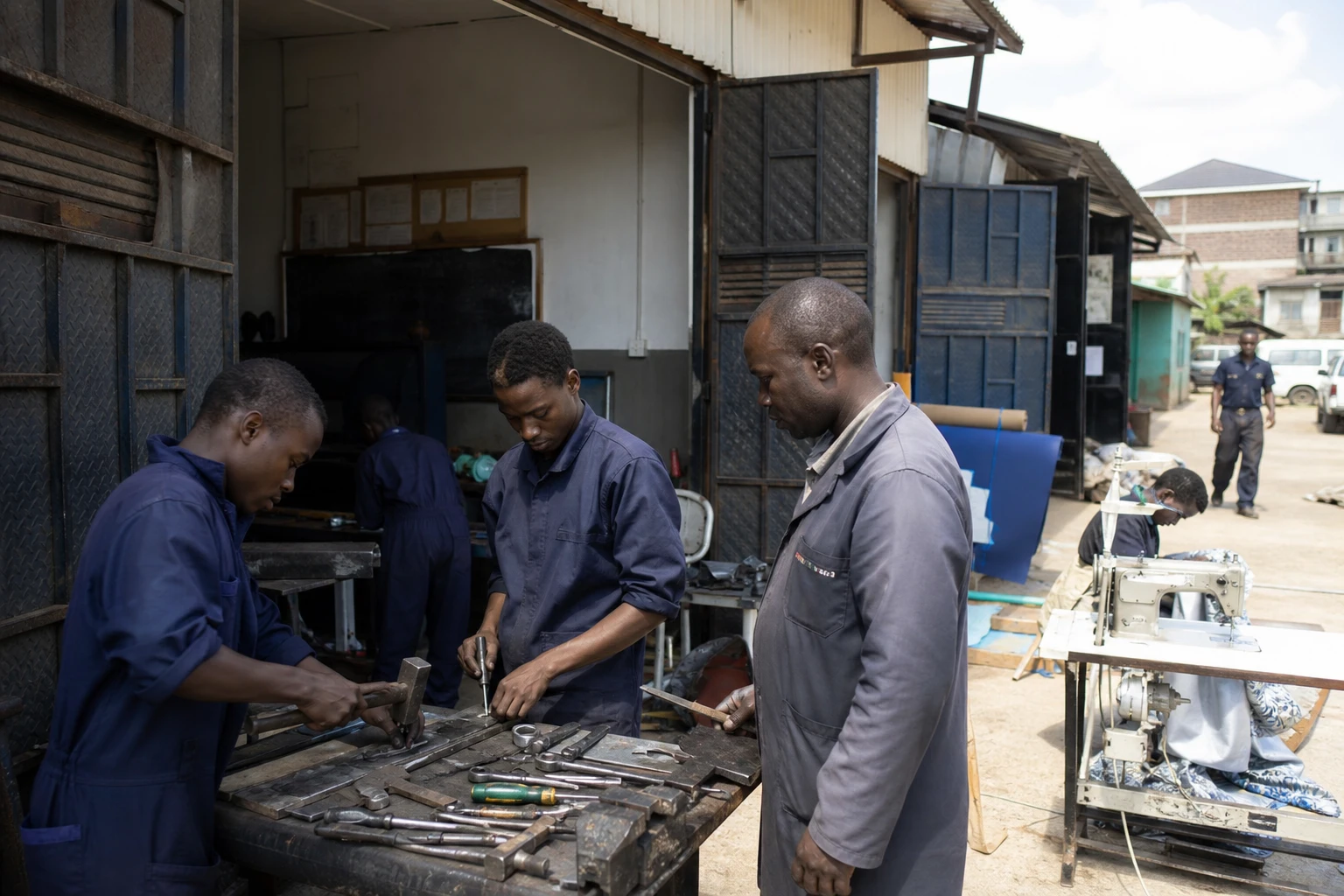
In Kenya, finding a job does not always mean signing a contract or joining a well-structured company. For millions of Kenyans, especially in secondary cities, urban outskirts and rural areas, work still means selling, small-scale production, transport, construction or everyday services. This reality says much about the Kenyan economy: it creates activity, but not yet enough stable jobs.
The issue is central in Nairobi, where the government is seeking to show that growth is about more than macroeconomic indicators. It also matters in the East African Community, where young, urban economies are struggling to absorb the large numbers of new entrants to the labour market. In the region, the challenge is not only to produce more. It is also to turn informal work into jobs that are more productive, better paid and better protected.
Figures confirm the dominance of the informal sector
Figures published in Kenya point to a persistent reliance on the informal economy. In 2025, the country created 822,100 jobs, 87.2% of them in the informal sector, according to official data cited in Nairobi in late August 2026. The same pattern was evident in 2024, when 782,300 jobs were created, the vast majority in the informal sector.
The National Bureau of Statistics says 18.1 million people worked in the informal sector in 2025, an increase of 4.1% year on year. Construction recorded the largest sectoral rise, with 490,100 workers, up 6.7%. Wholesale and retail trade, as well as accommodation and food services, also account for a large share of these jobs.
By contrast, modern employment is growing more slowly. Kenya had about 3.5 million formal jobs in 2025, compared with 18.1 million informal jobs, leaving the labour market highly unbalanced. The picture is clear: the country is creating work, but most of it remains poorly protected and often unproductive.
What agriculture, services and industry tell us
This structure is not new. In 2019, agriculture already accounted for 45% of employment in Kenya, according to World Bank research based on national data. In rural areas, it remains a major social safety net, absorbing labour when industry and formal services cannot keep pace.
The contrast with the most modern sectors is stark. Knowledge-intensive services, such as information technology, finance and specialised professions, employ about 2% of workers, while accounting for 14% of gross domestic product and 19% of growth, according to the World Bank. In other words, the sectors that generate the most value are not yet those that hire the most people.
This disconnect partly explains the current pressures. Kenya has a more dynamic economy than many of its neighbours, but its capacity to create formal jobs remains limited. Construction, trade and agriculture therefore act as a safety net. They support households, but on their own they are not enough to build a lasting path to social mobility.
The state’s response: train, certify, place
In response, the Kenyan government is now focusing on job quality rather than volume alone. The executive wants to develop skills, improve productivity and better link public spending to tangible results. This approach is consistent with the World Bank’s findings that pro-competition reforms could support the creation of up to 400,000 additional jobs a year in Kenya.
The National Youth Opportunities Towards Advancement programme, better known as NYOTA, is part of this approach. Launched to improve young people’s access to jobs, entrepreneurship and technical skills, it is being rolled out across all 47 counties. Public government documents say it targets more than 200,000 young people and combines training, support and assistance with economic activity.
The stated targets are ambitious: 570,000 job placements, 310,000 certifications and 90,000 technical training courses. These figures point to a significant shift. Kenya is no longer seeking only to multiply entry-level jobs. It also wants to upskill some of its young people so they can move into more productive activities and, in time, more robust businesses.
A social, budgetary and continental challenge
For households, the issue is immediate. Informal work makes survival possible, but often leaves little room for saving, retirement, health insurance or investment. For the state, the challenge is budgetary. The more employment remains informal, the narrower the tax and contribution base, limiting the resources available to fund education, health and infrastructure.
The formal private sector continues to play a key role, but not a sufficient one. The World Bank notes that competition and productivity reforms can raise wages and stimulate investment. In Kenya, the aim is not to condemn the informal sector, which remains a driver of social absorption. Rather, it is to create pathways out of it: access to credit, appropriate taxation, training, social protection and the growth of small businesses.
Across Africa, Kenya’s experience resonates far beyond Nairobi. In many of the continent’s economies, young people are arriving faster than formal jobs are being created. Kenya shows that a serious strategy must start with the facts: recognise the weight of the informal sector, invest in skills and build bridges to more productive activities. What happens next will depend on whether reforms can turn this mass of workers into more secure economic prospects, in a country that often serves as a testing ground for East Africa.