Algeria
 Egypt
 Libya
 Morocco
 Sudan
 Tunisia
 Benin
 Burkina Faso
 Cabo Verde
 Côte d'Ivoire
 Ghana
 Guinea
 Guinea-Bissau
 Liberia
 Mali
 Mauritania
 Niger
 Nigeria
 Senegal
 Sierra Leone
 The Gambia
 Togo
 Cameroon
 Central African Republic
 Chad
 DR Congo
 Equatorial Guinea
 Gabon
 Republic of the Congo
 São Tomé and Príncipe
 Burundi
 Comoros
 Djibouti
 Eritrea
 Ethiopia
 Madagascar
 Malawi
 Mauritius
 Mozambique
 Rwanda
 Seychelles
 Somalia
 South Sudan
 Tanzania
 Uganda
 Angola
 Botswana
 Eswatini
 Lesotho
 Namibia
 South Africa
 Zambia
 Zimbabwe
When credit becomes a lever for growth
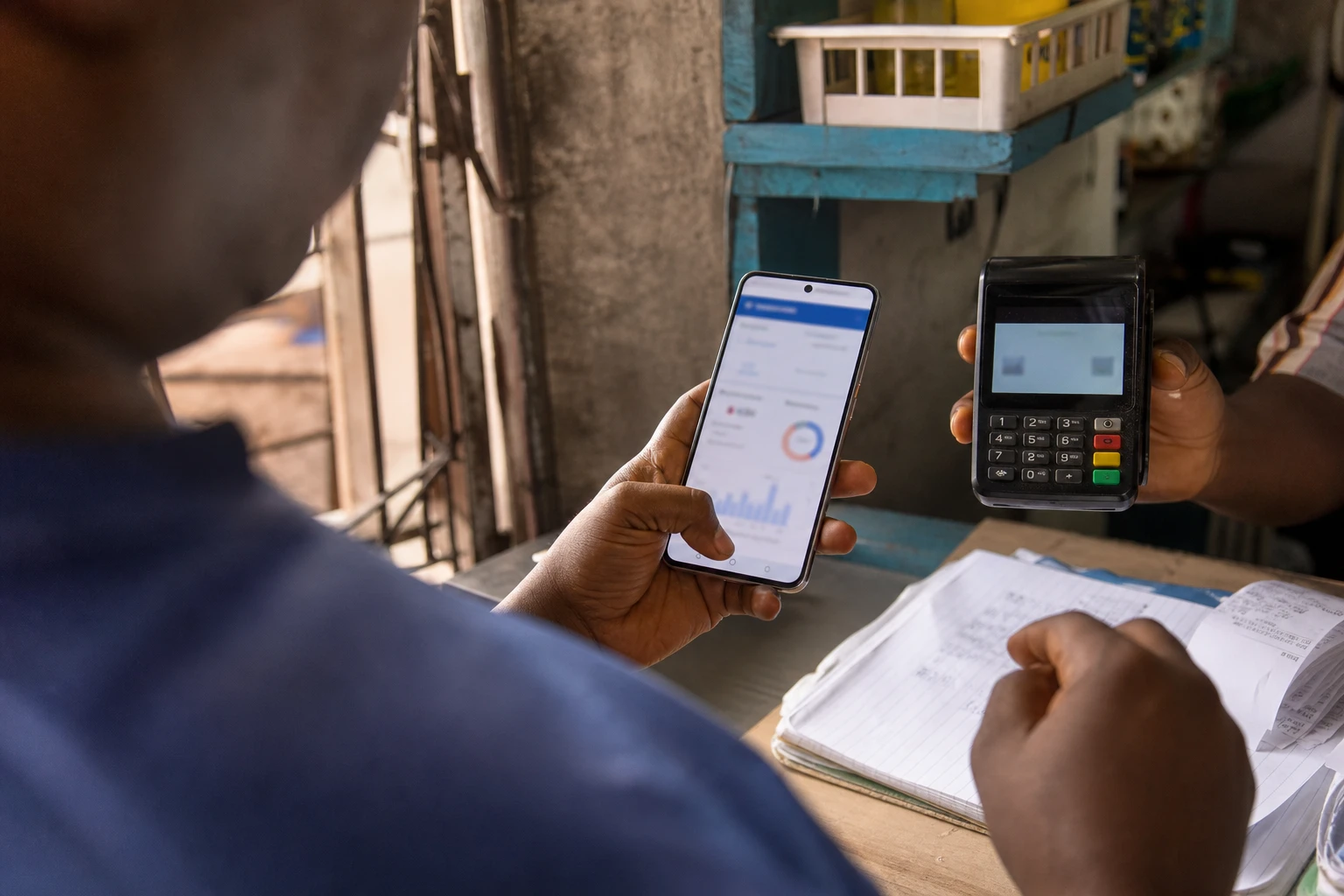
In Nairobi, the real challenge is not simply to lend more. It is above all to lend differently, so that very small businesses, often confined to cash transactions and guarantees that are difficult to provide, can enter the formal financing system. In Kenya, access to credit remains a key hurdle for micro, small and medium-sized enterprises, a segment that accounts for a large share of the real economy and employment.
It is against this backdrop that the International Finance Corporation, the private sector arm of the World Bank Group, is activating a catalytic first-loss guarantee mechanism for the Kenyan market. The principle is simple: if some loans go bad, the institution absorbs part of the expected losses first, encouraging banks and non-bank lenders to support clients considered too risky by conventional channels.
A financial structure designed to share risk
The announced scheme mobilises $35.2m, including $24.2m provided by the IFC and $11m by the International Development Association’s Private Sector Window, or IDA PSW. According to the parameters published by the IFC, this funding will support local-currency loan portfolios and serve as a first-loss guarantee for financing aimed at Kenyan MSMEs.
The operation brings together Equity Bank Kenya, KCB Bank Kenya and 4G Capital. The 4G Capital project, made public by the IFC, provides for first- and second-loss cover for a loan portfolio of up to $44.4m equivalent, with a focus on microenterprises and women-owned businesses. The same mobilisation approach aims to generate about $144.4m in local-currency loans across the Kenyan scheme as a whole.
The IFC presents this structure as an important source of leverage: every dollar committed to the guarantee is intended to catalyse several dollars in additional credit. In its July announcement on Uzbekistan, where the IFC explained how the same instrument works, the institution noted that the CFLG is part of its global SME finance platform, designed to broaden access to credit in emerging markets.
What the Kenyan case reveals
Kenya already has a more developed financial ecosystem than many other African markets. But the gap between large companies and small businesses remains considerable. World Bank data indicate that SMEs and microenterprises dominate the productive landscape, while national statistical studies show that the informal sector accounts for a massive share of economic activity and employment. The question, then, is not whether businesses exist, but whether they are bankable.
The focus on women-led businesses and climate-related projects is no coincidence. It addresses two common blind spots in commercial lending: on the one hand, women entrepreneurs are more often underfunded; on the other, activities linked to climate adaptation, energy efficiency or more sustainable value chains are still penalised by a high perception of risk. The IFC is therefore positioning the programme as a way to correct market imbalances, not simply as a volume-driven operation.
For Equity Bank Kenya, KCB Bank Kenya and 4G Capital, the stakes are also commercial. These players can expand their customer base without bearing all the portfolio risk themselves. Equity has already demonstrated, in previous operations with the IFC, that risk-sharing can support SME financing and climate projects. KCB, for its part, has worked with the IFC on other loan and guarantee facilities for small businesses.
Why this matters beyond Kenya
The Kenyan case extends beyond the national context. The country serves as a regional hub for East Africa and is part of the East African Community, where the movement of capital, data and value chains depends on banks’ ability to finance small economic units. A successful mechanism in Nairobi could then serve as a model for other markets in the region.
It is also part of a broader World Bank Group trend: making greater use of guarantees to attract private capital to sectors considered essential, including SMEs, energy and productive infrastructure. In February 2026, the institution also highlighted a new global framework backed by insurers to expand financing for small businesses in emerging markets, a sign that risk-sharing is becoming a central tool in its strategy.
The decisive question remains: how many of these loans will reach, on a lasting basis, microenterprises in neighbourhood markets, service workshops, small processing businesses or young digital ventures? This is where the mechanism’s true impact will be determined. If it works, it will be more than just another credit line. It could become a full-scale test of finance that is more patient, more local and better suited to Kenya’s productive structure.