Algeria
 Egypt
 Libya
 Morocco
 Sudan
 Tunisia
 Benin
 Burkina Faso
 Cabo Verde
 Côte d'Ivoire
 Ghana
 Guinea
 Guinea-Bissau
 Liberia
 Mali
 Mauritania
 Niger
 Nigeria
 Senegal
 Sierra Leone
 The Gambia
 Togo
 Cameroon
 Central African Republic
 Chad
 DR Congo
 Equatorial Guinea
 Gabon
 Republic of the Congo
 São Tomé and Príncipe
 Burundi
 Comoros
 Djibouti
 Eritrea
 Ethiopia
 Kenya
 Madagascar
 Malawi
 Mauritius
 Mozambique
 Rwanda
 Seychelles
 Somalia
 South Sudan
 Tanzania
 Angola
 Botswana
 Eswatini
 Lesotho
 Namibia
 South Africa
 Zambia
 Zimbabwe
In Karamoja, hunger never comes alone
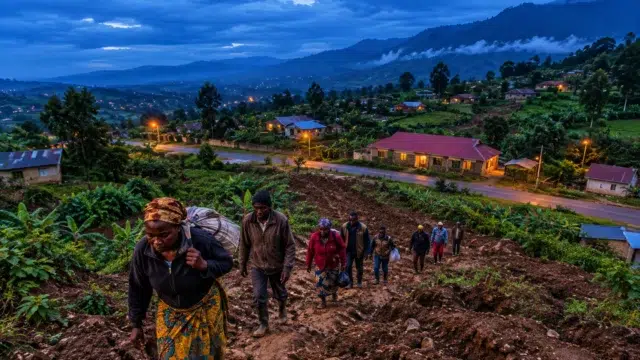
In north-eastern Uganda, families in Karamoja face pressure on two fronts. Rain is scarce and harvests are weakening. At the same time, children bear the heaviest burden, as food runs short just as their needs increase. According to the latest projections from the IPC, the reference system for food security, Karamoja’s nutrition situation continues to deteriorate as the next agricultural season approaches.
Karamoja is not a periphery that has been forgotten by accident. This sub-region, bordering Kenya and South Sudan, has long been exposed to drought, reliance on rain-fed agriculture and fragile livelihoods. Across East Africa, the issue goes beyond humanitarian aid: it touches on climate resilience, food security and states’ capacity to protect the most exposed rural areas. The East African Community has also pointed out that droughts and floods pose a direct threat to the region’s agricultural economies.
Rising figures, with children on the front line
The starting point is clear. Save the Children says the number of children suffering from acute malnutrition in Karamoja is expected to rise by 25% by October 2026, driven by El Niño-related droughts and low rainfall. The organisation cites the latest IPC data for Uganda.
The data provide a more precise measure of the shift. In the latest projection, about 122,000 children aged 6 to 59 months in Karamoja are expected to need treatment for acute malnutrition between March 2026 and February 2027. A second IPC document, published a few days later, puts the situation at a still very high level, with 154,200 children expected to receive nutritional support over the most recent analysis period. Both publications confirm the same trend: the crisis is worsening, and fast.
The greatest needs are among cases of severe acute malnutrition, the most dangerous form, which requires prompt medical care. The IPC and UNICEF have for several years warned that Karamoja experiences repeated spikes in hunger, undernutrition and difficulties accessing healthcare.
Drought has a cascading effect. Households run down their stocks, sell assets, cut the number of meals and sometimes withdraw children from certain forms of care or activities to get by from day to day. This pattern is well known to humanitarian actors in the region. UNICEF has also reported interruptions to malnutrition treatment services in several districts due to insufficient funding.
In Kampala, the humanitarian emergency is also a test of governance
The response is not being shaped only in Karamoja’s health centres. Decisions are also made in Kampala, where the Ugandan government coordinates relief through the Office of the Prime Minister. In early July 2026, the authorities began distributing emergency food in the sub-region, following a prolonged dry spell that had caused crop losses and shortages. On 9 July, the first consignment was sent to Kaabong, identified at the time as the worst-affected district.
This sequence highlights a central point: Karamoja is no longer just a development issue; it is a matter of social protection and climate-shock prevention. In July 2026, the Ugandan government also launched a national roadmap for disaster preparedness, aimed at moving from late responses to forecast-based action. In a region such as Karamoja, this approach matters, because every week lost means fewer meals, weakened children and more admissions to health facilities.
Humanitarian organisations make the same point: without sustained funding, screening, referrals and treatment remain fragile. UNICEF launched an emergency nutrition response in 2026 with the World Food Programme and local governments, while Save the Children says it is working with Ugandan authorities and communities to strengthen early detection and access to care.
The debate is therefore practical. For rural households, the immediate concern is having enough food, water and health services. For the state, the challenge is institutional: showing that it can protect an exposed area, often cited as one of the country’s most vulnerable. For local markets, finally, the crisis is weighing on small-scale trade, grain stocks and agricultural incomes, and therefore on the entire informal economy that sustains a large share of families.
A local crisis, a regional warning
Karamoja points to a broader problem in East Africa. Climate change is exacerbating long-standing vulnerabilities: reliance on rainfall, weak water infrastructure, uneven healthcare coverage and often insufficient emergency budgets. IGAD and the EAC have long regarded drought and food insecurity as major structural threats to the region.
The continental implications are clear. In several African countries, El Niño or La Niña episodes continue to weaken agricultural and health systems, especially where social safety nets are too weak. Uganda, with Karamoja on the front line, illustrates what climate adaptation means when it must be pursued in a rural, landlocked and exposed area. The question is therefore not only humanitarian. It is also political, budgetary and regional.
What is at stake now in Kampala, in Karamoja’s districts and in coordination channels with regional partners is Uganda’s ability to prevent a seasonal crisis from becoming a lasting setback to children’s development. The coming weeks will show whether emergency food, nutrition screening and community-based care are enough to contain the projected rise in malnutrition cases.