
 Algeria
 Egypt
 Libya
 Morocco
 Sudan
 Tunisia
 Benin
 Burkina Faso
 Cabo Verde
 Côte d'Ivoire
 Ghana
 Guinea
 Guinea-Bissau
 Liberia
 Mali
 Mauritania
 Niger
 Nigeria
 Senegal
 Sierra Leone
 The Gambia
 Togo
 Cameroon
 Central African Republic
 Chad
 Equatorial Guinea
 Gabon
 Republic of the Congo
 São Tomé and Príncipe
 Burundi
 Comoros
 Djibouti
 Eritrea
 Ethiopia
 Kenya
 Madagascar
 Malawi
 Mauritius
 Mozambique
 Rwanda
 Seychelles
 Somalia
 South Sudan
 Tanzania
 Uganda
 Angola
 Botswana
 Eswatini
 Lesotho
 Namibia
 South Africa
 Zambia
 Zimbabwe
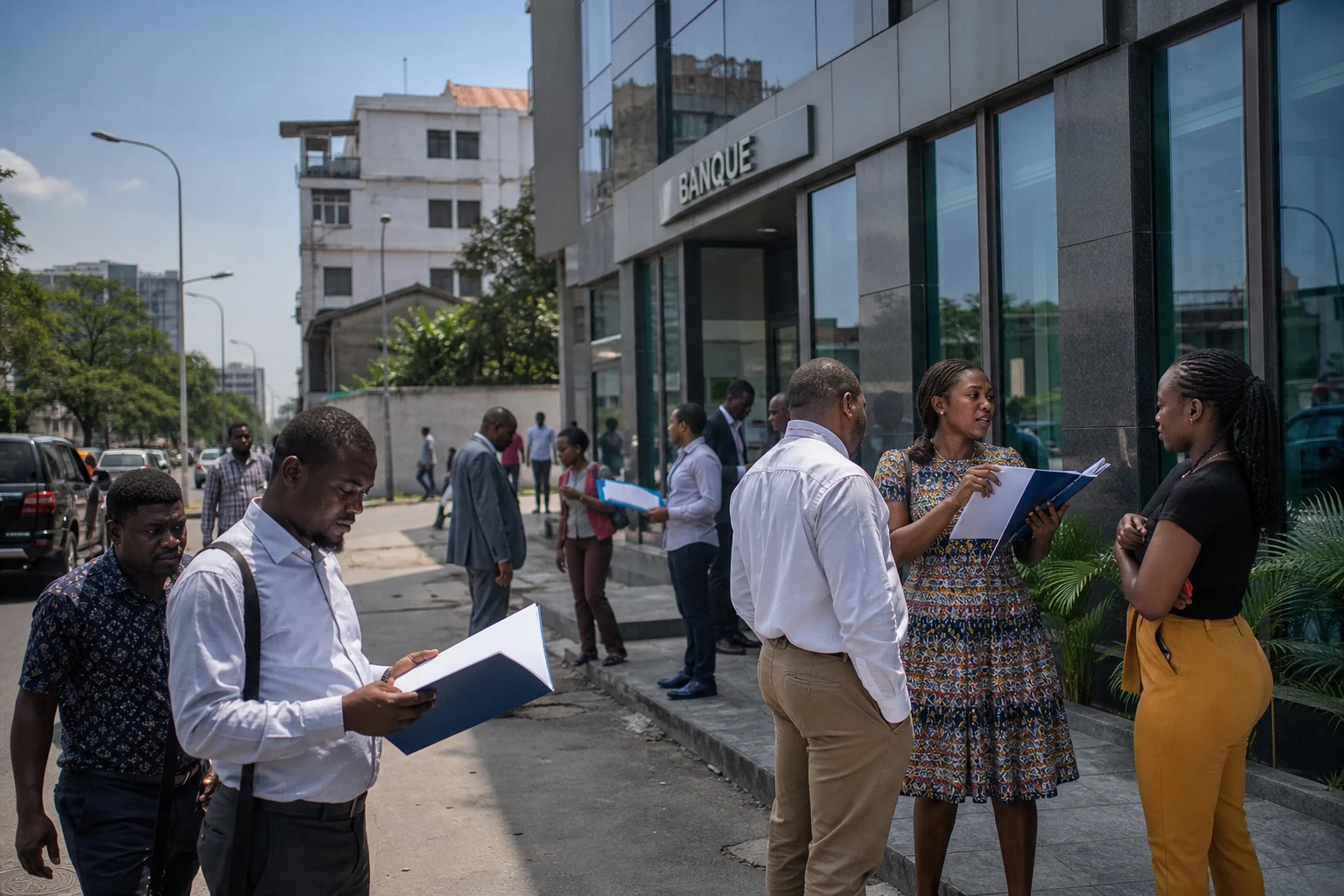
For Congolese businesses, the challenge is no longer just access to bank credit. It is also about finding investors able to finance their growth over several years. With this in mind, Kadoo Securities, a Tanzanian financial services company, is exploring the capital market of the Democratic Republic of the Congo.
The move is still at a preliminary stage. It comes, however, at a decisive moment for Kinshasa, which is preparing the country’s first formal stock exchange structure.
First contact between Kadoo Securities and Congolese authorities
On 23 September 2026, a Kadoo Securities delegation met André Wameso, governor of the Central Bank of the Congo. The meeting was facilitated by the National Agency for Investment Promotion, ANAPI, which supports foreign businesses in their dealings with Congolese institutions.
The Tanzanian company presented its plans to establish a presence in the Democratic Republic of the Congo. It also outlined its interest in three activities: securities brokerage, investment advice and fund management. These services connect businesses seeking capital with investors looking to place their savings in financial securities.
ANAPI says Kadoo Securities was put in touch with the relevant departments of the Central Bank of the Congo. Technical discussions could therefore follow to examine the proposed activities, the regulatory framework and the conditions for entering the Congolese market. ANAPI’s report makes no mention of a licence being granted, a subsidiary already being established or operations having begun.
This distinction is important. Kadoo Securities has expressed an interest in the DRC, but its project has not yet reached the stage of official authorisation. The next step will depend on discussions with the monetary and financial authorities.
Kinshasa Stock Exchange enters its construction phase
The approach follows the adoption of Law No. 26/034 on stock markets. Promulgated on 20 August 2026 and published in the Official Gazette on 2 September, the law sets out rules for the organisation, financing, supervision and regulation of stock markets in the Democratic Republic of the Congo.
The Congolese Press Agency has described the reform as a framework intended to create a financial centre capable of mobilising savings and strengthening corporate financing. The law also provides for dedicated supervision of stock markets, as well as access to new financial instruments for growing businesses and start-ups. The ACP’s report confirms that the law was promulgated by President Félix-Antoine Tshisekedi Tshilombo.
The government is targeting the first listings between June and December 2027. This timetable does not mean that the Kinshasa Stock Exchange is already operating. Several steps remain: establishing the regulatory authority, adopting market rules, licensing the exchange, appointing the central depository and setting up listing and settlement infrastructure.
The future financial centre will also have to persuade businesses to publish reliable accounts. Above all, it will need to reassure investors about the protection of their assets and the transparency of transactions. A law creates a framework. On its own, it is not enough to create a liquid market.
A market still dominated by government securities
The DRC already has an active segment for Treasury bills and bonds. These securities enable the state to borrow from banks, institutional investors and other authorised actors. By contrast, the market for shares and bonds issued by companies remains to be built.
This situation explains the authorities’ interest in diversifying financing instruments. Congolese businesses currently depend mainly on banks, their own funds or financing linked to industrial partners. A stock exchange could provide them with another route, particularly to finance infrastructure, strengthen their capital or support regional expansion.
Available data nevertheless show that the government securities market already forms the foundation for this transformation. The Ministry of Finance publishes bulletins on Treasury bill and bond issues, with securities denominated in US dollars accounting for a significant share. The government securities market bulletin shows that the future stock exchange will build on a financial environment already structured around sovereign debt.
For Kadoo Securities, this foundation could provide an initial source of business. Brokerage in government securities, investor advice and portfolio management could serve as an entry point before the arrival of a more developed segment for private companies.
Tanzania looks towards Kinshasa
The move also has a regional dimension. Tanzania and the DRC are seeing growing trade, particularly along corridors linking eastern Congo with ports and economic centres in East Africa. Tanzania is a member of the East African Community, as is the DRC. Kinshasa is also part of the Southern African Development Community, SADC.
This dual membership places the DRC at the crossroads of several economic areas. It could attract financial intermediaries with existing experience in East and Southern African markets. For investors, the question will be whether Congolese rules enable capital, information and securities to move with sufficient clarity.
The Central Bank of the Congo will play a central role. The institution will have to contribute to settlement stability, oversight of authorised actors and confidence in transactions denominated in Congolese francs or other currencies. ANAPI, for its part, is seeking to reduce administrative uncertainty that can slow the arrival of specialist investors.
The challenge: turning regional interest into a functioning market
Any eventual arrival by Kadoo Securities will not immediately change how the Congolese economy is financed. A functioning market requires issuers able to publish their results, investors with savings that can be mobilised and intermediaries operating under clear rules.
The effects will also vary between actors. Large companies and banks are best placed to access the first market segments. Smaller businesses will probably need tailored mechanisms, with disclosure requirements proportionate to their size. For savers, the market’s opening could offer new opportunities, but it will also carry a risk of capital loss.
The next milestone, then, will be less the announcement of another company’s arrival than the effective establishment of the institutions provided for by the law. Before the first listings, announced for the period from June to December 2027, the DRC will have to show that its future stock exchange can ensure transparency, liquidity and investor protection.
The Kadoo Securities project already illustrates a broader shift: the DRC is no longer seeking only to attract capital to its extractive sectors. It is also trying to build the financial tools to channel regional savings towards businesses, infrastructure and productive projects in Kinshasa and the provinces.



