Algeria
 Egypt
 Libya
 Morocco
 Sudan
 Tunisia
 Benin
 Burkina Faso
 Cabo Verde
 Côte d'Ivoire
 Ghana
 Guinea
 Guinea-Bissau
 Liberia
 Mali
 Mauritania
 Niger
 Nigeria
 Senegal
 Sierra Leone
 The Gambia
 Togo
 Cameroon
 Central African Republic
 Chad
 Equatorial Guinea
 Gabon
 Republic of the Congo
 São Tomé and Príncipe
 Burundi
 Comoros
 Djibouti
 Eritrea
 Ethiopia
 Kenya
 Madagascar
 Malawi
 Mauritius
 Mozambique
 Rwanda
 Seychelles
 Somalia
 South Sudan
 Tanzania
 Uganda
 Angola
 Botswana
 Eswatini
 Lesotho
 Namibia
 South Africa
 Zambia
 Zimbabwe
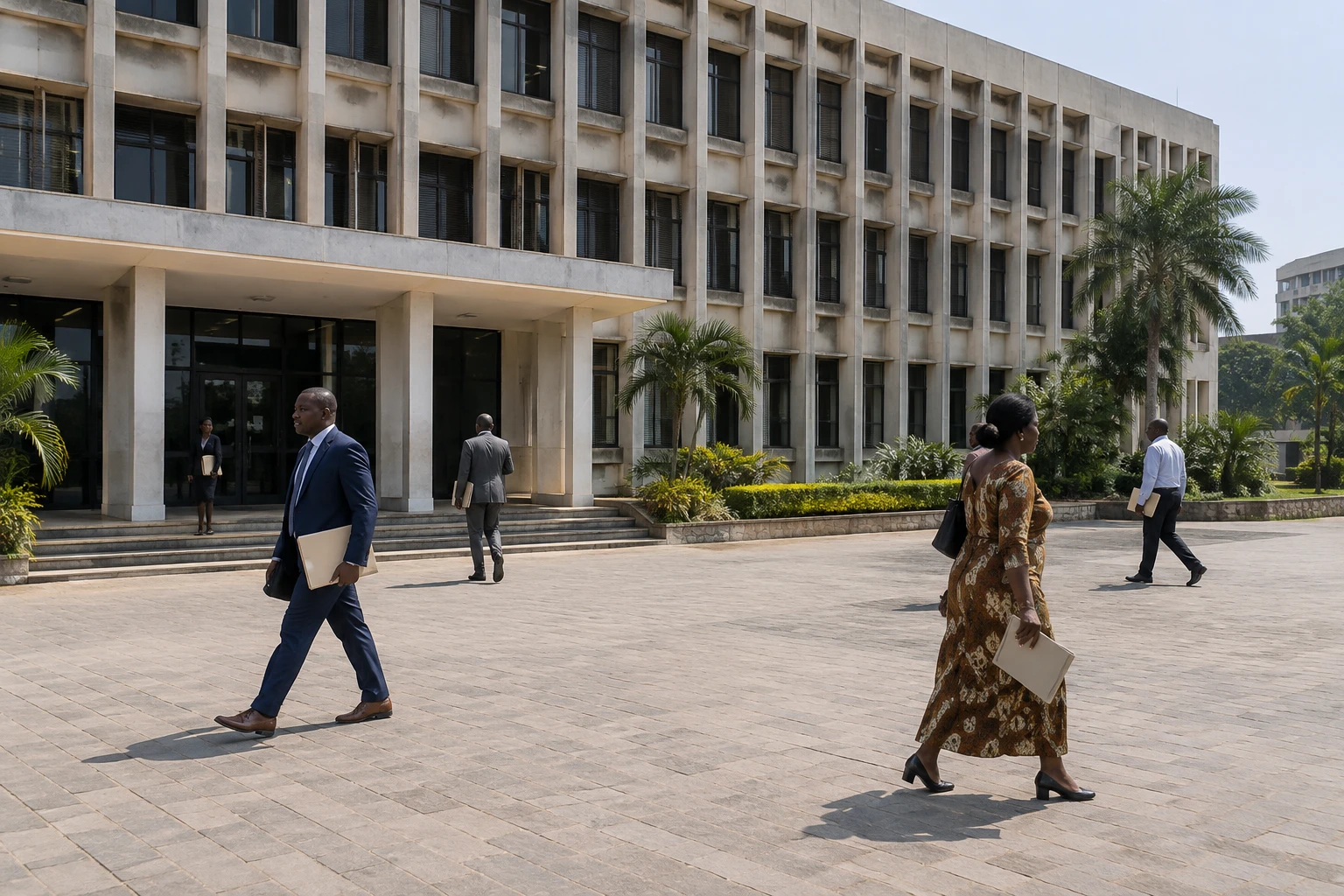
In the east of the Democratic Republic of the Congo, the creation of a new politico-military coalition further blurs the line between political opposition and armed insurgency. In Kinshasa, the government sees it as a direct threat. But the accusation of an imminent offensive remains, at this stage, a statement by the Congolese authorities, not a fact independently established.
Coalition announced in territory controlled by M23
On 12 October, former president Joseph Kabila took the lead of the Front for the Refoundation of the Nation (FRN), a body that includes groups originating from the Congo River Alliance (AFC) and M23. Corneille Nangaa and Bertrand Bisimwa, leading figures in AFC/M23, are its vice-presidents, according to Radio Okapi. The coalition describes itself as politico-military and says it wants to end what it calls tyranny, including by force. The Associated Press also reports that the movement was created in Goma, a city in North Kivu under M23 control. Radio Okapi’s details on the FRN leadership and the report on the announcement in Goma agree on the coalition’s overall composition.
On Friday 16 October, government spokesman Patrick Muyaya accused Kabila of formalising a large-scale offensive against the Congolese state. He denounced a plan that, he said, aimed to conquer territory by force. Muyaya also described the FRN as a rebranding of AFC/M23. These remarks express Kinshasa’s position; the available evidence alone does not confirm that a general offensive is planned.
Kabila, who led the country from 2001 to 2019, disputes the accusations against him. On 30 September 2025, a Congolese military court sentenced him to death in absentia, notably for treason and crimes linked to the conflict. The sentence, handed down in his absence, is a major element in the confrontation between the former head of state and the current authorities. It is not, however, independent proof of the accusations made this week. The report on the hearing and verdict sets out the nature of the proceedings.
In the east, a war weighing on civilians and trade
The FRN has emerged as M23 has extended its control in the east of the country, including in Goma and Bukavu, the capital of South Kivu, during its 2025 offensive. Fighting continues in several areas, while front lines can shift locally. For residents, the consequences go beyond clashes: displacement, disrupted access to services and insecurity on roads make daily life more difficult. Markets and small businesses also depend on movement between towns and territories.
The conflict extends beyond the Congolese borders. Kinshasa accuses Rwanda of supporting M23; Kigali rejects the accusation. A 2025 United Nations experts’ report described Rwandan support for the movement, while regional and international diplomatic processes are seeking to secure de-escalation. The East African Community (EAC) and the Southern African Development Community (SADC), two regional organisations involved in peace efforts, have worked to coordinate their initiatives. These efforts have not ended the fighting. The reported evidence of external support for M23 should be considered alongside the positions of the states concerned and the ongoing negotiations.
Opposition weakened by war and a crisis of trust
Kabila’s return to the political forefront comes amid heightened tensions. Debate over a possible revision of the Constitution and presidential term limits is dividing Congolese politicians. The opposition fears that a reform could allow President Félix Tshisekedi to remain in power beyond his second term, which is due to end in 2028 under the current constitutional timetable. The government and its supporters, for their part, defend the institutional debate. This disagreement is fuelling mistrust, but is not proof of the intentions attributed to either camp.
For Congolese people, this dual tension — war in the east and political rivalry at the top — raises a practical question: who can speak on behalf of populations living under rebel control, and under what conditions does a negotiated solution remain possible? The creation of the FRN could increase armed groups’ ability to coordinate, but could also complicate talks if the coalition claims a political role while continuing to use force.
What happens next will depend on verifiable facts: the course of the fighting, Kabila’s actual role in the coalition, the authorities’ responses and the mediators’ decisions. In the Great Lakes region, the challenge is also to preserve diplomatic channels between Kinshasa and its neighbours. For the African Union and regional organisations, the issue is a reminder that no agreement can durably stabilise eastern DR Congo without addressing cross-border security, political representation and civilian protection together.