Algeria
 Egypt
 Libya
 Morocco
 Sudan
 Tunisia
 Benin
 Burkina Faso
 Cabo Verde
 Ghana
 Guinea
 Guinea-Bissau
 Liberia
 Mali
 Mauritania
 Niger
 Nigeria
 Senegal
 Sierra Leone
 The Gambia
 Togo
 Cameroon
 Central African Republic
 Chad
 DR Congo
 Equatorial Guinea
 Gabon
 Republic of the Congo
 São Tomé and Príncipe
 Burundi
 Comoros
 Djibouti
 Eritrea
 Ethiopia
 Kenya
 Madagascar
 Malawi
 Mauritius
 Mozambique
 Rwanda
 Seychelles
 Somalia
 South Sudan
 Tanzania
 Uganda
 Angola
 Botswana
 Eswatini
 Lesotho
 Namibia
 South Africa
 Zambia
 Zimbabwe
In Côte d’Ivoire, access to credit remains a decisive hurdle for women-led businesses. In Abidjan, a partnership between NSIA Banque Côte d’Ivoire and the African Development Bank (AfDB) is seeking to reduce this barrier by combining finance, guarantees and support.
A scheme designed to go beyond a simple bank loan
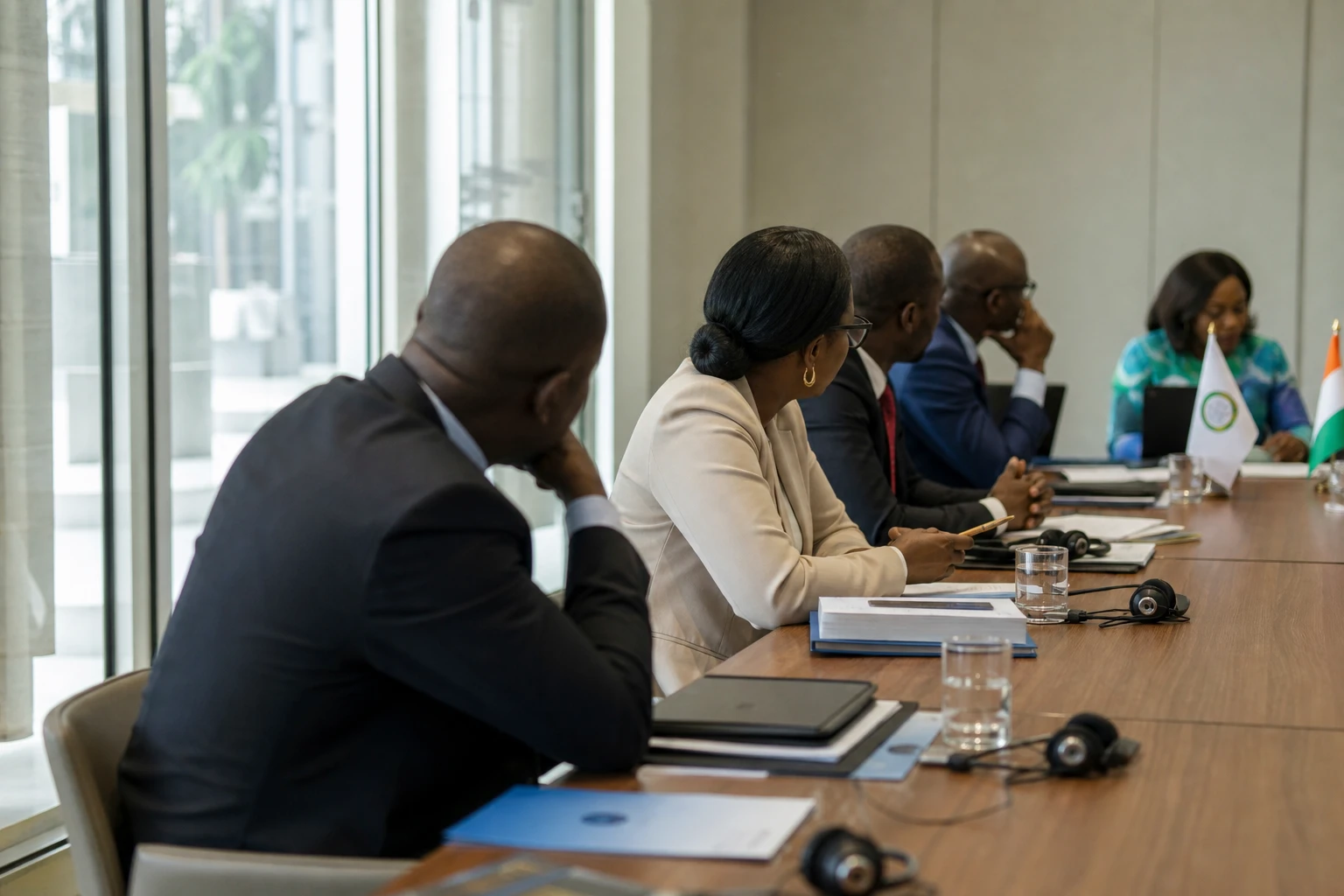
On 24 September 2026, NSIA Banque Côte d’Ivoire hosted a delegation from the AfDB, the We-Fi programme and several partner financial institutions. The meeting was part of a visit focused on the results of the AFAWA initiative, or “Affirmative Finance Action for Women in Africa”, a pan-African programme intended to improve women entrepreneurs’ access to finance.
The approach is not based solely on making loans available. It combines tailored financial solutions, close support and greater consideration of the specific constraints facing small and medium-sized enterprises (SMEs) led by women.
For banks, the challenge is in particular to better assess businesses that may have few conventional forms of collateral but show genuine growth potential. For women entrepreneurs, the aim is to secure sufficient resources to buy equipment, boost production or enter new markets.
The AFAWA Guarantee plays a risk-sharing role. It enables partner financial institutions to support more women-owned businesses, including those that do not fully meet the usual financing criteria.
20 SMEs financed to the tune of CFAF 2.219bn
Since the partnership was launched, 20 women-led SMEs have received financing totalling CFAF 2.219bn, or about $3.84m. This record was presented during the visit on 24 September 2026.
The businesses operate across a range of sectors. Restaurants, transport, agro-industry, trade, construction and public works, services, education and distribution are among the activities represented.
This diversity matters. It shows that women’s entrepreneurship in Côte d’Ivoire is not limited to a handful of occupations traditionally associated with local retail. Women are also investing in production, construction, logistics, education and activities linked to food value chains.
According to the AfDB, beneficiaries have used the funds to expand production capacity, acquire equipment, diversify their offerings and access new markets. Some have also created jobs. However, the published record does not specify the total number of jobs generated or how financing was distributed by sector.
The meeting included discussions with Ariane Monney, head of the Casa Èkwa restaurant and hotel, Yvette Yelematou Soro, head of construction company Lemias Engineering, and Blandine Koffi, founder of Poisson d’Afrique in the fishing sector.
An issue that extends beyond Côte d’Ivoire
The partnership is taking place against a continental backdrop of a persistent financing gap. The AfDB estimates that the gap in access to finance between women and men entrepreneurs in Africa stands at $42bn. This estimate covers several sectors and value chains, including agriculture.
The African bank attributes this gap to several factors. Women are less likely to have the collateral required by financial institutions. They also face difficulties formalising their activities, presenting financial statements or accessing business networks. Some banks, for their part, still lack the tools to properly assess the needs and risks of women-led businesses.
AFAWA addresses these challenges on three fronts: access to finance, capacity-building and improvements to the business environment. The programme therefore works with banks, support organisations and public-sector actors.
The We-Fi programme, or Women Entrepreneurs Finance Initiative, complements this approach. This international initiative supports projects designed to remove the financial and non-financial barriers faced by businesses owned or led by women in developing countries.
The initiative’s place in Côte d’Ivoire’s economy
In Côte d’Ivoire, women’s access to capital has a direct bearing on the transformation of the productive sector. SMEs play an important role in creating economic activity, but many remain small and have limited financial resources.
In the political capital, Yamoussoukro, as in Abidjan and other economic centres, the challenges are not the same. Businesses close to bank headquarters and major markets generally have better access to information. By contrast, women entrepreneurs based in secondary cities or rural areas often have to contend with higher logistics costs, a less extensive banking offer and more limited business networks.
Finance alone is therefore not enough. A business may secure a loan and remain vulnerable if it does not manage its accounts, if its suppliers are unreliable or if it lacks stable access to markets. That is why NSIA Banque emphasises the close support provided alongside credit.
“We are convinced that women entrepreneurs play a decisive role in our country’s economic development,” said Sékou Chérif Sanogo, deputy managing director of NSIA Banque Côte d’Ivoire. He also said the bank intended to offer tailored solutions and local support to promote the sustainable development of businesses.
This approach echoes calls regularly made by Côte d’Ivoire’s authorities for greater mobilisation of the private sector and public institutions. It also aligns with the priorities of the Economic Community of West African States (ECOWAS), which is seeking to strengthen regional economic integration and women’s participation in trade and value creation.
The next test: measuring lasting results
The initial record is positive in terms of the volume of financing announced. The long-term resilience of the beneficiary businesses, however, remains to be assessed. Monitoring will need to cover revenue growth, repayment capacity, job creation and the businesses’ presence in new markets.
It will also be necessary to check whether the scheme reaches women entrepreneurs based outside Abidjan. A concentration of financing in the economic capital would limit the scheme’s geographical reach, even as agricultural, commercial and craft activities develop across the country.
The partnership between NSIA Banque Côte d’Ivoire and the AfDB is due to run until 22 February 2029, according to information released as part of the programme. Until then, the challenge will be to turn individual financing into a broader dynamic: more formalised businesses, better-structured value chains and greater participation by women in Côte d’Ivoire’s economy.
At the African level, Côte d’Ivoire’s experience will also serve as a point of comparison for other AFAWA partner financial institutions. The central question will not simply be how many loans have been granted, but how many businesses will actually have scaled up.