Algeria
 Egypt
 Libya
 Morocco
 Sudan
 Tunisia
 Benin
 Burkina Faso
 Cabo Verde
 Ghana
 Guinea
 Guinea-Bissau
 Liberia
 Mali
 Mauritania
 Niger
 Nigeria
 Senegal
 Sierra Leone
 The Gambia
 Togo
 Cameroon
 Central African Republic
 Chad
 DR Congo
 Equatorial Guinea
 Gabon
 Republic of the Congo
 São Tomé and Príncipe
 Burundi
 Comoros
 Djibouti
 Eritrea
 Ethiopia
 Kenya
 Madagascar
 Malawi
 Mauritius
 Mozambique
 Rwanda
 Seychelles
 Somalia
 South Sudan
 Tanzania
 Uganda
 Angola
 Botswana
 Eswatini
 Lesotho
 Namibia
 South Africa
 Zambia
 Zimbabwe
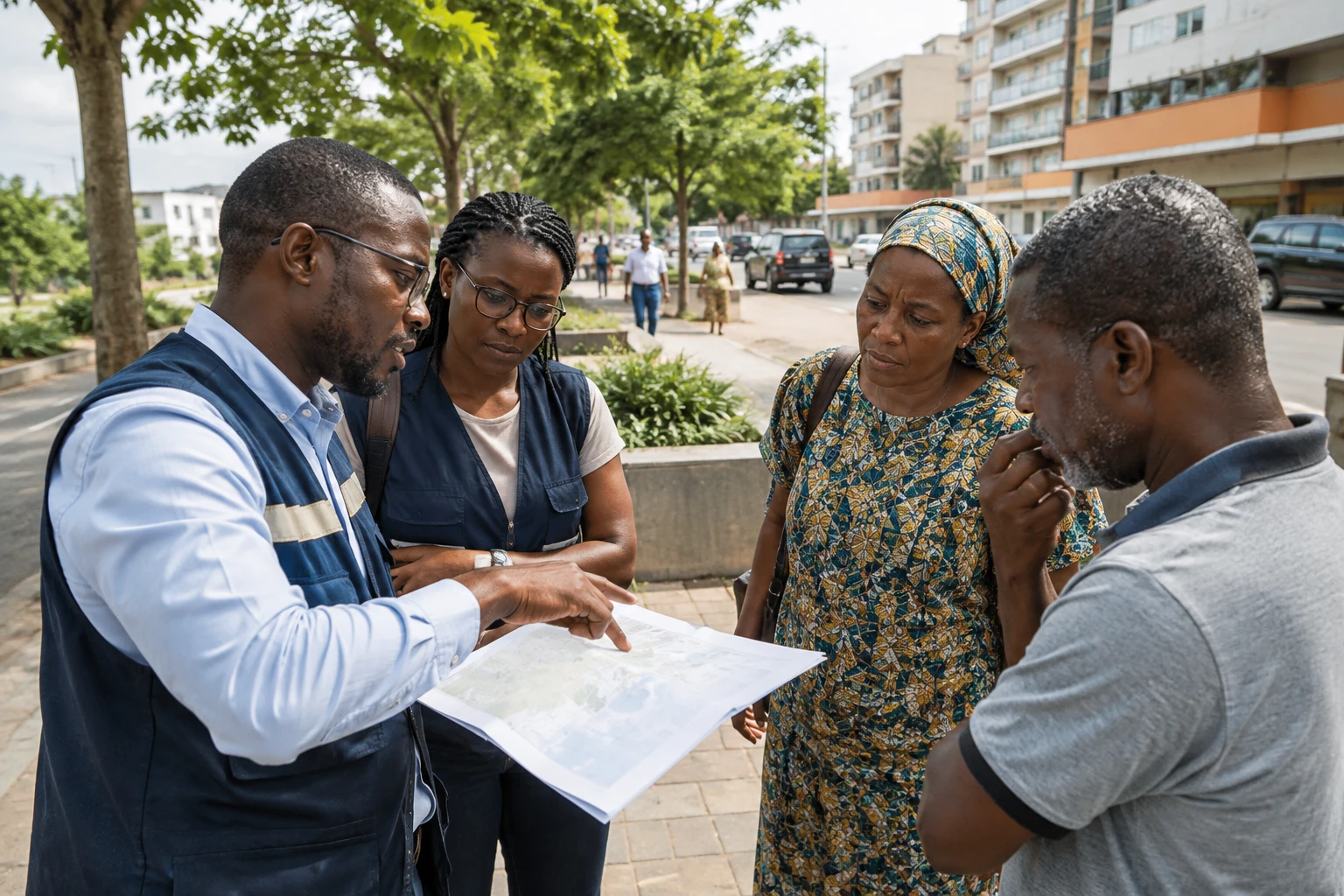
An urban planner can design the expansion of a neighbourhood or advise a local authority. But turning those plans into professional activity also requires financing and suitable banking services. That is the area in which NSIA Banque Côte d’Ivoire and the National Order of Urban Planners of Côte d’Ivoire (ONUCI) say they have concluded an agreement.
A professional agreement in a country becoming more urban
The agreement concerns ONUCI members. It provides for preferential banking support and solutions covering financing, savings and banking services. However, the precise terms, eligibility criteria, available amounts and date of signature are not detailed in the announcement reviewed.
The Order describes the agreement as its first partnership with a financial institution. Its president, Youssouf Ouattara, says it should make it possible to take better account of urban planners’ specific needs and facilitate the financing of their projects. Sékou Sanogo, deputy managing director of NSIA Banque Côte d’Ivoire, links the initiative to the development of sustainable urban projects.
These statements set out the two signatories’ objectives. They do not yet make it possible to measure the agreement’s effects: no activity report, implementation timetable or financing indicator has been provided at this stage. The partnership is presented in an NSIA Banque announcement circulated online, but its signing could not be corroborated by a second independent publication.
Urban pressures extend beyond Abidjan
The issue can be understood at national level. According to 2021 census data cited by UN-Habitat, 52.5% of Côte d’Ivoire’s population lived in urban areas. The number of cities with more than 100,000 inhabitants had risen from eight in 1998 to 17 in 2021. Urban growth therefore affects secondary cities as well as Abidjan.
Detailed figures from the National Institute of Statistics, published in 2025 on the basis of the 2021 census, confirm the scale of this trend: the urban population exceeded 15.7 million. Abidjan accounted for 39.2% of that urban population. The data highlight both the economic capital’s importance and the need to plan for other urban centres.
The political capital, Yamoussoukro, should not be confused with Abidjan, the main economic and urban centre. This distinction matters in a country where needs differ considerably between regions: transport and housing in large urban areas, facilities and services in growing cities, and access to land and infrastructure on the outskirts.
From financing professionals to meeting residents’ needs
For urban planners, better-tailored access to financial services could make it easier to equip a practice, manage cash flow or set up as an independent professional. But the announcement does not specify whether the solutions will be offered on preferential terms or whether they will directly finance development projects. It will therefore be important to distinguish banking support for professionals from the financing of urban infrastructure, which often involves other stakeholders and broader arrangements.
The benefits may also vary according to professional profile. An urban planner based in Abidjan and working with large companies does not necessarily face the same constraints as an independent professional working in a secondary city. Local authorities, developers and residents will not automatically benefit from an agreement between a bank and a professional body. The practical impact will depend on the products offered and the projects actually supported.
Urban planning nonetheless touches on very everyday concerns: the location of housing, access to transport, water and sanitation networks, public spaces and risk prevention. UN-Habitat notes challenges involving housing, land management and access to services in Ivorian cities. In this context, urban planners’ expertise is valuable, but it cannot replace public decisions or the investment required.
A partnership to assess over time
The agreement is part of a broader trend: banks are building relationships with professional organisations to tailor their services to specific occupations. NSIA Banque had previously announced agreements with organisations of notaries and chartered accountants. The agreement with ONUCI extends this approach to a profession directly involved in spatial planning.
At regional level, Côte d’Ivoire is a member of ECOWAS, which brings together West African countries facing urban growth and infrastructure needs, each in its own context. The agreement between NSIA and ONUCI is not a regional policy. Rather, it illustrates the role that professional organisations and banks can play in developing local skills and activity.
The next points to watch are concrete: publication of eligibility terms, the number of members receiving support, the volume and nature of financing, and the distribution of beneficiaries between Abidjan and other cities. These results will show whether the agreement genuinely improves urban planners’ ability to practise and supports projects that benefit Ivorian communities beyond the signatory institutions.
Context sources: announcement of the agreement between NSIA Banque and ONUCI ; UN-Habitat’s 2023 country report on Côte d’Ivoire ; ANSTAT urbanisation data ; information about the National Order of Urban Planners of Côte d’Ivoire.