
 Algeria
 Egypt
 Libya
 Morocco
 Sudan
 Tunisia
 Benin
 Burkina Faso
 Cabo Verde
 Ghana
 Guinea
 Guinea-Bissau
 Liberia
 Mali
 Mauritania
 Niger
 Nigeria
 Senegal
 Sierra Leone
 The Gambia
 Togo
 Cameroon
 Central African Republic
 Chad
 DR Congo
 Equatorial Guinea
 Gabon
 Republic of the Congo
 São Tomé and Príncipe
 Burundi
 Comoros
 Djibouti
 Eritrea
 Ethiopia
 Kenya
 Madagascar
 Malawi
 Mauritius
 Mozambique
 Rwanda
 Seychelles
 Somalia
 South Sudan
 Tanzania
 Uganda
 Angola
 Botswana
 Eswatini
 Lesotho
 Namibia
 South Africa
 Zambia
 Zimbabwe
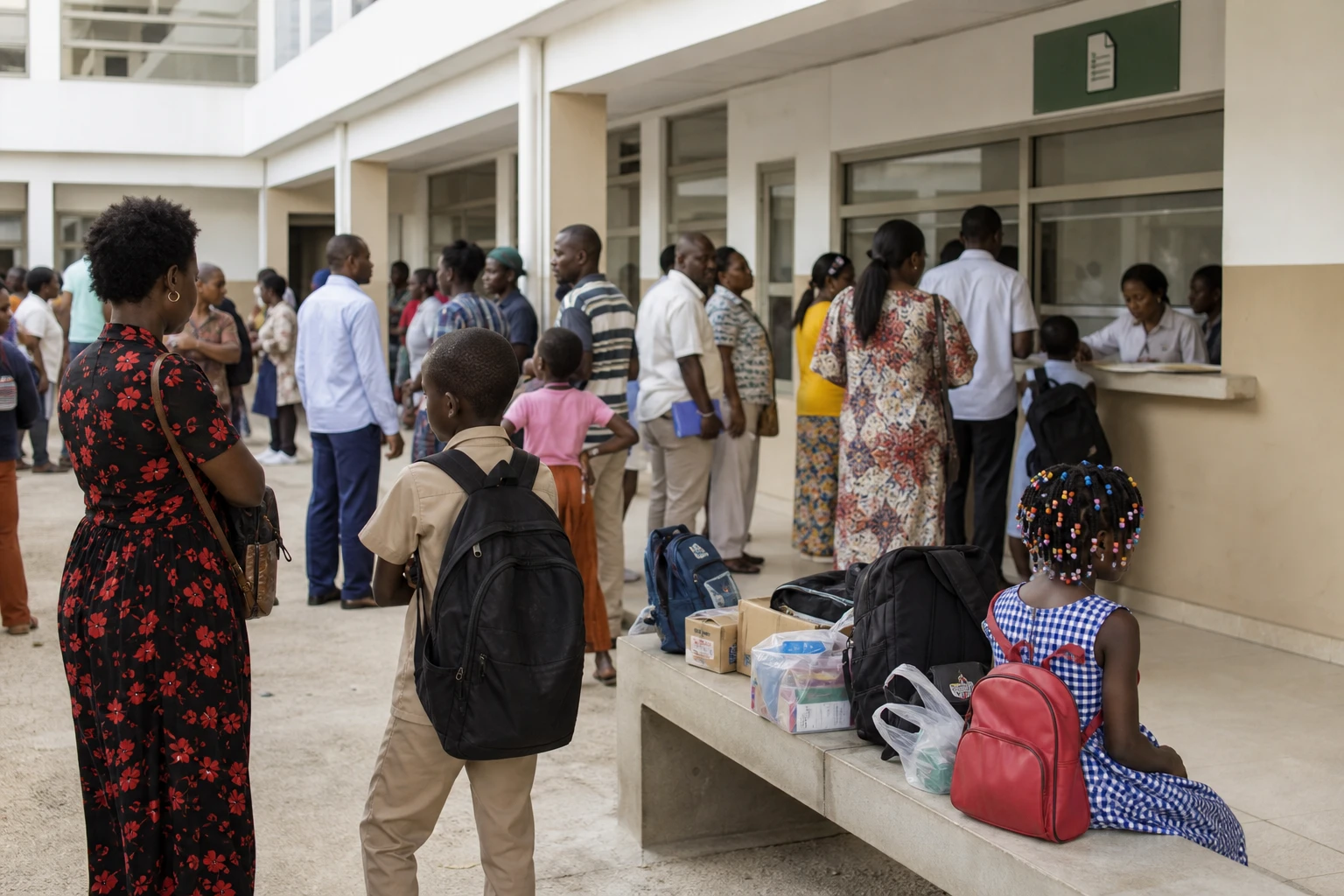
When the start of term becomes a balancing act for families
In Abidjan and other major Ivorian cities, the start of the school year is about more than buying a schoolbag. For many households, it means making a series of very practical choices: exercise books, uniforms, shoes, bags, textbooks, transport and sometimes additional fees. This is where the financial pressure is greatest. Parents have to choose between several expenses that often fall due at the same time.
This budgetary pressure comes amid a regional environment in which prices remain under scrutiny. In the WAEMU, the BCEAO forecasts inflation of 1.3% in August 2026, up from 1.1% in July, with pressures linked in particular to freight costs and petroleum products. For households, this matters. Even a moderate increase, added to school expenses, is enough to make the start of term more difficult for those on the lowest incomes.
In Côte d’Ivoire, the authorities have chosen to support families during this period with targeted measures. The government extended sales until 10 September 2026, giving families more time to compare offers and buy school supplies, clothes, shoes and bags at reduced prices. The message is clear: the start of the school year is also a period of consumer spending under pressure, and the state wants to cushion the impact.
Public measures, but expenses remain
The 2026-27 school calendar officially began on Monday 14 September 2026. The Ministry of National Education, Literacy and Technical Education said that 8.8 million pupils are expected this year, including 5.3 million in primary school and 3.5 million in secondary school. These figures show the scale of the issue: the start of the school year in Côte d’Ivoire is not an individual matter, but a nationwide event that affects almost every family, directly or through their wider circle.
To ease the burden, the state announced the distribution of 5,081,262 school kits in public primary schools. This is a considerable volume, demonstrating the scale of the public effort. In previous years, the government has also pointed out that textbooks from the locally produced primary-school edition are approved, with the aim of limiting price disparities and preventing price-gouging at the start of term.
But public schemes do not eliminate all the other costs. In practice, families still make up the difference with purchases from formal markets, bookshops or more informal channels, particularly for branded items, clothing and some second-hand textbooks. Solidarity initiatives are also multiplying. Associations, cooperatives and foundations have distributed kits in Abidjan, in the north and in several localities across the country, showing that social need remains high ahead of each new school year.
The 2026-27 school year was also prepared through a series of administrative decisions. More than 719,000 pupils had already been assigned to sixth form or directed to the equivalent of Year 12, according to figures published in late August 2026. This allocation process is a reminder that the school year in Côte d’Ivoire does not begin on the day pupils walk through the school gates. It takes shape weeks earlier, through online procedures, family decisions and schools’ capacity to accommodate enrolments.
What the start of the school year reveals about Côte d’Ivoire
This moment says a great deal about the country’s trajectory. On the one hand, the state is demonstrating a real capacity to organise: the calendar has been kept, kits announced, sales extended, placements processed and the return to school observed in Abidjan’s schools. On the other, the start of term remains a social test. It reveals the pressure on family budgets, especially in urban households, where expenses are more visible and the cost of living is quickly felt.
The contrast is stark between families with room to manoeuvre and those who have to spread purchases over time, wait for promotions or rely on donations. There is also a clear divide between the administrative capital, Yamoussoukro, and the economic centre of Abidjan, where most commercial networks and retail outlets are concentrated. In rural areas, the issue is not limited to the price of an exercise book. It also involves access to supplies, the distance to shops and the availability of uniforms and textbooks.
Finally, the start of the school year in Côte d’Ivoire is part of a broader trend in West Africa. ECOWAS has for several years promoted the idea of better-educated human capital as a driver of integration and growth, while WAEMU monitors an environment of still-fragile prices. In this context, education is not just an item of expenditure. It is becoming an indicator of a state’s ability to protect purchasing power while investing in the future.
The events of September 2026 also point to an important shift: education is now being treated as an economic governance challenge as much as a social one. The extension of sales, the mass distribution of kits and adjustments to the school calendar reflect the same logic. The return to school must be secured without placing too much strain on households. That will be the challenge in the coming weeks, as public schools take in new pupils and families continue to compare what they can afford with what they will have to put off buying.



