Algeria
 Egypt
 Libya
 Morocco
 Sudan
 Tunisia
 Benin
 Burkina Faso
 Cabo Verde
 Ghana
 Guinea
 Guinea-Bissau
 Liberia
 Mali
 Mauritania
 Niger
 Nigeria
 Senegal
 Sierra Leone
 The Gambia
 Togo
 Cameroon
 Central African Republic
 Chad
 DR Congo
 Equatorial Guinea
 Gabon
 Republic of the Congo
 São Tomé and Príncipe
 Burundi
 Comoros
 Djibouti
 Eritrea
 Ethiopia
 Kenya
 Madagascar
 Malawi
 Mauritius
 Mozambique
 Rwanda
 Seychelles
 Somalia
 South Sudan
 Tanzania
 Uganda
 Angola
 Botswana
 Eswatini
 Lesotho
 Namibia
 South Africa
 Zambia
 Zimbabwe
Roads that do more than connect cities
In Côte d’Ivoire, a road is more than a strip of tarmac. It can mean the difference between a market supplied on time, cheaper transport and an agricultural area finally selling its produce on better terms. When the state brings road funding back to the table, it is talking as much about competitiveness, safety and access as about traffic.
The issue has particular resonance in the south-west and west-central parts of the country. These areas remain central to trade with neighbouring countries and with coffee, cocoa, food-crop and cross-border trading zones. They also contain routes that have long remained fragile, despite progress in public infrastructure over the past decade.
Two financing packages for two strategic routes
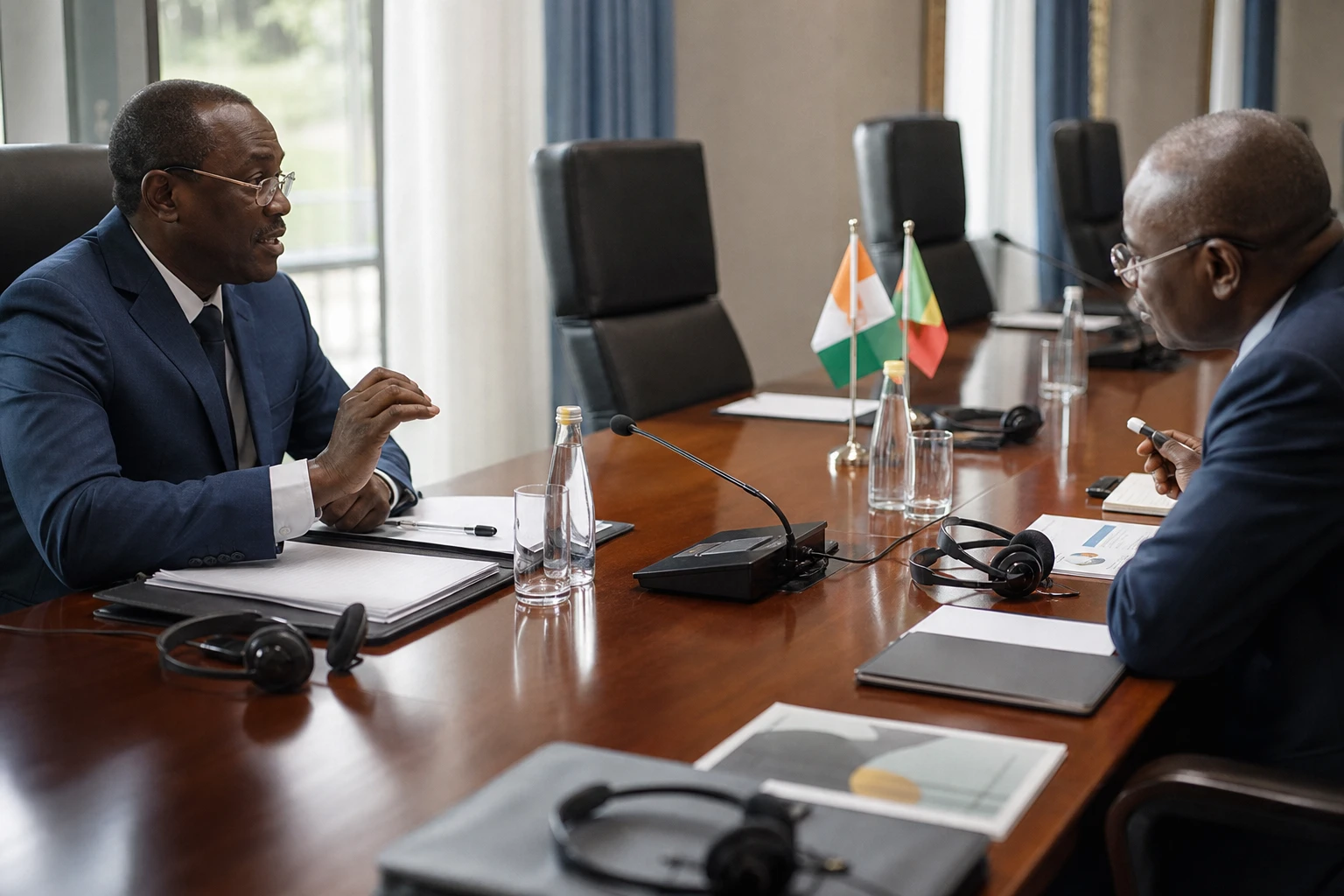
The Council of Ministers approved two financing agreements linked to road projects. The first is a 30 billion CFA franc loan from BOAD for the upgrading and asphalting of the 60-kilometre Yabayo-Buyo road. BOAD confirmed the operation in its March 2026 approval statement, where the project appears among the new interventions selected for Côte d’Ivoire.
The project extends beyond the road surface. It also includes 8 kilometres of urban roads, improvements to public spaces and water-supply infrastructure. In other words, road investment here serves as a lever for basic facilities that directly affect the daily lives of people in the communities along the route.
The second agreement concerns additional funding of €15.2 million for the West-Central Road Project. This is not a new starting point: the Islamic Development Bank had already provided €83.5 million for the modernisation of the 45-kilometre Toulepleu-Zouan-Hounien section and the 55-kilometre Séguéla-Mankono section, a total of 100 kilometres. The new contribution therefore extends a programme already under way rather than creating one from scratch.
The technical works are standard for this type of project, but vital: drainage, bridges, urban roads, street lighting and weigh stations. These features matter as much as the road surface itself: a road without drainage deteriorates quickly, while one without load controls struggles to withstand heavy traffic.
A vast network, but with uneven surfacing
The stakes are all the greater because Côte d’Ivoire’s road network is extensive but remains highly uneven. AGEROUTE says it manages 81,996 kilometres of roads, of which 7,500 kilometres are paved and 74,500 kilometres are unpaved. The agency also puts network density at around 25 kilometres per 100 km², and highlights a persistent weakness: several prefectural capitals had long been poorly connected by paved roads, including Mankono and Toulepleu.
The figures also point to a simple reality: a national road may exist on paper without providing the same level of service everywhere. The contrast between Abidjan and the rest of the country remains stark, as does the gap between major routes and rural roads. In an economy where agricultural produce still depends largely on trucks for transport, this affects logistics costs, final prices and the profitability of small farms and informal transport operators alike.
The government places these projects within a broader infrastructure modernisation policy. According to the Presidency, the 2026-2030 National Development Plan aims to consolidate gains and raise total investment to 114,838.5 billion CFA francs, with a large share expected to come from the private sector. Roads remain a key tool for supporting growth and domestic transport.
What this means for the areas concerned
In the south-west, the Yabayo-Buyo route is primarily intended to ease local travel and improve access to public services. The addition of urban roads and water facilities shows that the project targets communities, not just a transit corridor. For households, it could reduce time lost, extra transport costs and supply disruptions during the rainy season.
In the west-central region, the impact is broader still. The Toulepleu-Zouan-Hounien and Séguéla-Mankono roads connect production areas, border communities and places with long-standing needs for improved access. The IsDB had already noted in the project’s initial design that its aim was to cut vehicle operating costs by more than 50% and significantly improve journey times. Although these estimates date from the project’s initial planning, they capture its underlying purpose: to make the road useful and durable, not merely visible.
For businesses, the expected benefits are tangible. A stable road surface reduces the need to transfer loads between vehicles, protects vehicles and helps ensure deliveries arrive safely. For local authorities, weigh stations can help preserve the infrastructure. For the state, the issue is fiscal: each new loan improves territorial coverage but also brings requirements for monitoring, maintenance and disciplined implementation.
A regional perspective beyond Côte d’Ivoire’s own roadworks
These funding deals point to a wider story about West Africa. According to AGEROUTE, Côte d’Ivoire accounts for nearly half of the WAEMU road network, giving it a pivotal role in sub-regional trade. When its internal routes are upgraded, flows to Liberia, Guinea and, more broadly, West African markets also become more reliable.
The project also highlights a continent-wide reality: economic integration rarely happens through speeches alone. It depends on corridors, bridges, checkpoints and roads built to last. This is where regional development banks such as BOAD and multilateral lenders such as the IsDB become tangible players in African mobility. What happens next will depend above all on the pace of implementation, the quality of the work and the capacity to maintain what is built.