Algeria
 Egypt
 Libya
 Morocco
 Sudan
 Tunisia
 Benin
 Burkina Faso
 Cabo Verde
 Ghana
 Guinea
 Guinea-Bissau
 Liberia
 Mali
 Mauritania
 Niger
 Nigeria
 Senegal
 Sierra Leone
 The Gambia
 Togo
 Cameroon
 Central African Republic
 Chad
 DR Congo
 Equatorial Guinea
 Gabon
 Republic of the Congo
 São Tomé and Príncipe
 Burundi
 Comoros
 Djibouti
 Eritrea
 Ethiopia
 Kenya
 Madagascar
 Malawi
 Mauritius
 Mozambique
 Rwanda
 Seychelles
 Somalia
 South Sudan
 Tanzania
 Uganda
 Angola
 Botswana
 Eswatini
 Lesotho
 Namibia
 South Africa
 Zambia
 Zimbabwe
Stricter checks for a sector under pressure
In Côte d’Ivoire, cocoa is no longer traded solely by weight. The identity of the grower, the tracking of the beans and proof of their origin also count. From 1 September 2026, the producer card will be compulsory for farm-gate transactions, as the 2026-2027 season opens and the sector moves to a more demanding national traceability system.
This is no minor administrative change. It affects a sector that carries considerable weight in the Ivorian economy, in the incomes of hundreds of thousands of rural families and in the country’s position on the global cocoa market. Côte d’Ivoire remains the world’s leading producer of cocoa beans, and Abidjan now wants to show that it can also prove the origin, journey and compliance of its output.
Traceability, producer cards and new market discipline
The system is based on a simple principle. Every producer must be identified, every transaction better recorded, and every flow of beans more easily traced from plantation to export. The Coffee and Cocoa Council describes the card as the starting point for the national traceability system. It also says the card should secure payments, limit the circulation of cash and make it easier to comply with the farm-gate price set by the state.
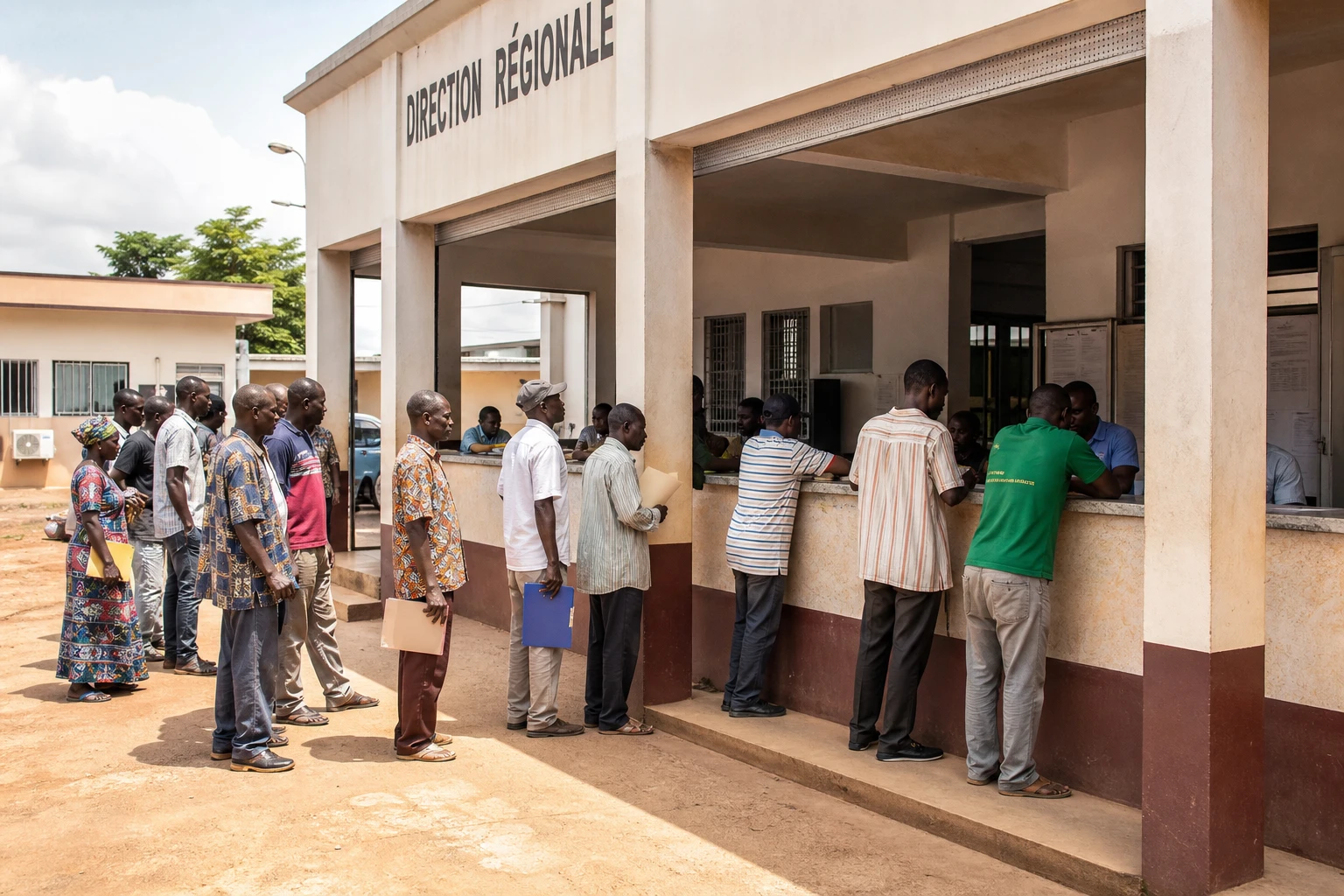
According to figures released by the regulator, more than 1.1 million producers have been registered and more than 900,000 cards distributed. During awareness sessions in August 2026, a regional official also stressed that the card would be compulsory in production areas from 1 September. More than 90,000 producers are said to be affected in the Lôh-Djiboua region, showing that the measure is not confined to large plantations but reaches some of the most active rural growing areas.
The farm-gate price remains central to the system. In March 2026, during the 2025-2026 mid-crop season, the guaranteed minimum price was set at 1,200 CFA francs per kilogram of cocoa. A few months earlier, for the 2025-2026 main crop season, it had reached 2,800 CFA francs per kilogram, a level then described as historic. These two benchmarks show that the producer card is not just a monitoring tool. It is also part of a mechanism to stabilise agricultural incomes.
What the measure means for growers, cooperatives and the state
On the ground, the aim is twofold. First, to reduce the risks of fraud, non-payment and informal resale. Second, to ensure that growers are better protected when they receive payment for their produce. Several industry participants have noted that some producers still carry cash after a sale, leaving them exposed to assault. Equipped with a bank chip, the card is intended to shift payments into safer channels.
But the transition is not without friction. Producers and cooperative officials say not everyone has received a card yet, despite registration having begun several years ago. Others fear the rollout may be too rapid, especially in areas where information circulates poorly and digital technology is not equally well understood. This matters: in a sector of this size, a traceability system will succeed only if it is understood, accepted and technically operational from village to port.
For the Ivorian state, the stakes go beyond the internal organisation of the sector. The country is seeking to secure its exports to markets increasingly focused on the origin of agricultural products. The European Union regulation on deforestation-linked products covers cocoa, among other commodities, and is due to apply at the end of 2026. In this context, traceability is no longer just a communications tool. It is becoming a condition for access to some markets.
A West African signal beyond Ivorian cocoa
The Ivorian decision also resonates at regional level. Together with Ghana, Côte d’Ivoire accounts for the bulk of global cocoa supply. The two countries have stepped up discussions to push for better remuneration for producers and greater control over the value chain. In Abidjan and Accra, the message is clear: West Africa no longer wants simply to sell a raw material. It also wants a say in the rules governing its trade.
This approach aligns with ECOWAS priorities, even though cocoa is still governed primarily by national systems. Producer cards, data collection and traceability could also benefit other agricultural sectors across the sub-region, where debates over formalisation, taxation, the movement of goods and fair remuneration are recurring. In Côte d’Ivoire, the task is therefore agricultural, commercial and institutional.
What to watch now is the actual pace of the rollout in growing areas, buyers’ ability to comply with the new rule and producers’ level of acceptance during the 2026-2027 season. If the system works, Côte d’Ivoire will have a stronger tool to defend its cocoa in global markets. If it stalls, tensions could quickly rise between growers, cooperatives and regulatory bodies.