Algeria
 Egypt
 Libya
 Morocco
 Sudan
 Tunisia
 Benin
 Burkina Faso
 Cabo Verde
 Ghana
 Guinea
 Guinea-Bissau
 Liberia
 Mali
 Mauritania
 Niger
 Nigeria
 Senegal
 Sierra Leone
 The Gambia
 Togo
 Cameroon
 Central African Republic
 Chad
 DR Congo
 Equatorial Guinea
 Gabon
 Republic of the Congo
 São Tomé and Príncipe
 Burundi
 Comoros
 Djibouti
 Eritrea
 Ethiopia
 Kenya
 Madagascar
 Malawi
 Mauritius
 Mozambique
 Rwanda
 Seychelles
 Somalia
 South Sudan
 Tanzania
 Uganda
 Angola
 Botswana
 Eswatini
 Lesotho
 Namibia
 South Africa
 Zambia
 Zimbabwe
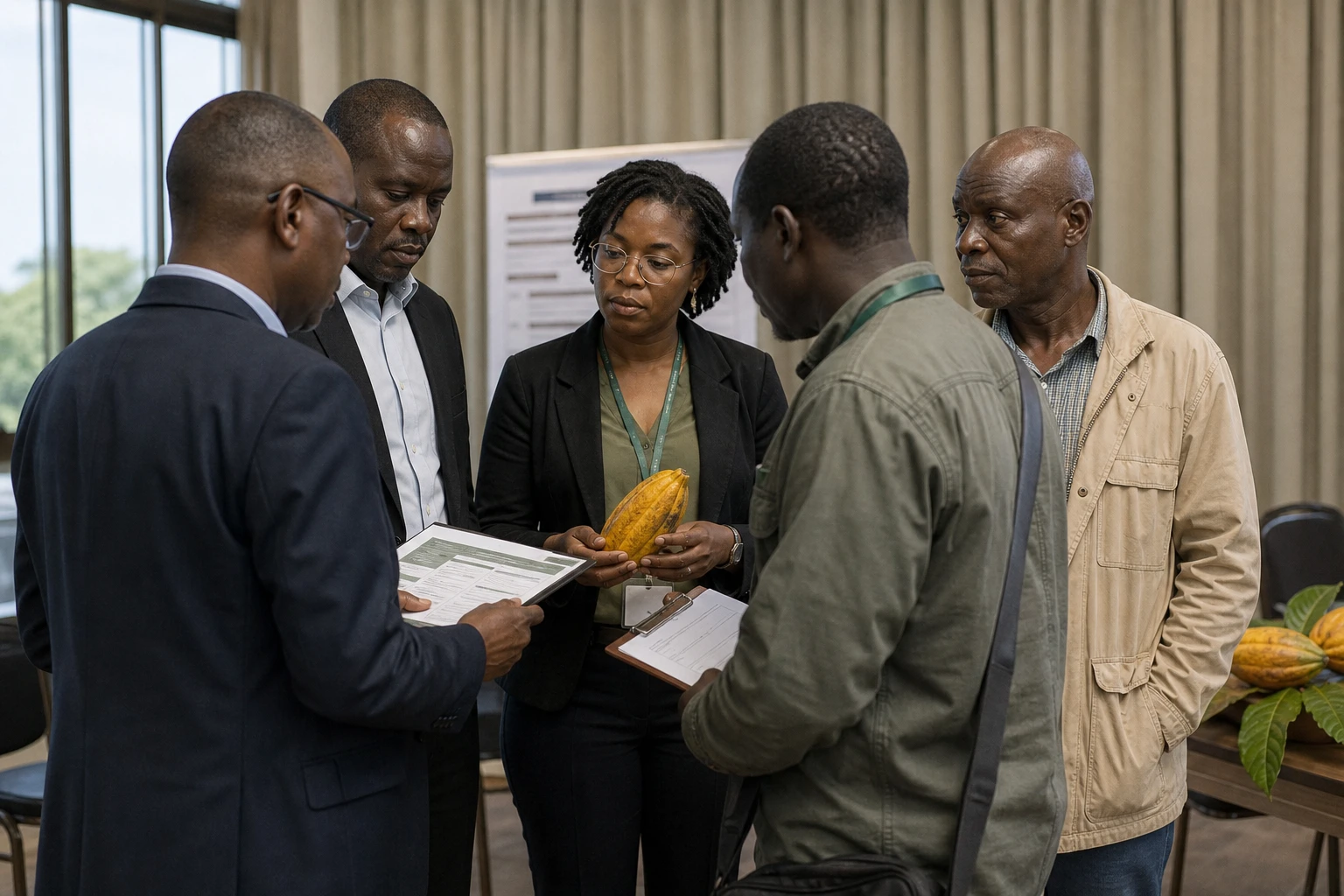
In Côte d’Ivoire’s plantations, the weather determines more than the size of the next harvest. It also affects family incomes, export contracts and the global price of chocolate. As the 2026-2027 season approaches, the prospect of an El Niño episode is therefore adding uncertainty to a sector already weakened by disease and ageing plantations.
A climate risk that affects the entire sector
El Niño is an abnormal warming of the surface waters of the tropical Pacific. The phenomenon alters rainfall and temperature patterns in several parts of the world. In West Africa, its effects are not automatic. They can vary according to the season, the agricultural zone and the phenomenon’s intensity.
For cocoa, the main danger is an imbalance in water supply. Excessive rainfall can encourage fungi, make it harder to maintain plots and disrupt flowering. Conversely, a hot, dry spell can stress cocoa trees, reduce pod formation and accelerate fruit drop.
Côte d’Ivoire is particularly exposed. The country remains the world’s leading cocoa producer and supplies a major share of the beans used by the international industry. The sector provides a livelihood for about 1.2 million producers and nearly eight million people, directly or indirectly, according to figures cited by Ivorian authorities.
In this context, forecasts should be treated with caution. Analysts expect downward pressure on Ivorian production in the 2026-2027 season. One estimate puts output at about 1.7 million tonnes, a year-on-year decline of 17.5%. This figure is a projection, not a harvest tally.
Neighbouring Ghana is also affected. The two countries are at the heart of West African cocoa production. They co-operate, notably through the Côte d’Ivoire-Ghana Cocoa Initiative, which focuses on the sector’s sustainability and the fight against cross-border diseases.
In Côte d’Ivoire, climate adds to structural challenges
The risk associated with El Niño cannot be separated from the problems already affecting Ivorian plantations. Cacao swollen shoot virus, often called swollen shoot, reduces tree productivity and sometimes requires infected plots to be uprooted.
The Coffee and Cocoa Council said that more than 105,000 hectares had been uprooted as part of efforts to combat the disease. The aim is to limit the virus’s spread, but the operation temporarily deprives producers of income and delays the restoration of plantations.
The disease causes yields to decline progressively. Research cited by the French Agricultural Research Centre for International Development (CIRAD) points to a fall of up to 25% in the first year and 50% in the second year in affected plots. The impact varies, however, according to the condition of the trees, farming practices and how quickly action is taken.
Ageing plantations add to this vulnerability. Older cocoa trees produce less and may be less able to withstand heat or drought. The loss of forest cover also plays a part. Shade trees help maintain soil moisture and limit extreme temperatures in plots.
Producers therefore face several constraints at once: erratic rainfall, disease pressure, ageing trees, the cost of inputs and unequal access to agricultural advice. In rural areas, a poor harvest first affects household incomes. It can also reduce spending on education, healthcare and farm maintenance.
The response is therefore not solely a matter of weather forecasting. It also involves renewing plantations, selecting suitable seedlings, agroforestry, monitoring disease and better protecting incomes during periods of transition.
Nervous markets, but no inevitable outcome
Cocoa markets react quickly to climate news. The prospect of a smaller harvest can support prices, particularly after the supply tensions recorded in recent years. However, the global price depends on more than Ivorian production.
Demand also matters. Consumption remains buoyant in several Asian markets, while the evolution of European demand depends on purchasing power, inflation and consumer habits. Manufacturers can also adjust their recipes, stocks or forward purchases.
For the Ivorian authorities, the challenge is to secure contracts without selling more volume than the harvest can actually supply. The Coffee and Cocoa Council regulates marketing and organises forward sales. This role becomes more difficult when harvest forecasts are uncertain.
Higher prices do not automatically benefit all farmers. Producers receive the farmgate price set under Côte d’Ivoire’s system, but their incomes also depend on the volumes harvested. A better-paid bean does not always make up for the loss of several hectares affected by disease or drought.
Local processing is another issue. Côte d’Ivoire has expanded its capacity to grind cocoa and manufacture semi-processed products. This development allows more value to be captured locally, but it does not remove dependence on global markets or the difficulties faced on farms.
A test for West African co-operation
The climate risk is a reminder that the sector can no longer be managed country by country. Swollen shoot virus circulates in an agricultural zone that extends beyond national borders. The movement of seedlings, plant material and beans makes joint arrangements between Côte d’Ivoire and Ghana necessary.
In April 2026, a regional workshop held in Abidjan under the auspices of the FAO and the Côte d’Ivoire-Ghana Cocoa Initiative produced a 2026-2031 roadmap. It notably provides for stronger disease monitoring and co-ordination between research services, agricultural authorities and producer organisations.
This co-operation is part of a West African region where the cocoa sector influences rural incomes, exports and public revenues. It also concerns the Economic Community of West African States, ECOWAS, even though cocoa regulation remains primarily a national responsibility.
The coming months will be decisive. Rainfall, the state of flowering, arrivals at Ivorian ports and the first estimates for the 2026-2027 season will need to be monitored. The key question will not simply be whether El Niño reduces the harvest. It will be how well producers and institutions can absorb another climate shock without permanently weakening the sector.