Algeria
 Egypt
 Libya
 Morocco
 Sudan
 Tunisia
 Benin
 Burkina Faso
 Cabo Verde
 Ghana
 Guinea
 Guinea-Bissau
 Liberia
 Mali
 Mauritania
 Niger
 Nigeria
 Senegal
 Sierra Leone
 The Gambia
 Togo
 Cameroon
 Central African Republic
 Chad
 DR Congo
 Equatorial Guinea
 Gabon
 Republic of the Congo
 São Tomé and Príncipe
 Burundi
 Comoros
 Djibouti
 Eritrea
 Ethiopia
 Kenya
 Madagascar
 Malawi
 Mauritius
 Mozambique
 Rwanda
 Seychelles
 Somalia
 South Sudan
 Tanzania
 Uganda
 Angola
 Botswana
 Eswatini
 Lesotho
 Namibia
 South Africa
 Zambia
 Zimbabwe
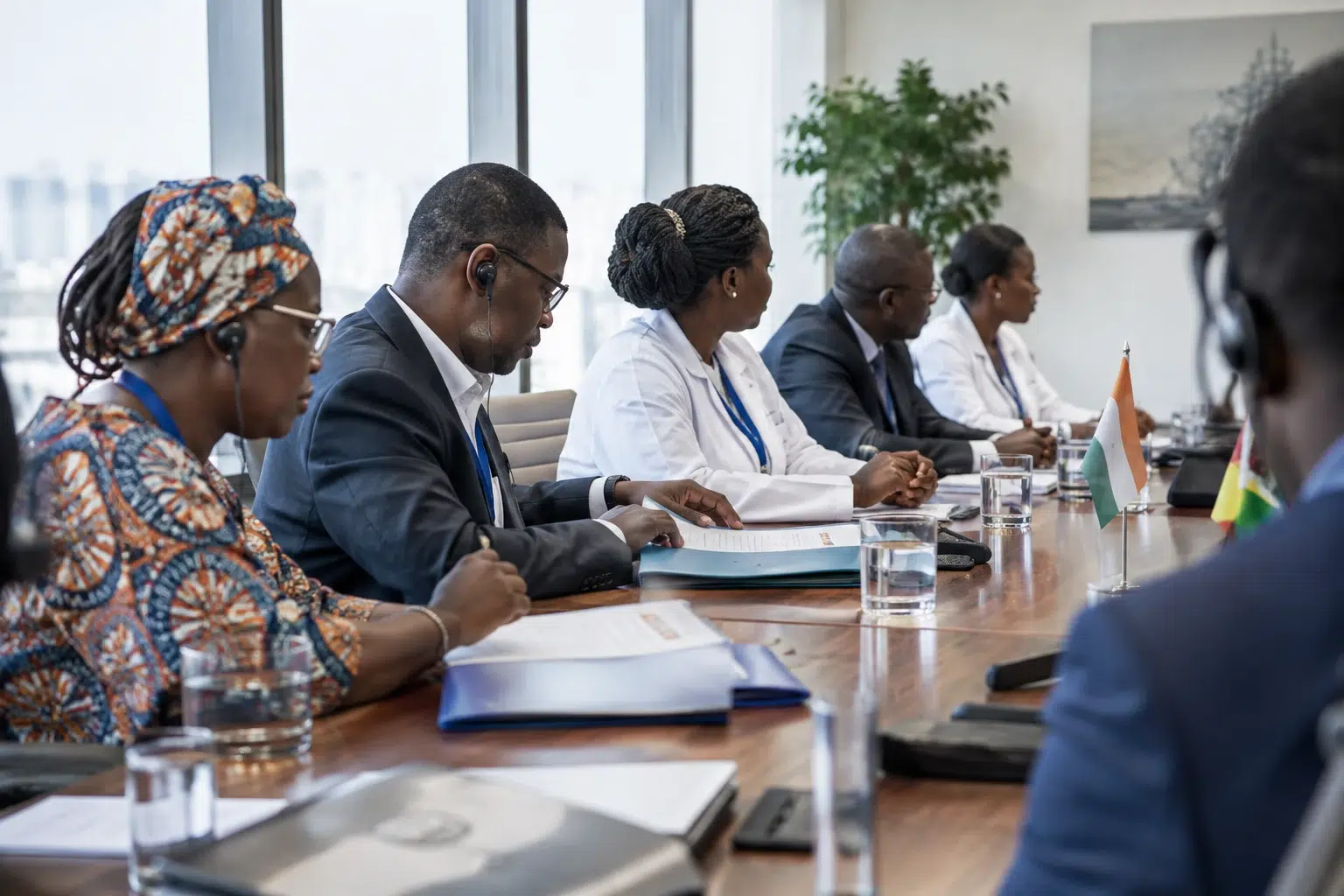
Prevention attracts attention, but the journey does not end with screening. For women who have already been diagnosed, access to treatment and continuity of care remain crucial. This is the focus of an initiative by AGL in Côte d’Ivoire, held to mark Pink October 2026.
Support announced for Treichville oncology department
On 13 October, AGL’s Ivorian entities made a financial contribution to the oncology department at Treichville University Hospital (CHU). The handover was made by Martine Coffi-Studer, chair of the board of AGL Côte d’Ivoire, in partnership with the National Cancer Control Programme (PNLCa), the public body responsible for co-ordinating the fight against the disease.
The amount of the donation and how it will be used were not specified in the information released about the initiative. The aid is presented as support for the medical care of women with breast cancer and their access to treatment. It is therefore targeted assistance, whose impact will depend in particular on how it is allocated in practice and on its ability to meet patients’ needs.
Professor Innocent Adoubi, director-co-ordinator of the PNLCa and head of the oncology department at Treichville University Hospital, welcomed businesses’ participation in public health efforts. He said such contributions could support the care of women affected by the disease, alongside prevention and screening initiatives.
The following day, 14 October, a debate and discussion event at the Yiri Innovation Centre in Marcory extended the initiative to the group’s female employees. A practical self-examination workshop preceded discussions with healthcare professionals and staff representatives. Topics included early screening, care provision and support for women with the disease.
A health challenge that goes beyond awareness
Breast cancer is the cancer most frequently diagnosed in women in Côte d’Ivoire. The International Agency for Research on Cancer’s GLOBOCAN 2024 estimates put the number of new cases among women that year at 4,845. For 2022, the Ivorian health ministry cited 3,869 new cases and 2,092 deaths, based on the GLOBOCAN data then available. These figures are estimates for different years and should not be confused with an annual tally observed in real time. GLOBOCAN estimates for Côte d’Ivoire and data cited by the health ministry illustrate the scale of the challenge.
These indicators give a measure of need, but do not in themselves show whether every patient can undergo the examinations and treatment required. In 2025, the ministry cited obstacles linked to late diagnosis, lack of awareness of warning signs and socio-economic constraints. For a patient, the distance to a specialist department, the cost of examinations and the regularity of appointments can all affect the course of care.
However, the care system is not limited to a single facility. The ministry lists specialist services at Treichville University Hospital and Bouaké University Hospital, as well as the Alassane Ouattara National Medical Oncology and Radiotherapy Centre. In 2025, it also said the country had 14 mammography sites, some of which offered examinations at reduced rates. The presence of equipment and facilities is progress, but their distribution and the cost of access remain essential issues for women outside major urban centres.
From business to the health system: what impact?
By combining assistance for patients with an information session for its female employees, AGL links two dimensions often addressed separately: workplace prevention and support for women who are already ill. The company also plans to hold a day devoted to women’s wellbeing before the end of the month, with relaxation and breathing activities. These initiatives can help raise awareness, but they are no substitute for medical screening or treatment supervised by professionals.
For female employees, the workshop provides a space for discussion and guidance on possible next steps. For patients at the hospital department, the announced donation is intended instead to support their care. The needs are not the same: a workplace initiative primarily reaches those who work there, while improving access to care also requires responses for women without formal employment and those living far from hospital centres.
A company’s contribution therefore cannot be assessed solely by the number of events organised. Transparency about the amount donated, how it is used and the results achieved would make it possible to better assess its impact. Similarly, continuity of care depends on sustained commitment from public authorities, hospital teams and partners, as well as resources that patients can afford.
Across West Africa, where health systems face significant needs for diagnosis and treatment, the Ivorian experience highlights the value of strengthening local capacity rather than limiting the fight to an annual campaign. In Côte d’Ivoire, a member of the Economic Community of West African States (ECOWAS), national efforts draw on specialist facilities and partnerships between public, private and voluntary-sector actors. The next challenge is to measure whether these initiatives actually improve patient referrals and continuity of care beyond October.