Algeria
 Egypt
 Libya
 Morocco
 Sudan
 Tunisia
 Benin
 Burkina Faso
 Cabo Verde
 Ghana
 Guinea
 Guinea-Bissau
 Liberia
 Mali
 Mauritania
 Niger
 Nigeria
 Senegal
 Sierra Leone
 The Gambia
 Togo
 Cameroon
 Central African Republic
 Chad
 DR Congo
 Equatorial Guinea
 Gabon
 Republic of the Congo
 São Tomé and Príncipe
 Burundi
 Comoros
 Djibouti
 Eritrea
 Ethiopia
 Kenya
 Madagascar
 Malawi
 Mauritius
 Mozambique
 Rwanda
 Seychelles
 Somalia
 South Sudan
 Tanzania
 Uganda
 Angola
 Botswana
 Eswatini
 Lesotho
 Namibia
 South Africa
 Zambia
 Zimbabwe
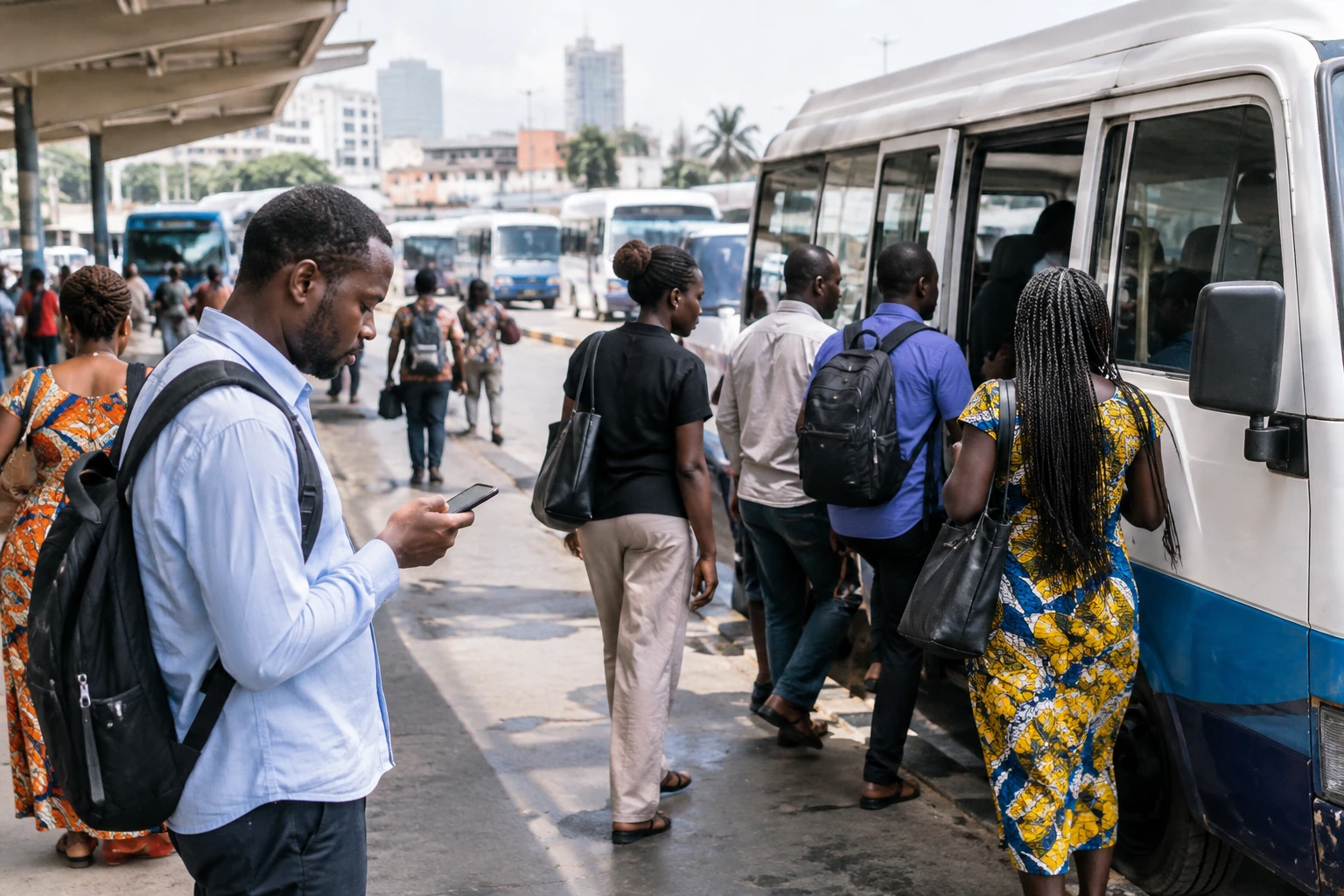
Mobile connectivity can cover a territory without everyone being able to use it in practice. In Côte d’Ivoire, the government wants to narrow this gap by addressing smartphone prices, with a stated target of 15,000 CFA francs, or about $25.
Coverage does not guarantee access
The Ministry of Digital Transition says 95% of Côte d’Ivoire’s population has internet coverage. But, according to figures presented by Minister Djibril Ouattara, smartphone penetration remains around 40%. The government is targeting 80% by the end of 2027. These indicators measure different things: coverage means a network is available, while ownership and use also depend on household resources.
This distinction matters in a country where digital services are playing an increasingly important role in administrative procedures, payments, education and commercial exchanges. It is also a reminder that a deployed network is not enough to guarantee effective access. The cost of a handset, data packages and the ability to use services all weigh on household decisions.
The issue is part of a broader West African trend. Côte d’Ivoire is a member of ECOWAS, the Economic Community of West African States, which brings together countries with different markets and digital policies. More affordable devices could expand usage in the country, but their availability and price will also depend on manufacturers, operators and tax rules.
Agreement to identify solutions
On 10 November in Doha, Minister Djibril Ouattara and Vivek Badrinath, director-general of the GSMA — the global association of mobile operators — signed a cooperation protocol. The meeting took place on the sidelines of the Mobile World Congress, held from 8 to 10 November in the Qatari capital. Implementation on the Ivorian side is to be handled by the National Telecommunications/ICT Universal Service Agency (ANSUT), as part of the GSMA Handset Affordability Coalition, a coalition working to make phones more affordable.
The agreement is intended to help identify ways to reduce the price of devices compatible with mobile internet. It supports the National Smartphone Affordability Programme announced by the ministry. At this stage, however, the available information specifies neither the features of the phones in question nor the beneficiaries or the financing and distribution arrangements. The 15,000 CFA franc price is therefore a stated target, not proof that devices are already available at that price.
The initiative had been discussed before the agreement. In June 2026, ANSUT announced that it was working on a reduced-cost smartphone programme for low-income people, with particular attention to rural and remote areas. The agency has also described the National Broadband Network as infrastructure that is already operational. This highlights the last-mile challenge: turning investment in networks into practical access to services for residents.
Price is only part of the equation
The GSMA identifies the cost of devices as one of the barriers to mobile internet adoption in low- and middle-income economies. Its report on the mobile economy in Africa describes a persistent gap between the availability of mobile broadband and its use. Across the continent, the organisation estimates that many people live within coverage areas but do not connect to mobile internet. This industry analysis sheds light on the problem, but does not replace detailed data on incomes and usage specific to Côte d’Ivoire.
The choice of mechanism will be crucial. A public subsidy, instalment payments, tax cuts or a partnership with manufacturers would have different effects on the state budget, the price paid and the number of beneficiaries. The GSMA coalition is working on affordability solutions in several markets. In Abidjan, secondary cities and rural areas, the challenge will be to ensure that the offer reaches its target audience and does not remain merely an announced price.
A cheaper smartphone can facilitate access to mobile money, educational resources, online administrative services and e-commerce. But a phone alone does not guarantee regular use. Data prices, the quality of local connectivity, the availability of electricity and digital skills can continue to pose barriers even after a device has been purchased.
Results to be measured by 2027
For the public, the impact will therefore depend less on the signing itself than on its implementation: who will be able to buy the phone, at what final price, in which locations and with what quality guarantees? Publishing the eligibility criteria, timetable and financing arrangements will make it possible to assess whether the scheme meets the needs of lower-income households without excluding less well-served areas.
The target of 80% smartphone penetration by the end of 2027 gives the programme a political deadline. The number of devices actually distributed, their price, network compatibility and the growth in usage will need to be monitored, rather than relying on the number of phones announced. For ECOWAS, Côte d’Ivoire’s experience could also inform discussions on the affordability of devices, a shared challenge that calls for solutions tailored to each national market.
Background sources: ANSUT announcement reported by the Ivorian Press Agency, digital targets of Côte d’Ivoire’s ministry, GSMA report on the mobile economy in Africa and dates of the Mobile World Congress in Doha.