
 Algeria
 Egypt
 Libya
 Morocco
 Sudan
 Tunisia
 Benin
 Burkina Faso
 Cabo Verde
 Ghana
 Guinea
 Guinea-Bissau
 Liberia
 Mali
 Mauritania
 Niger
 Nigeria
 Senegal
 Sierra Leone
 The Gambia
 Togo
 Cameroon
 Central African Republic
 Chad
 DR Congo
 Equatorial Guinea
 Gabon
 Republic of the Congo
 São Tomé and Príncipe
 Burundi
 Comoros
 Djibouti
 Eritrea
 Ethiopia
 Kenya
 Madagascar
 Malawi
 Mauritius
 Mozambique
 Rwanda
 Seychelles
 Somalia
 South Sudan
 Tanzania
 Uganda
 Angola
 Botswana
 Eswatini
 Lesotho
 Namibia
 South Africa
 Zambia
 Zimbabwe
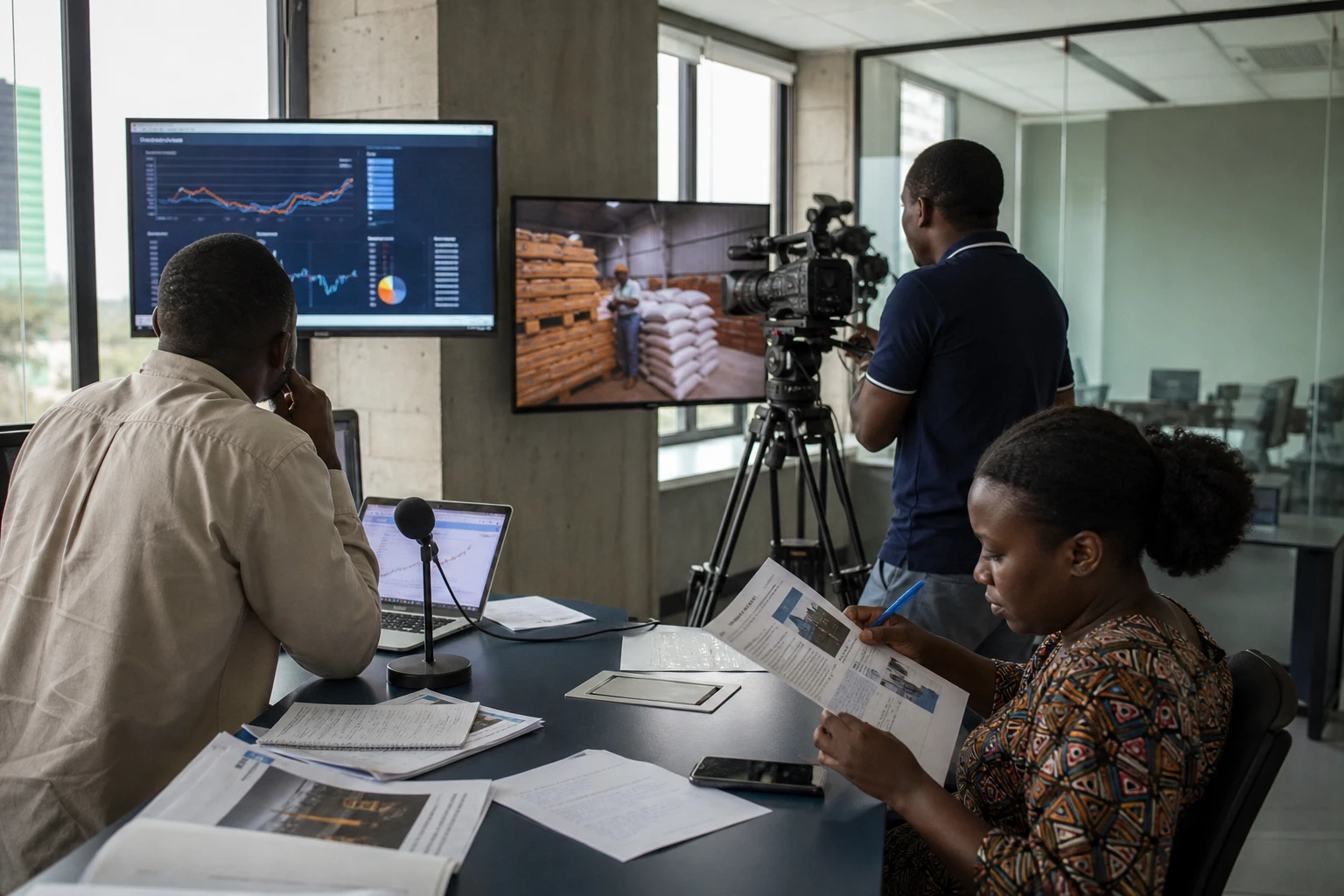
When Ivorian cocoa moves beyond a single-price system
In Côte d’Ivoire, cocoa is more than a budget line. It underpins incomes, cooperatives, exports and a significant share of social stability in producing areas. When the farmgate price shifts, thousands of farmers, transporters and small-scale buyers reorganise their activities, often from one day to the next.
The situation observed in recent months shows one thing above all: the sector remains powerful, but is still sensitive to shocks involving timing, stocks and markets. In a country whose political capital is Yamoussoukro, decisions on cocoa continue to be made in Abidjan too, the economic and logistical heart of the bean trade.
A sector regulated by the state, but exposed to regional tensions
In West Africa, Côte d’Ivoire shares a central role in the global cocoa balance with Ghana. Together, the two countries account for around 60% of global supply. It was precisely to gain more leverage in international markets that they strengthened their coordination in June 2026, with an stated aim of aligning producer prices and synchronising marketing seasons from 1 September.
This rapprochement is not a symbolic gesture. It reflects a broader strategy: moving away from a position in which producers bear the brunt of price movements, in an effort to regain some control. In this West African region, where ECOWAS remains a framework for economic and political exchange, cocoa also affects export revenues, local processing and the credibility of agricultural policies.
Stocks remain high and marketing is under pressure
The heart of the problem is tangible. After the main crop season, the Ivorian state authorised the sale of an additional volume of cocoa to reduce residual stocks. The quantities cited in the sector initially reached 23,830 tonnes, with the aim of keeping the market moving and preventing beans from remaining tied up in cooperative warehouses.
At the same time, the farmgate price set for the intermediate season was cut to 1,200 CFA francs per kilogram, from 2,800 CFA francs during the main season. This difference is not a simple accounting adjustment. It reflects two distinct realities: on the one hand, better-quality beans from the main season; on the other, later and less consistent volumes, which the system cannot buy at the same level without creating a financial imbalance.
On the ground, several cooperatives say they still hold unsold stocks or sold their beans at the lower rate to avoid heavier losses. The sensitive issue here is not just price. It is confidence in the marketing chain. When stocks do not move at the right pace, tensions rise between farmers, interprofessional organisations, buyers and the regulator.
Export documents and the battle over quality
Another bottleneck concerns bills of lading, the documents authorising the export of shipments. More than 150 cases are said to have been flagged as problematic in the sector. The issue is technical, but its effects are very tangible. A stock declared as main-season cocoa cannot be bought at the same price if it has the characteristics of a later harvest.
This distinction in bean size and quality highlights a reality often invisible to the general public: cocoa is not a uniform commodity. Between a product that is well dried, well sorted and delivered on time, and one that arrives late or is poorly graded, a producer’s income can change considerably. Cooperatives face pressure on two fronts. They must pay farmers promptly and meet increasingly strict export standards.
In this system, the Coffee and Cocoa Council acts as regulator, while the interprofessional organisation seeks to defend the interests of those involved. But room for manoeuvre remains limited when global prices reverse and demand slows. This is where the fixed-price policy shows its limits: it offers protection, but cannot absorb every shock.
What the crisis says about the future of West African cocoa
The current episode extends beyond Côte d’Ivoire. It exposes a structural problem shared across the West African cocoa belt: producers remain poorly protected against international volatility, even as their countries bear most of the agricultural, logistical and social risks. When prices fall, the pressure is immediately felt in rural incomes, cooperative financing and governments’ ability to preserve social peace in producing areas.
Coordination with Ghana nevertheless offers an interesting path. It could narrow price gaps between neighbouring countries, limit opportunistic buying by traders and strengthen West Africa’s influence in global negotiations. But this strategy will have lasting effects only if it is accompanied by better traceability, more flexible storage, stronger local processing and clearer organisation of the seasons.
At continental level, the stakes are clear. Cocoa is no longer just an exported raw material. It is becoming a test of economic sovereignty for Africa’s major producing countries. What is at stake in Côte d’Ivoire and Ghana could inspire other sectors, from coffee to cotton, where governments are also seeking to move from dependence towards collective bargaining.



