Algeria
 Egypt
 Libya
 Sudan
 Tunisia
 Benin
 Burkina Faso
 Cabo Verde
 Côte d'Ivoire
 Ghana
 Guinea
 Guinea-Bissau
 Liberia
 Mali
 Mauritania
 Niger
 Nigeria
 Senegal
 Sierra Leone
 The Gambia
 Togo
 Cameroon
 Central African Republic
 Chad
 DR Congo
 Equatorial Guinea
 Gabon
 Republic of the Congo
 São Tomé and Príncipe
 Burundi
 Comoros
 Djibouti
 Eritrea
 Ethiopia
 Kenya
 Madagascar
 Malawi
 Mauritius
 Mozambique
 Rwanda
 Seychelles
 Somalia
 South Sudan
 Tanzania
 Uganda
 Angola
 Botswana
 Eswatini
 Lesotho
 Namibia
 South Africa
 Zambia
 Zimbabwe
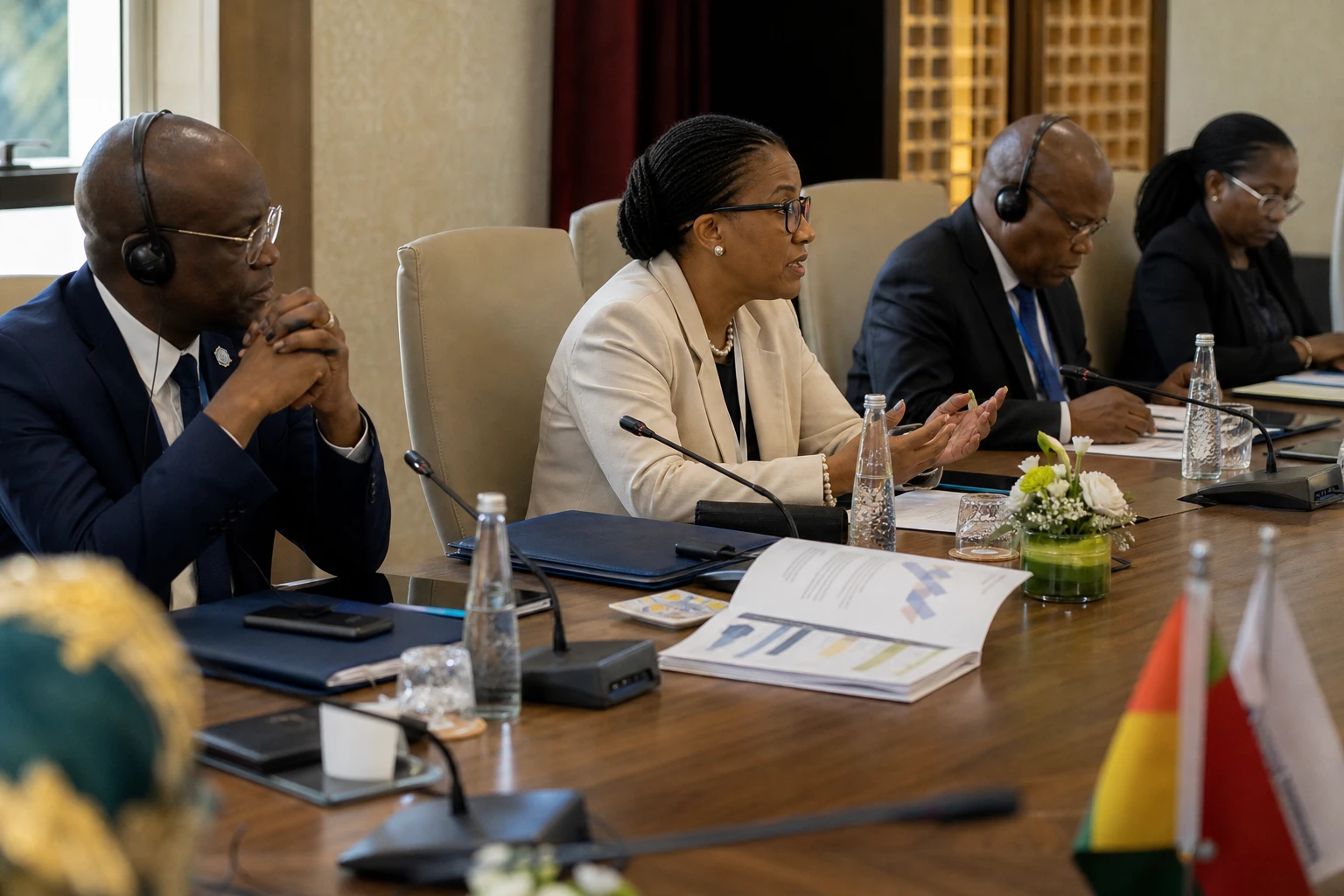
A French withdrawal, but not an exit from Morocco
In Moroccan banking, shifts in ownership often mean more than a simple change of shareholder. They point to a broader reshaping: European groups sell assets while Moroccan conglomerates consolidate holdings deemed strategic. The BMCI deal fits this pattern, with a shift that could matter for customers, employees and the balance of Morocco’s financial sector.
On 29 April 2026, BNP Paribas and Holmarcom Finance Company signed an agreement providing for the sale of the French group’s 67% stake in Banque marocaine pour le commerce et l’industrie, or BMCI. Completion is expected in the fourth quarter of 2026, subject to regulatory approval in Morocco, notably from Bank Al-Maghrib and the Competition Council.
At the same time, BNP Paribas confirmed that it was not leaving the kingdom. The group intends to retain its corporate and investment banking activities, as well as Arval Maroc, its long-term vehicle leasing and mobility subsidiary. Holmarcom, for its part, is continuing a strategy of expansion already evident in finance, as well as insurance, agri-food, distribution, logistics and real estate.
What the takeover means for Casablanca’s financial centre
BMCI is no peripheral bank. The Competition Council describes it as an institution offering a full range of financial products to individuals, businesses and institutions, with its head office in Casablanca. Its move into majority Moroccan ownership comes amid a broader wave of consolidation in the country. Holmarcom has already become the reference shareholder in Crédit du Maroc following Société Générale’s exit, a deal that reshaped the hierarchy of banking players in Morocco.
For customers, the official message stresses continuity. BMCI says contacts, products and services will remain unchanged during the transition, while a long-term commercial partnership is intended to preserve complementary services for companies operating in Morocco and internationally. In a market where SMEs, exporters and multinational groups are highly dependent on smooth banking services, this matters as much as the change of shareholder itself.
The deal also has a financial prudence dimension. BNP Paribas said the transaction was expected to strengthen its CET1 ratio, the main indicator of a bank’s capital strength; it stood at 12.6% at the end of 2025, according to the group’s published accounts. The French group has been seeking for several years to simplify its international portfolio, while the Moroccan market remains attractive enough for a local player seeking critical mass.
For Morocco, the issue extends beyond BMCI alone. For several years, the country’s most powerful financial groups have been strengthening their presence across the continent. The history of Moroccan banks in sub-Saharan Africa shows a long-standing expansion, often supported by acquisitions and a model based on close commercial relationships. Today, this trend is unfolding in a broader regional context, where financial integration and the African Continental Free Trade Area have yet to turn intentions into smoother financing channels.
The shift also comes as Morocco’s authorities step up their scrutiny of banking supervision. Bank Al-Maghrib and the Competition Council have a central role in bringing the deal to completion. In practice, their approval will determine not only the timetable but also how the new group is structured alongside Holmarcom’s other financial assets.
A signal for North Africa as a whole
At regional level, the deal confirms a clear trend: major Moroccan banking groups are gaining ground as several European institutions reallocate capital. Morocco remains an important anchor between Europe, North Africa and sub-Saharan Africa, with a banking centre recognised for its depth, prudential oversight and regional reach. This positioning is precisely what attracts local buyers and allows foreign sellers to exit without a sudden break.
At continental level, the BMCI deal is a reminder of an enduring reality: the battle to finance Africa’s growth is fought in bank balance sheets as well as at political summits. The next point to watch will be the final regulatory approvals in the fourth quarter of 2026, followed by how Holmarcom integrates BMCI alongside Crédit du Maroc. In Rabat and Casablanca, the challenge will be to turn a change of ownership into greater banking capacity, without undermining confidence or continuity for the real economy.